
Preventing jams enhances safety during tunneling operations. This jam prevention keeps the TBM machine safer in squeeze ground conditions. To avoid TBM jamming, it's essential to plan thoroughly before starting the tunneling process. Additionally, maintaining vigilance while working is crucial. Selecting the right TBM for your project is vital, and CEGC is here to assist you in finding the best method and machine for navigating squeeze ground effectively.
Key Takeaways
-
Careful planning and checking the ground are very important to stop TBM jams in squeezing ground. Find risks early so you can pick the best equipment.
-
Watching the TBM as it works helps find jamming problems before they get worse. Use sensors and look at data to get early warnings.
-
Checking and fixing the TBM often makes sure it works well. Fix problems quickly to stop breakdowns and keep work going smoothly.
Method Selection and Pre-Tunneling Strategies
Ground Investigation and Risk Assessment
You should always begin a squeezing ground project with a careful ground investigation. This helps you find risks and pick the right dgs. The table below lists the main things to check before using a tbm:
|
Parameter |
Description |
|---|---|
|
Cutterhead Torque |
Tells you how much the tbm pushes against the rock. |
|
Thrust Force |
Shows the force the tbm uses to move forward. |
|
Penetration Rate |
Measures how fast the tbm moves through the ground. |
|
Grain Size Distribution |
Describes the soil’s feel and helps you guess squeezing ground behavior. |
|
Hydraulic Conductivity |
Explains how water goes through the soil, which can change tbm performance. |
|
Plasticity |
Shows if the soil could block the tbm, using Atterberg limits. |
|
Soil Strength and Compactness |
Tells you how steady the ground is for the tbm. |
You can use risk assessment models to guess if the tbm will jam in squeezing ground. These models use Bayesian statistics to give you a chance of jamming. The jamming perception index can spot jam risk very well. Some models say there is a 94% chance of jamming in risky spots and only 7% in normal places. This helps you pick the right dgs and plan your work.
Choosing the Right Tunnel Machine
There are different machines for squeezing ground. The tunnel boring machine is good for long, straight tunnels. The auger boring machine works for short, steady crossings. The Microtunnelling Machine is very accurate and works in many ground types. Horizontal directional drilling is best for long, curved paths but not for hard or rocky squeezing ground. You need to match the tbm or other dgs to what your project needs.
Ground Improvement Methods
You can make squeezing ground safer for your tbm by improving the ground. Grouting, dewatering, or soil stabilization can lower the risk of jamming. These steps help your dgs and keep your project moving. CEGC looks at your ground data and project needs to suggest the best dgs and tunnel machine for squeezing ground. You get expert help for safe and smooth tunneling.
Jam Prevention Keeps the TBM Machine Safer in Squeeze Ground
Real-Time Monitoring and Early Warning
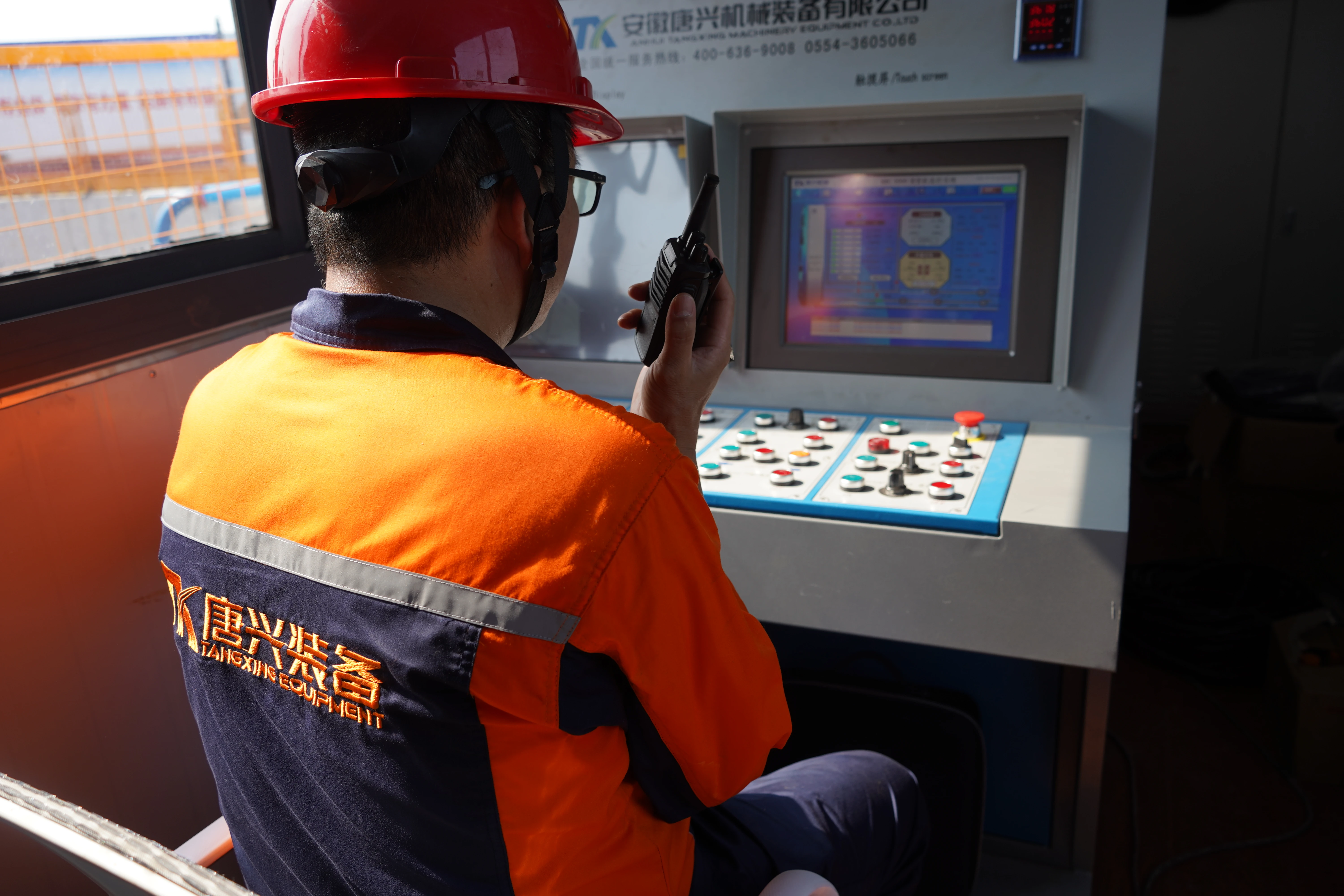
You have to watch the TBM closely in squeezing ground. Real-time monitoring lets you find problems before they get worse. Shield strain monitoring is very important. It uses sensors and computers to check shield pressure and strain. This gives you early warnings about jamming. You can see changes in how the TBM works and act fast.
|
Evidence Description |
Contribution to TBM Jamming Prevention |
|---|---|
|
Real-time monitoring of shield pressure |
Lets you spot jamming risks early by watching changes. |
|
Installation of strain gauges and sensors |
Gives you important data about TBM and rock contact. |
|
Use of computer programs for warnings |
Sends quick alerts if jamming might happen. |
Early warning signs help you guess if jamming will happen. These signs are very good and work well. The table below shows how well these signs do their job:
|
Metric |
Value |
|---|---|
|
0.996 |
|
|
Sensitivity |
1.00 |
|
Specificity |
0.996 |
|
Precision |
0.733 |
|
F1-score |
0.846 |
|
95% CI Sens. |
1.00 |
|
95% CI Spec. |
0.99 |
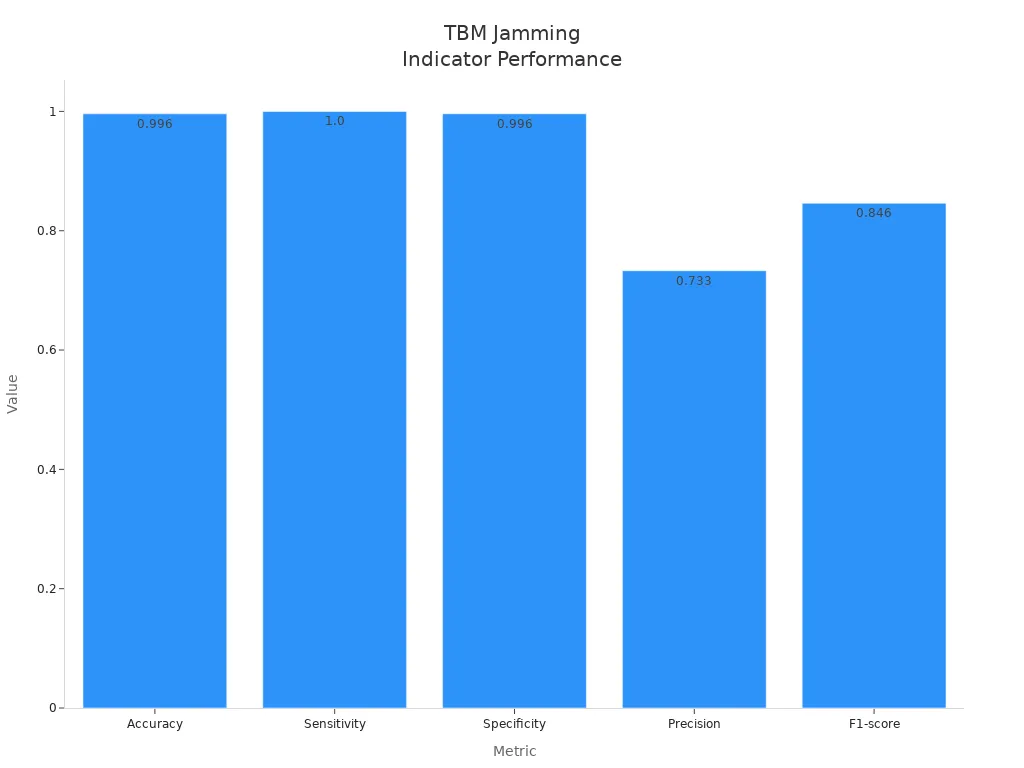
You can make a squeezing index for the ground. This index uses thrust force changes. It also looks at time and tunnel length where squeezing happens. Watching the squeezing index is very important. It helps you find jamming risks early and keeps the TBM safer.
Operational Adjustments and Lubrication
You need to change how the TBM works to stop jams. Changing the advance rate is a big step. If you go slower or faster, you can lower jamming risk. You must know how squeezing affects the TBM. Standstills and creep can make jamming more likely. Always check the advance rate and thrust force when using the TBM.
-
Hasanpour et al. looked at how advance rate changes entrapment risk in squeezing ground.
-
Swannell et al. gave a way to manage geotechnical risks for TBM tunneling in squeezing ground.
-
Mohammadzamani et al. checked thrust force needs for different advance rates in shielded TBMs.
Special tools can help stop jams. Slurry TBMs and grizzly bars work well in squeezing ground. They help keep the TBM safer by stopping blockages and making the TBM work better.
Bentonite is pumped into the annular space to act as a lubricant in squeezing material, which helps to avoid the TBM becoming stuck.
You should use bentonite or other lubricants when using the TBM. Lubrication makes friction less and helps the TBM move easily. This keeps the TBM safer and stops jamming.
Emergency Response and Communication
You need a clear emergency plan for TBM work in squeezing ground. If jamming happens, you must act fast. Train your team to see squeezing and jamming signs. Good communication helps everyone know what to do. You can use alarms and warning systems to tell the team during TBM work.
-
Make emergency rules for TBM work.
-
Keep talking between operators and supervisors.
-
Use warning systems to help people act fast.
You can stop jams and keep the TBM safer by staying alert and ready. Jam prevention works best when you use real-time monitoring, change how you work, and have a strong emergency plan.
Maintenance and Continuous Improvement
Inspection and Maintenance Routines
You keep the TBM safe by checking it often. Regular checks help you find problems early. Fixing them soon stops jams or breakdowns. Always look for oil leaks, hot spots, or odd noises. Take pictures if you see anything strange. Write down every check with the date and what you fixed. This helps you watch the TBM’s health over time.
Here is how different maintenance steps help your TBM work better:
|
Maintenance Aspect |
Impact on Reliability |
|---|---|
|
Regular maintenance |
Makes the TBM work better |
|
Reliability drop after 1.5 hours |
Reliability drops by 40% |
|
Preventive maintenance availability |
Goes up from 61% to 70% |
|
Maintenance frequency |
Stops breakdowns and delays |
You can stop sudden breakdowns by following your schedule. Doing more checks helps the TBM last longer and work better.
Procedure Updates and Training
You should change your routines when you learn new things. After each problem or strange event, look at your steps again. Change how often you do checks if you see a pattern. Track how long the TBM works before it breaks. Try to make this time longer. Watch for fewer breakdowns and less time stopped. Try to finish more planned checks on time.
-
Write down every check you do.
-
Note things like oil leaks or high heat.
-
Take pictures for your records.
-
Track how long the TBM works between problems.
-
Try to have less time stopped.
-
Do more checks before problems happen.
-
Change your schedule if you see a pattern.
-
Listen to your team to make routines better.
You make the TBM safer and stronger by learning from each job and teaching your team new steps.
You can stop TBM jams in squeeze ground by picking the best method. Planning before you start is important. Watching the TBM in real time helps too. Some case studies show bentonite injection works well. Tracking the squeezing index also helps a lot.
|
Key Takeaway |
Description |
|---|---|
|
Squeezing Index |
Thrust force changes help guide TBM use. |
|
Bentonite Injection |
Makes jamming less likely and helps the TBM work better. |
|
Jamming Incidents |
Quick action makes rescue time shorter after jams. |
You should ask CEGC for expert help. Keep making your process better with new tools and training.
FAQ
What is the best way to prevent TBM jamming in squeeze ground?
You should use real-time monitoring and an optimization algorithm. This helps you adjust the TBM quickly and avoid jams.
How do you handle water inflow during tunneling?
You can use water inflow control methods. These include grouting and drainage systems. They keep your tunnel safe and dry.
What does a successful operation look like for a TBM in squeeze ground?
You finish the tunnel on time. The TBM moves smoothly. You avoid jams and delays. Your team stays safe.


