
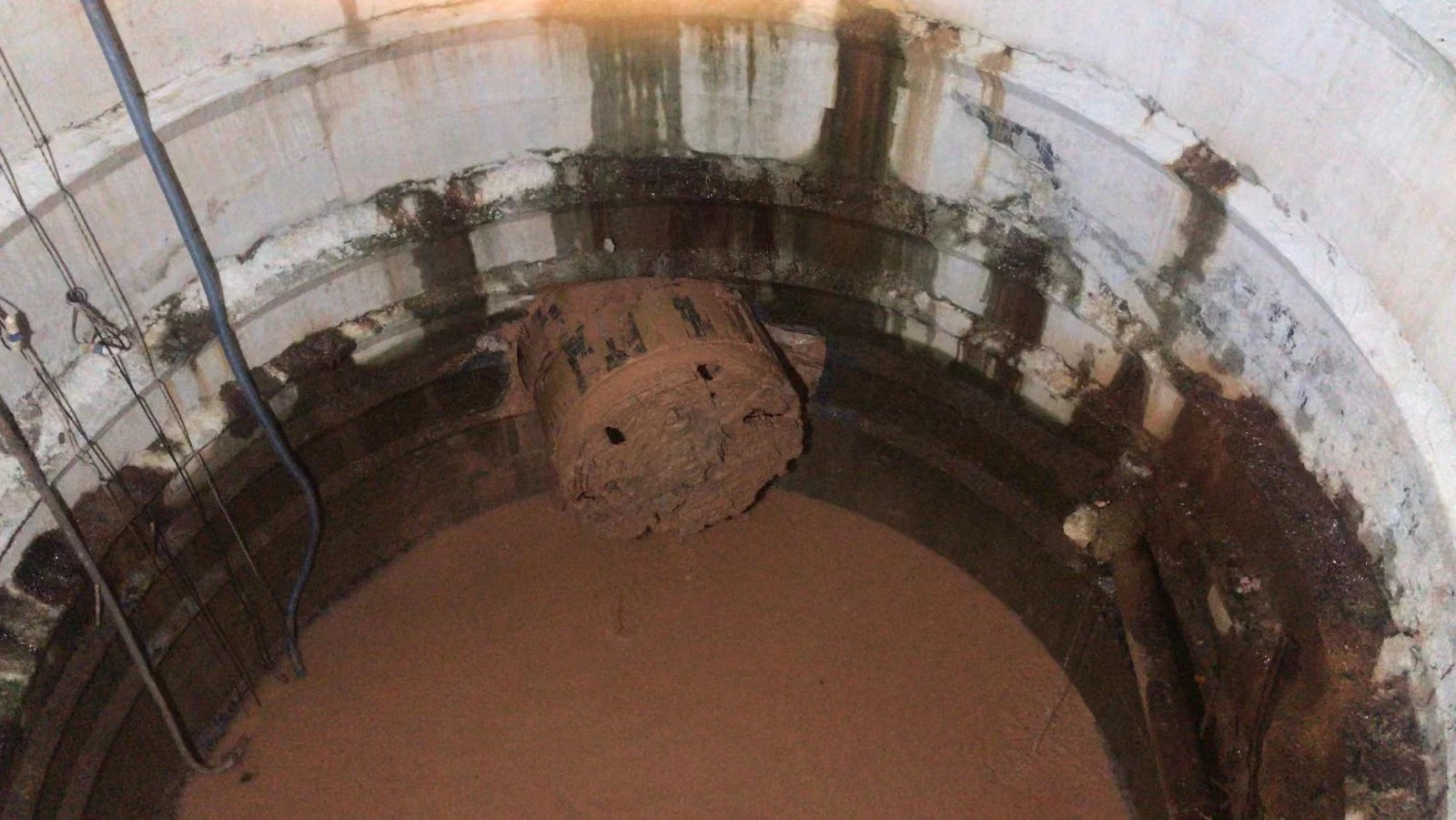
You keep the TBM machine steady in mixed ground by watching it all the time, controlling face pressure carefully, and making the ground better. New studies show that real-time systems can warn you early about sinkhole risks, so you can act fast. CEGC tunnel machine solutions help with these needs using advanced technology and strong performance.
Key Takeaways
-
Watch the TBM machine all the time to keep it steady in mixed ground. Use live data to make fast changes and stop problems.
-
Manage face pressure with care to stop collapses and blowouts. Use strong support systems to keep earth and water pressures balanced.
-
Use grouting and soil conditioning to make weak ground stronger. Pick the best additives for the ground type to keep it stable.
Challenges of Mixed Ground for TBM
Stability Risks and Settlement Issues
You face many challenges when you use a tunnel boring machine in mixed ground. Mixed ground can change quickly. You might see sticky clay, hard rock, sand, or even boulders in one project. Here are some common types of mixed ground you may encounter:
-
Sticky greenish clay with little water, which makes extraction hard.
-
High water pressure with hard clay, silty sand, and gravel.
-
Transitions from clay and sand to hard rock with strong water flow.
-
Rock fragments and andesite deposits that wear down cutting discs.
-
Watery lake clays mixed with basalt and large boulders.
-
Pumice, sand with gravel, lava, and alluvial fans with boulders.
These ground types can cause problems for your tunnel machine. You may see abnormal cutter wear, face instability, and muck transportation issues. The table below shows some main stability risks:
|
Stability Risks |
Description |
|---|---|
|
Abnormal cutter wear |
Mixed ground increases wear on the cutter. |
|
Face instability |
The tunneling face can collapse if the ground is not stable. |
|
Muck transportation problems |
Moving excavated ground becomes difficult. |
|
Ground settlement |
The ground above the tunnel may settle, causing surface issues. |
|
Poor TBM performance |
The tunnel machine may not work as well in mixed ground. |
|
Cost overrun |
Delays and extra work can raise costs. |
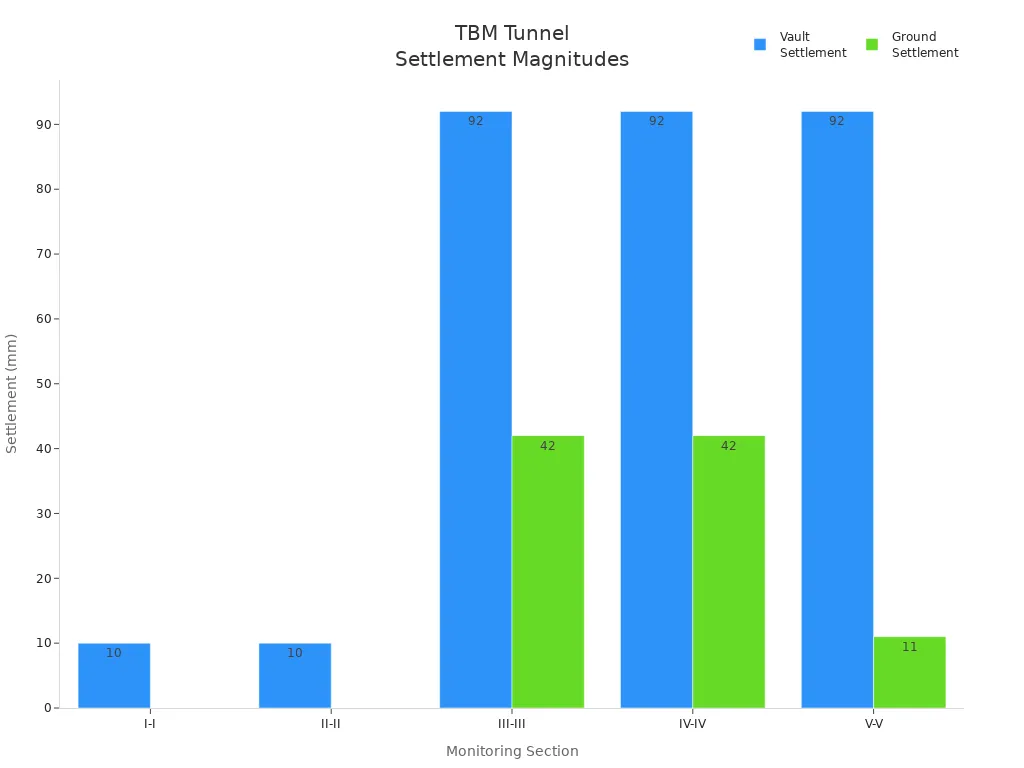
Settlement issues can be serious. In some projects, vault settlement reached up to 92 mm, and ground settlement reached 42 mm. You can see these numbers in the chart below:
Water Ingress and Face Instability
Water in the ground can make your job even harder. High water pressure can push into the tunnel, especially when the ground changes from clay to sand or rock. If you do not control the face pressure, water can rush in and cause the ground to collapse. You must watch for signs of water ingress at all times. When the ground is unstable, you risk losing control of the tunnel face. This can lead to sudden ground movement or even a blowout. You need to use the right support systems and keep the ground stable to avoid these problems.
Keep the TBM Machine Steady in Mixed Ground
Face Pressure and Support Systems
You keep the TBM machine steady by controlling face pressure. You also use strong support systems. Mixed ground has many soil types and water pressures. You must change the face pressure when the ground changes. If you do not control pressure, the face can collapse. Blowouts can also happen. Closed-mode face support helps keep the tunnel face stable. This system lets you set the right pressure for soft or wet ground.
You need to know the ground before you start. You use tests to learn about the ground’s state. These tests help you pick the best support pressure. The table below shows ways to control face pressure in TBM machines:
|
Method |
Description |
|---|---|
|
Characterization of Excavated Ground |
You study the ground to see how it acts and what support it needs. |
|
On-site Testing Procedure |
You test for clogging and compare with machine pressure and torque. |
|
Geological-Geotechnical Characterization |
You look at the material and pick additives for soil conditioning. |
You must check if the tunnel face is stable. If the ground is weak, you add support. This helps balance earth and water pressures. You use the ultimate limit state approach to find the lowest safe support pressure. You balance all settings in mixed face conditions. Good TBM process control systems help you react fast to ground changes. You keep the TBM machine steady by changing pressure and using the right support.
Grouting and Ground Conditioning
You make the ground better by using grouting and soil conditioning. Grouting fills gaps and makes weak ground stronger. You inject grout to stop water and lower settlement. Soil conditioning helps move muck and keeps the tunnel face stable. You add foam, polymers, or bentonite to the ground. These additives change the ground and help keep the TBM machine steady.
You must pick the right conditioning for each ground type. You test the ground and change the mix of additives. You watch for clogging or bad muck flow. If you see problems, you change the recipe. You keep the TBM machine steady by making the ground act the same way every time. This helps you dig and tunnel better.
CEGC’s tunnel boring machine lets you change the soil conditioning interface. You can set the pressure range and sealing design for changing pressure. You use these features to keep the TBM machine steady and dig better.
Real-Time Monitoring and Adjustments
You use real-time monitoring to watch key things and keep the TBM machine steady. You check face conditions, groundwater, ground settlement, and machine performance. You connect this data to machine controls. This lets you automate changes when the ground changes. You use AI guidance and predictive maintenance to tunnel better.
You make changes in real time using predictive models. You change TBM settings when you see new ground behavior. You update models as the TBM moves forward. This helps you match ground conditions and TBM performance. You keep things safe and efficient by acting fast.
You use passive seismic methods to see risks ahead of the cutterhead. These methods use TBM vibrations to make seismic profiles. You spot sudden changes and hidden obstacles before you reach them. Seismic interferometry uses noise to show where different ground layers are. You change TBM operations in real time to keep the TBM machine steady.
Tip: Always watch ground and machine settings. Make changes as soon as you see something new. This keeps the TBM machine steady and lowers risk.
You keep the TBM machine steady by using face pressure control, ground conditioning, and real-time monitoring. You use CEGC’s tunnel machine features to match changing pressure and dig better. You act fast and stay alert to keep your project safe and efficient.
TBM Cutterhead and Operational Best Practices
TBM Cutterhead Selection for Mixed Ground
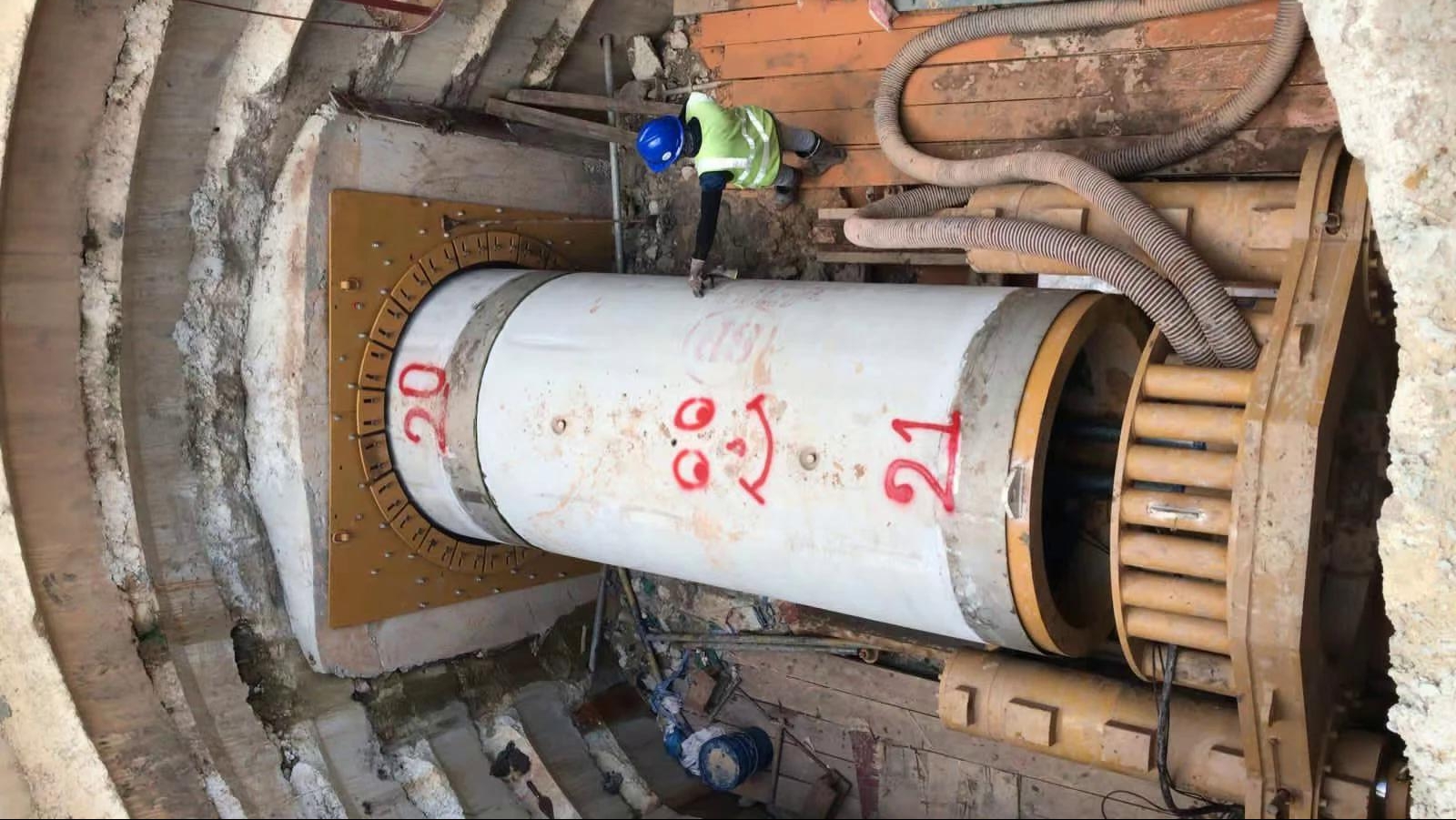
You need to pick the right tbm cutterhead for mixed ground. Mixed ground can change fast, so your cutterhead must work in soil, rock, and water. Think about these things:
-
Soil behavior and rock strength decide how long the cutterhead lasts.
-
Water pressure and how rough the ground is change how the cutterhead works.
-
A pressurized face tunnel boring machine with enough holes stops clogging.
-
Hard rocks need bigger cutters and new tbm cutterhead designs.
Hybrid tbm cutterheads use double disc cutters, precut rippers, and button rippers. This makes the cutterhead last longer and work better. You can swap knife bits in soft and mixed ground. Mixed-face cutterheads let you use disc cutters or knife bits. This means you can match the cutterhead to the ground.
Advance Rate and Thrust Control
You control how fast the tbm moves and how hard it pushes. Changing thrust force helps balance earth and water pressures. You also change screw conveyor speed and how much soil conditioner you add. Watching cutterhead torque and thrust force in real time keeps things safe. Good thrust control stops the face from falling in or the ground from rising. Careful work helps the cutterhead stay steady and work well.
Crew Training and Emergency Response
Crews must be trained to use the tbm cutterhead safely. Employers need to have rescue teams for underground work. Rescue teams must know what the tunnel is like. Training helps crews handle changing ground. Safety lessons and self-rescuer practice get crews ready for emergencies. Good training helps crews do better and keeps the cutterhead safe.
Maintenance and Common Mistakes
You must follow strict rules to keep the tbm cutterhead working. Look at this table for best ways to do maintenance:
|
Maintenance Aspect |
Details |
|---|---|
|
Reliability Analysis |
Ninety percent reliability at 2.64 hours of operation. |
|
Mean Time to Repair (MTTR) |
Average repair time is 5.78 hours. |
|
System Availability |
Overall availability is 67%, can reach 80% with proper maintenance. |
|
Critical Component |
Disc cutter is the most vulnerable part of the cutterhead. |
|
Recommended Strategies |
Schedule preventive maintenance and use skilled manpower. |
Some mistakes are digging too much, not managing face pressure, and not handling mixed ground right. You can avoid these by following rules and watching face pressure. Big rocks can trap the cutterhead, so use the right tools and ways to work. Good maintenance and careful work help the tbm cutterhead stay steady and perform well.
Tip: Always check the cutterhead and follow maintenance plans. This keeps your tunnel boring machine working and helps it perform better.
You keep your TBM machine steady in mixed ground by using smart ways and paying close attention. The table below lists the most important actions:
|
Critical Action |
Description |
|---|---|
|
Uses ground strength and real-time changes to stay stable. |
|
|
Instrumentation and Monitoring |
Gives you live data to help control tunneling work. |
Using technical tools and being careful makes things safer and faster. CEGC’s tunnel boring machine and microtunnelling machine can change for different ground and use AI to work better. Keep teaching your crew and do regular checkups for long-term success.
FAQ
What causes mud build-up on the TBM cutterhead?
You see mud build-up when sticky soil sticks to the cutterhead. This mud can slow down the tunnel machine and lower efficiency. You must clean the cutterhead often.
How do you prevent cutterhead mud build-up during tunneling?
You use soil conditioning to stop cutterhead mud build-up. Additives help keep mud from sticking. You also check the cutterhead for mud and clean it to keep efficiency high.
Why is efficiency important for TBM operations in mixed ground?
You need high efficiency to finish projects on time. Mud and cutterhead mud build-up can slow work. You must manage mud to keep the tunnel boring machine running well.


