
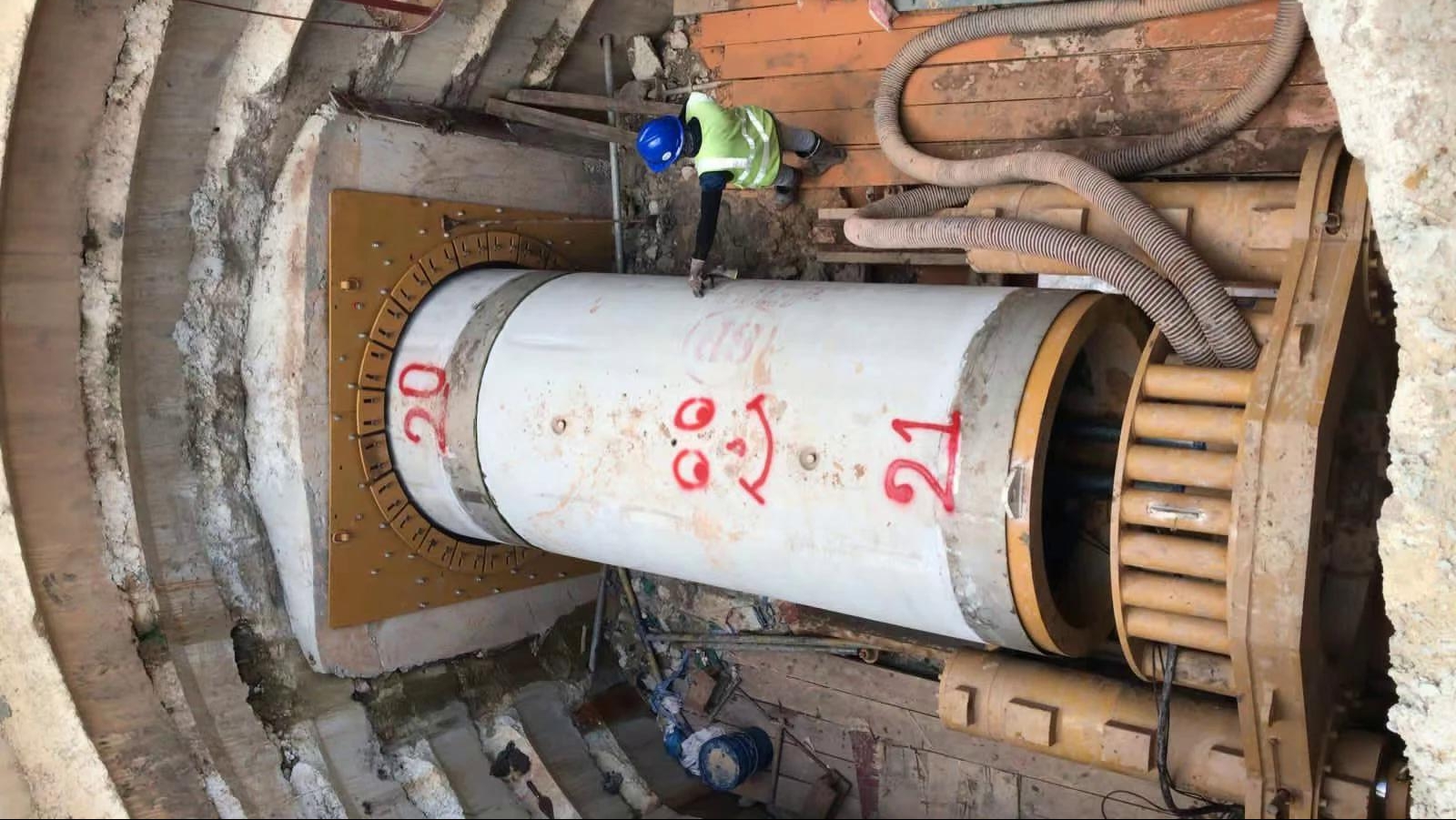
Stability issues hide inside TBM tunnel logs, and if not detected early, they can lead to major problems for your project. By carefully reviewing TBM tunnel logs, you can spot warning signs and address them before costs escalate. Early detection keeps your project safe and helps you save money. CEGC provides advanced tunnel machine technology, supporting you at every stage to ensure stability and project success.
Key Takeaways
-
Check TBM tunnel logs often to find stability issues early. Look at the logs every day to stop small problems from becoming big risks.
-
Follow a step-by-step plan to study tunnel log data. Break the data into parts, look for patterns, and compare with ground conditions to find hidden risks.
-
Use smart analytics and machine learning tools. These tools can spot patterns and strange things in tunnel logs. This helps make the project safer and more successful.
Detecting Stability Issues in TBM Tunnel Logs
Key Log Parameters and Anomalies
You can spot early warning signs by checking TBM tunnel log parameters. Some parameters show problems before they get worse. The table below shows the most important parameters and their order of influence:
|
Parameter |
Influence Order |
|---|---|
|
Sum of motor torque |
1 |
|
Cutter-head power |
2 |
|
Sum of motor power |
3 |
|
Sum of motor current |
4 |
|
Advance rate |
5 |
|
Cutter-head pressure |
6 |
|
Total thrust force |
7 |
|
Penetration rate |
8 |
|
Cutter-head rotational velocity |
9 |
|
Field penetration index |
10 |
You should also watch slurry pressure, working chamber pressure, cutterhead torque, and feedline slurry flow rate. These values can change if the ground is unstable or water enters the tunnel. If you see sudden drops or spikes, there could be a hidden problem.
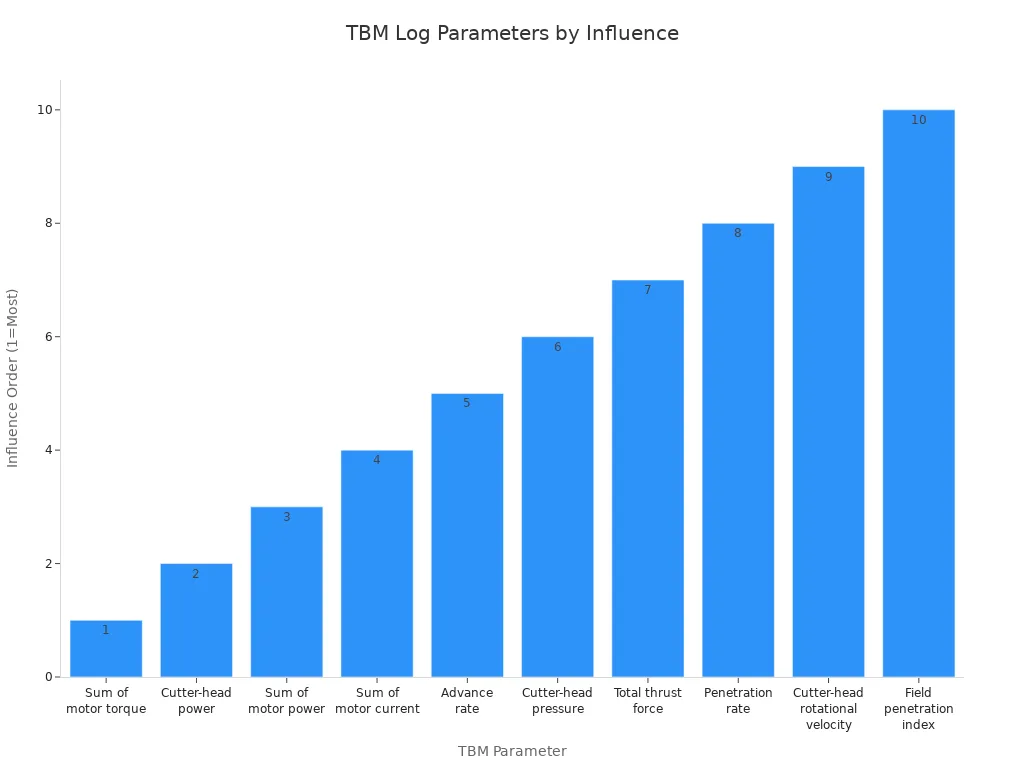
Stability issues hide inside TBM tunnel logs if you do not check these parameters often. You might miss small changes that turn into bigger risks. CEGC’s face pressure control and ground protection systems help keep these values steady and lower the chance of sudden problems.
Systematic Detection Workflow
You need a clear workflow to find hidden risks in tunnel logs. Here is a simple step-by-step process:
-
Segment the Data
Split your log data into sections by tunnel rings, shifts, or ground types. This helps you compare similar conditions. -
Check for Trends
Look for patterns over time. For example, a slow rise in cutterhead torque or a drop in advance rate can signal trouble. Stability issues hide inside TBM tunnel logs if you only look at single points instead of trends. -
Cross-Reference with Ground Conditions
Compare your log data with ground investigation reports. If you see a change in the logs where the soil type changes, you may need to adjust machine settings. -
Use Predictive Models
Machine learning models, like CNN-LSTM, can help you spot early signs of deformation. These models use past data to warn you about possible risks.
Tip: Keep a database of past deformations and incidents. This helps you learn from history and avoid repeating mistakes.
CEGC’s soil conditioning solutions let you adjust the machine in real time. You can respond quickly when you see signs of instability.
Data Preprocessing and Trend Analysis
You must clean your data before you can trust your analysis. Raw TBM tunnel logs often have noise and errors. If you do not fix these, stability issues hide inside TBM tunnel logs and you may miss early warnings.
You can use a moving average method to smooth out sudden jumps or drops in the data. Noise reduction filters help remove strange signals that do not match normal machine behavior. These steps make your trend analysis more reliable.
Trend analysis lets you see how parameters change over time. For example:
-
You can predict rock mass deformation before it becomes a problem.
-
You can use historical data to spot patterns that lead to instability.
-
You can classify risks and act before they cause damage.
Soil conditioning is important for keeping your tunnel stable. By adjusting soil properties, you can control face pressure and muck flow better. This makes it easier to spot and fix problems early. CEGC’s ground protection and soil conditioning systems give you tools to keep your tunnel safe and your project on track.
Stability issues hide inside TBM tunnel logs, but with the right workflow and tools, you can find them before they cause harm.
Advanced Analytics and Common Pitfalls
Pattern Recognition and Machine Learning
You can use advanced analytics to find hidden risks in tunnel logs. Time series analysis helps you guess what might happen underground. LSTM neural networks look at long lists of TBM data. They warn you if the ground starts to change. Anomaly detection methods like Vector Auto Regression, K-MEANS Clustering, Isolation Forest, and Variational Autoencoders help you spot strange patterns. Variational Autoencoders are very good at finding these problems. This matters because stability issues hide inside TBM tunnel logs. Real-time analysis lets you act fast when something goes wrong.
Extreme Learning Machine (ELM) algorithms make detection faster and more accurate. The table below shows how ELM compares to older ways:
|
Feature |
Extreme Learning Machine (ELM) |
Traditional Methods |
|---|---|---|
|
Learning Process |
Fast |
Iterative adjustments needed |
|
Generalization Performance |
Good |
Varies |
|
Identification Speed |
Quicker |
Slower |
|
Training Adjustments |
None required |
Required |
You can use different ELM types together to guess how things will go in different situations. CEGC’s advice and strong cutting systems help with these smart analytics.
Signal Processing Methods
Wavelet Transform Denoising helps remove noise from TBM tunnel log data. This method breaks the signal into parts and puts it back together cleaner. You keep the important details but get rid of random noise. This makes it easier to see when stability issues hide inside TBM tunnel logs. Signal denoising must keep a balance between less noise and keeping good data. Smoothness metrics help you check if the cleaned signal is trustworthy.
Avoiding Interpretation Errors
You need to avoid common mistakes when reading tunnel logs. Faults can make the ground move, collapse, or sink. High hydraulic conductivity brings in mud or water. Clay minerals can block the cutter head. Shallow cover depth makes the ground move more. Mixed ground causes uneven face pressure. Stress during cross-passage digging bends the ground. High water pressure and weathering also make things less stable.
Real examples show how smart analytics find hidden dangers. Time series clustering finds patterns in how tunnels are dug. Principal component analysis and dynamic time warping find hidden links. The Yinsong Water Diversion Project used a Cross-Attention Transformer model to sort rock and make better guesses. These tools help you see when stability issues hide inside TBM tunnel logs. CEGC’s wear management and guidance systems help you deal with these risks.
You make tunnels safer by using smart analytics and careful checks. Artificial intelligence and machine learning can guess how TBM will work and if the ground will move.
Watching TBM tunnel logs closely helps stop damage. If you check often, you can find hidden stability problems early.
|
Feature |
Benefit |
|---|---|
|
Precision Engineering |
Makes tunnels smooth and lowers the cost to finish them. |
|
Minimization of Ground Disturbance |
Works well in busy cities and keeps the tunnel steady. |
|
Shortened Construction Time |
Cuts down building time and helps finish projects faster. |
You get better safety and control with CEGC’s TBM machine and microtunnelling machine systems.
FAQ
What are the most common signs of tunnel instability in TBM logs?
You may notice sudden changes in cutterhead torque, face pressure, or advance rate. These changes often mean the ground is unstable or water is entering the tunnel.
How often should you review TBM tunnel logs for stability issues?
You should check your TBM tunnel logs daily. Regular reviews help you catch small problems before they grow into bigger risks.
Can advanced analytics help you find hidden risks in tunnel logs?
Yes. Advanced analytics and machine learning can spot patterns and trends that you might miss. These tools help you find hidden risks early.


