
Mixed-face rings fail when TBM tunnel control is slow. When workers install rings in mixed ground, the tunnel can become unstable or not straight, increasing the risk of tunnel projects. If the pressure on the face is not even, the face can become unstable. Excessive digging can occur, potentially causing the tunnel to collapse or the ground to sink. The table below illustrates how improper alignment and installation of rings can compromise tunnel safety.
|
Evidence Description |
Impact on TBM Tunnel Performance |
|---|---|
|
If segments are not lined up, there is more pulling force at the bottom and top, making cracks and breaks more likely. |
This severely undermines the tunnel’s strength and safety. |
|
If workers do not fill with peastone grouting after installing segments, the rings can shift and misalign. |
This worsens the work area and increases stress on the rings. |
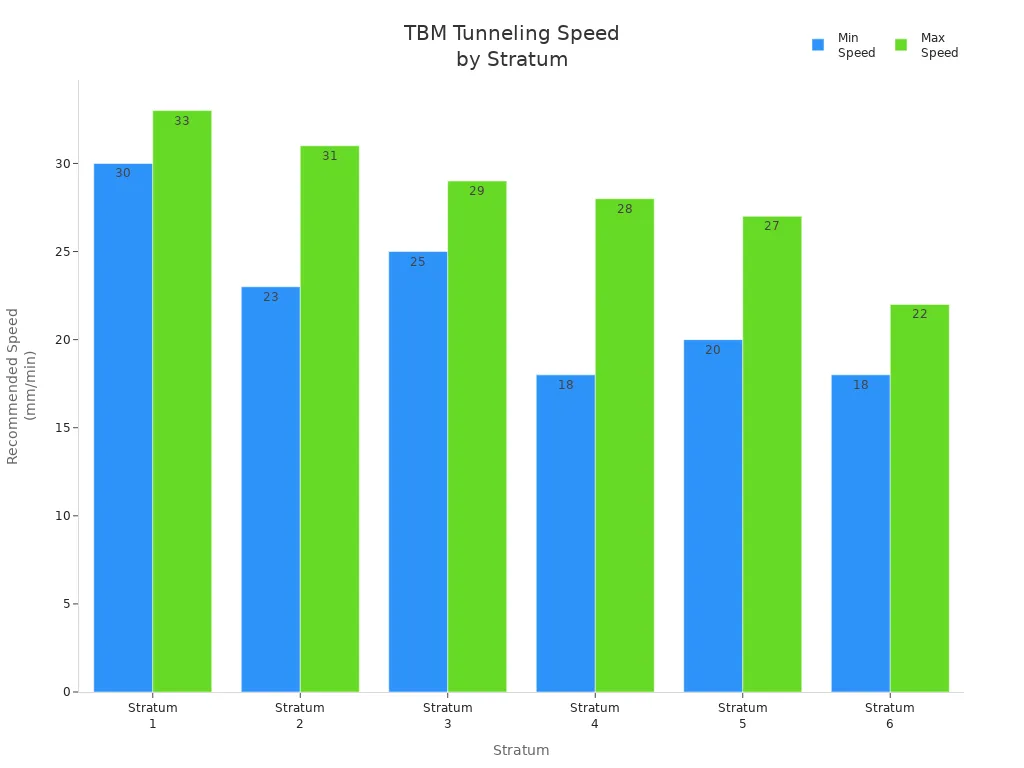
Project owners and builders need to carefully evaluate TBM suppliers to prevent these issues. They utilize computer models to assess how the tunnel machine operates and ensure that the cutterheads are compatible with the ground type. CEGC plays a crucial role by providing superior TBM solutions. The chart below displays the optimal speeds for tunneling in mixed-face ground.
Key Takeaways
-
If the tunnel boring machine (TBM) is controlled slowly, big problems can happen like the tunnel becoming unstable and rings not lining up right. Teams need to watch how the TBM works all the time to keep everyone safe.
-
Picking the best tunnel boring machine and tools for mixed-face ground is very important. Good planning and checking the ground first can stop expensive delays and make the project safer.
-
Fixing and checking TBM parts often is needed. Having extra parts ready helps teams fix problems fast when they come up during tunneling.
Mixed-Face Rings in TBM Tunneling
What Are Mixed-Face Rings
Mixed-face rings are pieces that line tunnels. Workers put them in place when a tunnel boring machine moves through mixed-face ground. This ground has both hard rock and soft soil, or rocks with different strengths. Mixed-face rings help hold up the tunnel as the machine moves forward. They are important for keeping the tunnel safe and steady during tbm tunneling.
Mixed-face ground can have:
-
Hard limestone next to soft shale
-
Places where rock and soil are mixed
-
Spots where the ground strength changes quickly
Tunnel boring machine operators must pick the right ring for each part of mixed-face ground. The right ring helps stop problems like ground loss or tunnel collapse.
Challenges of Mixed-Face Conditions
Mixed-face ground brings many problems for tunnel boring machine projects. The table below lists common problems and what they do:
|
Challenge |
Description |
|---|---|
|
Inability to maintain face pressure |
Hard to keep pressure at the tunnel face, which can cause collapses. |
|
Ground loss |
Losing material from the tunnel face, which can make the ground around it unstable. |
|
Settlements |
Ground moves and can hurt buildings above. |
|
Sinkholes |
The ground can suddenly fall in because of tunneling. |
|
Slow rates of advance |
Tunneling goes slower, which can delay the project. |
|
Rapid tool wear |
TBM tools wear out faster in mixed ground. |
|
Damage to tools |
TBM parts can break and need fixing often. |
|
Frequent interventions |
Workers must do repairs and checks more often. |
|
Clogging |
TBM can get blocked and stop working. |
|
Blow-outs |
Pressure can suddenly escape and cause danger. |
Mixed-face ground can make cutters wear out, jam, or cause the ground to settle. Tunnel boring machine teams use special cutterhead designs and tools to lower these risks. They also need good ground studies to match the machine to the ground. Picking a tunnel machine supplier with skill in mixed-face projects is important. The supplier should know the ground, choose the right tools, and plan for the tough parts of mixed-face ground.
Tip: To succeed, teams must match the tunnel boring machine and its tools to the mixed-face ground. Always check the ground before starting tbm tunneling.
Why Mixed-Face Rings Fail When TBM Tunnel Control Is Slow
Impact of Slow Control on Ring Installation
When the tunnel boring machine moves slowly, big problems can happen. The ground near the tunnel face can move if the machine stops a lot. This makes it hard to keep the tunnel rings in the right place. Workers may have trouble putting the rings where they belong. The tunnel can lose its shape and become weak. Sometimes, the tunnel boring machine does not push the rings evenly. This can make cracks or gaps between the rings. The tunnel is not as strong or safe.
In mixed-face ground, there is both hard rock and soft soil. The tunnel can settle in some places more than others. The rings might tilt or slide out of place. The tunnel boring machine must keep the tunnel face steady. If it cannot do this, the tunnel face might fall in. The tunnel boring machine also needs to keep the tunnel straight. Slow control makes this hard. The tunnel can bend or dip. The rings may not fit together well. The tunnel boring machine might have to stop for repairs. This makes the tunnel even less safe.
Note: Fast and careful control helps keep the tunnel safe. Teams should watch the tunnel boring machine closely and make changes quickly.
Failure Mechanisms and Common Issues
Many things can go wrong when the tunnel boring machine moves slowly in mixed-face ground. The table below shows common problems and what they mean for tunnel projects:
|
Failure Mode |
Description |
|---|---|
|
Cutter wear |
The tunnel boring machine cutters wear out fast in mixed ground. |
|
Jamming of roller cutterheads |
The tunnel boring machine can get stuck and stop working. |
|
Ground settlement |
The ground above the tunnel can sink or move. |
|
Poor TBM performance |
The tunnel boring machine does not work as well. |
|
Cost overrun |
The tunnel project costs more money. |
|
Inability to maintain face pressure |
The tunnel boring machine cannot keep the tunnel face steady. |
|
Ground loss |
Material falls away from the tunnel face. |
|
Settlements |
The ground moves and can hurt buildings. |
|
Sinkholes |
The ground can suddenly fall in above the tunnel. |
|
Slow rates of advance |
The tunnel boring machine moves very slowly. |
|
Rapid tool wear |
The tunnel boring machine tools break or wear out fast. |
|
Damage to tools |
The tunnel boring machine parts get damaged. |
|
Frequent interventions |
Workers must stop the tunnel boring machine for repairs often. |
|
Clogging |
The tunnel boring machine gets blocked by material. |
|
Blow-outs |
Pressure escapes suddenly, causing danger. |
|
Uneven face pressure |
The tunnel boring machine cannot keep pressure even at the tunnel face. |
|
Face instability |
The tunnel face can fall in. |
|
Over-excavation |
The tunnel boring machine takes out too much ground. |
|
Surface settlement |
The ground above the tunnel moves or sinks. |
Some common problems in mixed-face tbm tunneling are:
-
Not keeping face pressure steady
-
Losing ground at the tunnel face
-
The ground moving or sinking
-
Sinkholes forming above the tunnel
-
The tunnel boring machine moving slowly
-
Tools wearing out quickly
-
Damage to tools and other parts
-
Needing repairs often
-
The tunnel boring machine getting blocked
-
Sudden blow-outs
These problems make the tunnel unsafe. The tunnel boring machine may have to stop a lot. The tunnel can become unstable and not stay straight. The tunnel boring machine may need new parts. The tunnel project can take longer and cost more.
Preventing Failures in TBM Tunneling
Teams can stop many problems in tbm tunneling by using good plans. Checking the ground before starting helps teams know what to expect. They can pick the best tunnel boring machine for the job. They can use special machines for mixed ground. Good monitoring tools help teams watch the tunnel boring machine and the tunnel face. Teams can make changes fast if they see trouble.
Picking the right tunnel boring machine and changing it for the ground is important. Teams must make sure the tunnel boring machine works its best. They need to know how the tunnel boring machine and ground affect each other. This helps them avoid problems.
The table below shows how CEGC helps tunnel projects:
|
Service Type |
Description |
|---|---|
|
Project planning, equipment selection, geological assessment, and operational optimization for maximum efficiency. |
Teams should check the tunnel boring machine cutterhead often. They should have extra parts ready. Fast and careful control is very important. Teams should choose a tunnel machine supplier with good support and quick spare parts. CEGC gives these services to help teams do well in mixed-face tbm tunneling.
Tip: Teams that plan well, use the right tunnel boring machine, and fix problems quickly can keep the tunnel safe and finish on time.
Research shows that when tbm tunnel control is slow in mixed-face ground, rings can fail. Different materials in the ground can make the tunnel unstable and wear out cutters fast. Teams need good tbm software, help from experts, and spare parts they can trust. Picking a skilled tbm supplier like CEGC helps keep tbm tunneling safe and working well.
FAQ
What warranty should a tunnel boring machine come with?
A good tbm supplier offers a warranty for 12 months or 2,000 working hours. This protects the project if the tbm has problems during use.
How can teams compare tbm supplier proposals?
Teams should check technical support, after-sales service, spare parts, and project references. They must see if the tbm matches the ground and project needs.
Why is local after-sales support important for tbm projects?
Local support helps teams fix tbm problems fast. Quick help reduces downtime. Teams can keep the tbm running and finish the tunnel on time.


