
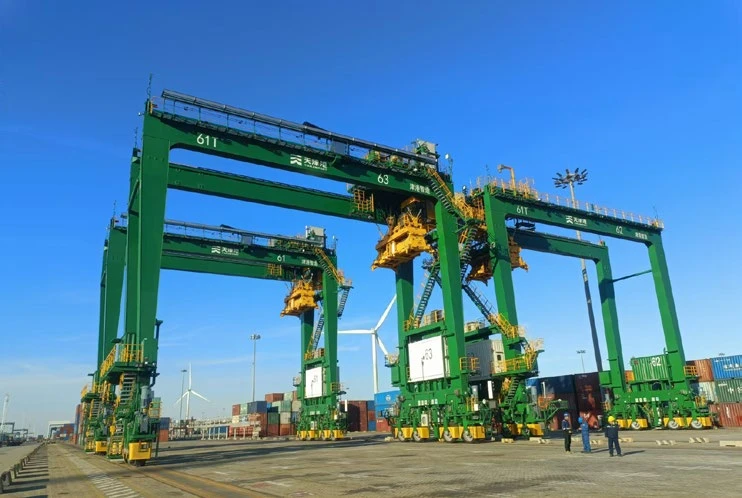
Outdoor crane equipment has big problems at marine terminals. Salt, humidity, and wind cause corrosion. Stopping corrosion is very important for crane operators. The portal crane corrosion plan for coastal terminals helps fight these tough marine forces. Outdoor crane machines at marine sites need strong protection. Saltwater makes corrosion happen faster. Inland terminals also deal with corrosion, but marine terminals have more damage. Outdoor crane parts face heavy loads and bad weather often. Operators use the portal crane corrosion plan for coastal terminals to stop corrosion. Outdoor crane designs for marine use need many layers of protection. CEGC gives solutions that meet market standards. Maintenance teams trust the portal crane corrosion plan for coastal terminals to keep cranes safe. Operators follow prevention steps made for marine conditions. Crane safety gets better when the portal crane corrosion plan for coastal terminals uses special materials and coatings. Engineers make prevention plans that work for every marine job. Owners know only a portal crane corrosion plan for coastal terminals gives full protection. Users get prevention that fits marine needs. Crane systems last longer with a portal crane corrosion plan for coastal terminals. Crane investments stay safe when marine prevention works well.
Key Takeaways
-
Corrosion is a big problem for portal cranes near the coast. Salt, humidity, and wind make it worse. A corrosion prevention plan is very important. It helps keep cranes safe and working longer.
-
Using corrosion-resistant materials helps a lot. Stainless steel and anodized aluminum last longer. Pick materials that can handle tough marine weather.
-
Regular maintenance is very important. This means checking and cleaning cranes often. Do monthly checks to find rust early. This keeps cranes safe and working well.
Corrosion risks in coastal terminals
Environmental factors accelerating corrosion
Coastal terminals have a big problem with corrosion. The air near the ocean has saltwater in it. Saltwater lands on metal and makes it rust faster. The air is very salty, so rust forms quickly. Humidity is high most of the year. This keeps things wet and helps rust spread. When the temperature changes, metal gets bigger or smaller. This can make cracks where rust starts. Waves splash saltwater on cranes and machines. This leaves even more salt behind. Dust and chemicals in the air stick to wet metal. This makes rust even worse. All these things together make it hard for portal cranes and container handling equipment.
-
Saltwater in the air makes more rust on metal.
-
Humidity keeps things wet and helps rust grow.
-
Temperature changes make cracks for rust to start.
-
Waves put saltwater on machines.
-
Dust and chemicals make corrosion worse.
Common pain points for port machinery
Port machinery at coastal terminals has many problems from corrosion. Saltwater causes strong rust on crane arms, joints, and platforms. Rust can hurt battery racks, power systems, and control panels. Electrical parts may stop working when rust builds up. HVAC units and other parts do not work well when rust spreads. Sun, rain, and salty air make metal weak. This can cause parts to break. Cranes lift heavy things every day. Rust makes these parts weaker and more likely to break. If no one checks for rust, machines can fail and accidents can happen. Maintenance teams must fight rust to keep cranes safe and working.
-
Saltwater makes rust on metal.
-
Rust can cause insulation and electrical problems.
-
Battery racks and control panels are at risk.
-
Rust makes crane parts weak and unsafe.
-
Heavy loads and no maintenance make rust worse.
Structural prevention strategies
Corrosion-resistant materials and alloys
Portal cranes at coastal terminals face salt, humidity, and wind all the time. Engineers pick special materials to keep crane structures safe. Stainless steel is good because it does not rust easily. Marine-grade alloys like 316 stainless steel have molybdenum. This helps the steel stay strong in salty water and with harsh chemicals. Aluminum, when anodized, does not peel or wear away like coated steel. Anodized aluminum stays almost the same after long salt spray tests. This makes it great for use near the ocean.
|
Material |
Benefits |
|---|---|
|
Stainless Steel |
Very good at stopping rust, lasts longer, needs less fixing. |
|
Aluminum |
Anodized aluminum hardly changes after 30+ years in salt spray, perfect for marine places. |
Engineers use these strong steels and alloys for crane arms, joints, and platforms. These materials make cranes last longer and need less fixing. CEGC lets operators pick anti-corrosion treatments that fit each job.
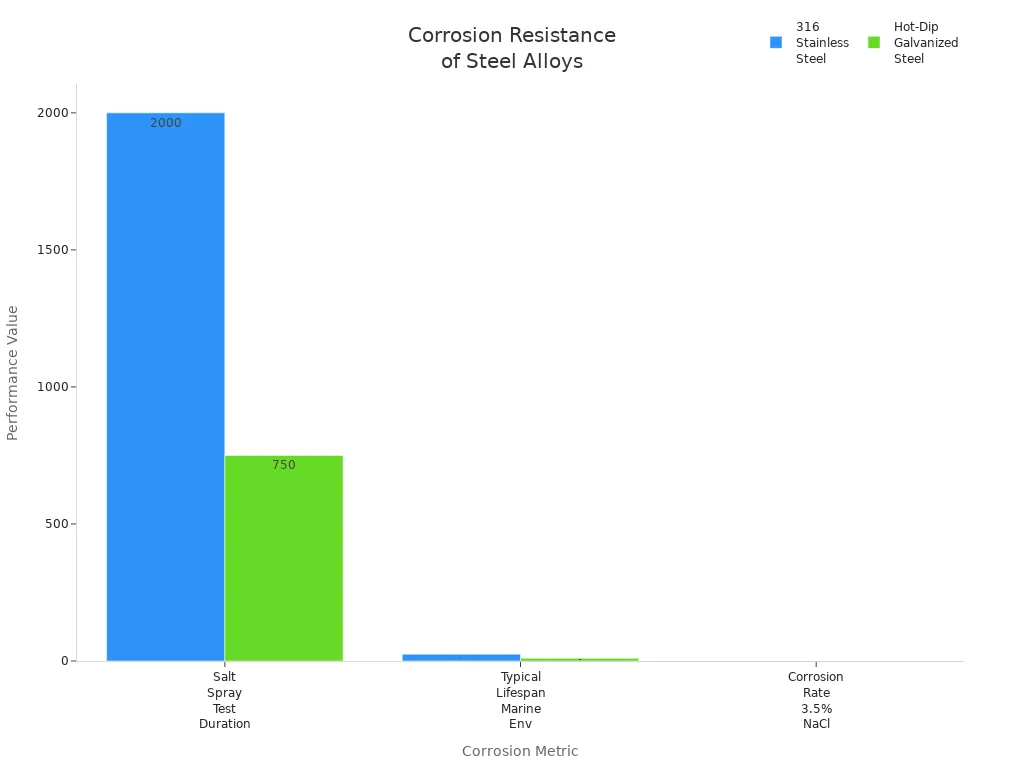
316 stainless steel lasts over 2,000 hours in salt spray tests. Hot-dip galvanized steel gets red rust after 500 to 1,000 hours. Stainless steel has a special layer that fixes itself. Galvanized steel uses a zinc layer that wears away faster. Marine-grade alloys stop pitting and crevice corrosion better than regular steel. These ideas help cranes work well in tough coastal places.
Protective coatings and paints
Protective coatings are important for stopping corrosion. Engineers put high-zinc and epoxy coatings on steel parts. These coatings block water and chemicals from touching the metal. Epoxy coatings stick well and keep saltwater out. Zinc-rich coatings add another shield to slow down rust.
Operators use these coatings on crane arms, platforms, and joints. CEGC’s anti-corrosion system has many coating choices. Teams pick coatings based on how much use and exposure the crane gets. Crews check coatings often to make sure they work. Maintenance teams fix any damaged spots to stop rust from spreading.
Tip: Make sure coatings cover all steel parts. Even tiny gaps can let water in and start rust.
Coatings and paints help cranes last longer. They lower repair needs and keep cranes safe during hard jobs. CEGC’s anti-corrosion treatments meet market rules and can be changed for each terminal.
Galvanization and sacrificial anodes
Galvanization protects steel by adding a zinc layer. The zinc acts as a shield and gives itself up to stop rust. Hot-dip galvanizing puts a thick zinc coat on crane parts. Sacrificial anodes are attached to steel and pull corrosion away from the main metal. These anodes protect ship hulls, crane bases, and other important parts.
-
Sacrificial anodes help ship hulls and crane bases last longer.
-
They keep machines working well by stopping rust that slows them down.
-
Anodes help protect sea life by stopping leaks from rusty parts.
Galvanization and anodes work well with coatings. Together, these methods keep portal cranes strong at coastal terminals. CEGC offers treatments that mix galvanization, coatings, and anodes. Operators can change these systems to fit each crane’s needs.
Structural prevention strategies use strong materials, coatings, and galvanization to protect cranes. CEGC’s anti-corrosion system gives operators ways to fight rust and make cranes last longer. Teams can pick the best treatments for each project.
Mechanical and system safeguards
Sealed components and drainage design
Sealing helps keep water and salt out of important parts. Engineers use rubber gaskets and tight covers on motors and gearboxes. They also use them on electrical boxes. Good drainage lets water flow away from flat spots and corners. This stops puddles from forming and lowers the chance of rust. CEGC makes portal cranes with sealed joints and sloped platforms. These features give extra safety in wet and salty places.
Tip: Check seals and drains often. If drains get blocked or seals crack, water can get in and hurt the equipment.
Lubrication and corrosion inhibitors
Lubrication is important for moving parts. Grease and oil cover metal and stop rust from starting. Corrosion inhibitors add another layer of safety. They make a barrier that keeps out salt and water. Regular lubrication and inhibitors help cranes last longer and work better.
-
It stops wear and damage from rust and dirt.
-
Corrosion inhibitors protect metal from bad weather.
-
Skipping these steps can cause expensive repairs and safety problems.
Maintenance teams use these steps to keep portal cranes and container handling equipment working well.
Anti-sway and safety control systems
Anti-sway systems help operators move loads safely. These systems use sensors and smart controls to stop swinging. Less sway means less stress on crane parts. It also gives better protection from sudden shocks. Overload protection and emergency stop features add more safety. Operator HMI panels show clear alarms and updates. These tools help teams find problems early and keep cranes working well.
Mechanical and system safeguards give strong protection from rust and damage. CEGC gives these solutions to help terminals keep cranes safe and working.
Electrical and hydraulic corrosion prevention
Marine-grade enclosures and components
Marine terminals need strong protection for electrical and hydraulic systems. Saltwater and humidity can cause corrosion fast. Engineers use marine-grade enclosures to keep water and salt out. These enclosures have special gaskets and seals. The gaskets and seals stay flexible and block moisture. Control panels often have NEMA 4 or IP66 ratings. These ratings mean the panels are dustproof and waterproof. Operators check cable glands and conduit fittings to make sure they are tight. They also inspect grounding and bonding systems to lower the risk of electrical shock. Hydraulic pumps, hoses, and cylinders use sealed designs. This keeps out salt and dirt that can damage the system.
-
Look at control panels for corrosion or loose wires.
-
Make sure all gaskets and seals are in good shape.
-
Check cable glands for tightness and sealing.
-
Keep grounding systems working to protect equipment.
Coatings for electrical and hydraulic systems
Coatings give extra protection against corrosion. Zinc and galvanized coatings protect metal by acting as a sacrificial layer. Epoxy coatings are strong against chemicals and moisture. Polyurethane coatings are flexible and help stop cracks. Thermal spray coatings make a tough surface that resists rust. These coatings work well with cathodic protection systems to keep electrical and hydraulic parts safe.
|
Coating Type |
Benefit |
|---|---|
|
Zinc/Galvanized |
Sacrificial layer for hydraulic parts |
|
Epoxy |
Durable and chemical resistant |
|
Polyurethane |
Flexible and crack-resistant |
|
Thermal Spray |
Tough, long-lasting surface |
Inspection and maintenance protocols
Regular inspection and maintenance keep systems working well. Teams look for early signs of corrosion on wires, connectors, and hydraulic lines. They clean and recoat any damaged spots right away. Operators test cathodic protection systems to make sure they work. They also check for leaks and replace worn seals. These steps help prevent breakdowns and keep portal cranes safe at coastal terminals.
Tip: Plan inspections every month to find problems early and avoid expensive repairs.
Maintenance and predictive strategies
Routine cleaning and touch-up
Routine cleaning is very important for portal cranes. Salt, dust, and dirt collect on cranes every day. Workers use clean water to wash crane arms, platforms, and joints. They look for chipped paint or scratches while cleaning. Quick touch-ups stop rust from spreading. Teams put new coatings on small damaged spots before rust grows. This habit keeps cranes safe and looking nice.
Tip: Clean cranes after storms or strong winds to remove extra salt and debris.
Routine cleaning and touch-ups help cranes last longer. They also make it easier to see early signs of damage. CEGC says regular cleaning should be part of every maintenance plan.
Scheduled inspections and monitoring
Scheduled inspections help teams find problems early. Workers use a checklist during inspections. They look for rust, loose bolts, and worn parts. Teams use a standard inspection form to keep records clear. They write notes about any rust or damage. This record helps track changes over time.
-
Teams tag unsafe equipment right away.
-
They decide which repairs are most important.
-
A tracking system schedules the next inspection and checks unfinished repairs.
Monitoring systems check portal cranes in real time. Sensors measure temperature, vibration, and electrical signals. These tools help workers spot changes that could mean trouble. CEGC offers monitoring solutions for different port machines. Regular monitoring and inspections lower the risk of sudden breakdowns.
Predictive maintenance and remote diagnostics
Predictive maintenance uses data to keep cranes running longer. Sensors collect information about how cranes move and work. The system looks for small changes that show early signs of wear. When the system finds a problem, it alerts the team before something breaks. This method helps cranes work longer and lowers repair costs.
-
Predictive maintenance uses real-time data to find problems early.
-
Continuous monitoring helps teams spot wear before it causes damage.
-
This method improves safety and makes container handling equipment last longer.
CEGC’s predictive maintenance and condition monitoring use advanced models to study maintenance logs. These models predict when a part might fail. Teams can plan repairs and order parts before something breaks. One company used remote diagnostics and saw 40% fewer unexpected failures in six months. This shows how predictive maintenance and monitoring can reduce downtime and make cranes more reliable.
Note: Predictive maintenance and remote diagnostics help operators avoid costly surprises and keep portal cranes working their best.
Innovative corrosion prevention technologies
Advanced coatings and cathodic protection
Engineers use special coatings to keep portal cranes safe. These coatings are strong and last a long time. They block salt, water, and chemicals from touching the metal. Teams also use cathodic protection to stop rust early. This method uses sacrificial anodes or electric systems. The system sends a small charge through the metal. The charge makes the metal act as a cathode, so it does not rust. CEGC gives cathodic solutions for many crane types. Teams can pick the right system for their project. Using both coatings and cathodic protection gives extra safety. Many operators trust this technology for long-lasting cranes. The right setup helps cranes last longer and saves money on repairs.
Corrosion sensors and remote monitoring
Digital sensors help teams watch for rust all the time. These sensors check humidity, temperature, and salt on crane surfaces. Remote monitoring lets workers check cranes from anywhere. Real-time data helps teams find rust early and fix it fast. Maintenance checks can change based on sensor results. This saves time and money for the team. Good records help teams plan and see patterns. IoT devices give exact data about the crane’s environment. Collecting data all the time helps with predictive maintenance and makes cranes last longer.
Note: Remote monitoring is helpful for places that are hard to reach or very busy.
|
Feature |
Description |
|---|---|
|
Teams see rust changes fast and can act quickly. |
|
|
Automated Data |
Sensors collect data without people, so results are good. |
|
Remote Accessibility |
Workers can check cranes from far away, even in bad weather. |
|
Cost Reduction |
Smart monitoring saves money by using resources better. |
Customization for project needs
Each port has its own problems. CEGC lets teams pick anti-corrosion solutions for each job. Teams can choose special coatings, weather-resistant finishes, or cathodic systems. Custom coatings help cranes last longer in tough places. Weather-resistant finishes protect against rain, sun, and heat. Cathodic protection can be changed for different crane sizes and jobs. CEGC also gives custom monitoring for remote or busy terminals. This means every crane gets the right protection.
|
Customization Option |
Description |
|---|---|
|
Protects cranes from salt, water, and chemicals. |
|
|
Weather-Resistant Finishes |
Shields against rain, sun, and heat. |
|
Anti-Corrosion Coatings |
Keeps cranes strong and safe in tough marine places. |
CEGC’s project plans make sure each crane gets the best anti-corrosion plan for its location.
A full corrosion plan helps keep portal cranes safe at coastal terminals. Teams use different ways to protect equipment:
-
Cleaning, checking coatings, and using oil stop damage.
-
Using strong materials and sealed parts gives more safety.
-
Sensors and remote checks find problems before they get worse.
|
Standard |
Impact on Corrosion Prevention |
|---|---|
|
Help pick good materials and make sure quality is high. |
CEGC helps every project by giving market rules and special solutions.
FAQ
Why do cranes at coastal terminals rust more?
Salt, humidity, and wind make rust happen faster. Cranes get more damage at coastal terminals than inland ones.
How often do teams need to check portal cranes for rust?
Teams should check cranes once a month. Fast checks after storms or lots of use help find problems early.
Can CEGC make special anti-corrosion plans for each project?
Yes. CEGC can change their plans for each project. Teams can pick coatings, materials, and monitors that fit their terminal.


