
You can get better peak shift results with portal crane: hoist speed tuning for peak shifts by using CEGC port machinery solutions. You may have problems like load sway, changes in cycle time, tough marine conditions, and machine downtime. Look at how different anti-sway systems work:
|
Type of Anti-Sway System |
Effectiveness |
Adoption Rate |
|---|---|---|
|
Mechanical |
Works well in tough conditions |
Used a lot in older places |
|
Electronic |
Very flexible, fits in easily |
Becoming more common in new industries |
|
Hybrid |
Mixes strength and accuracy |
More people use it for upgrades |
Key Takeaways
-
Know how lifting speed and overhead crane speed are not the same. Changing these speeds helps keep work safe and fast.
-
Use anti-sway systems to keep loads steady when lifting. This lowers accidents and makes things safer during busy times.
-
Follow a simple guide to set hoist speed. Make changes often to keep your electric hoist working well and safely.
Crane hoist speed control: basics and challenges
Understanding lifting speed and hoist speed tuning
It is important to know the difference between lifting speed and overhead crane speed. Lifting speed means how fast the electric hoist lifts or lowers a load. Overhead crane speed is how fast the crane moves on its bridge. CEGC container cranes and cargo cranes use both speeds to move things safely and quickly. Hydraulic crane systems need the right lifting speed for heavy loads. When you use an electric hoist, you should check the lifting speed for each job. Hydraulic crane operators change the lifting speed to fit the load and height. This helps stop accidents and keeps things running well. Tuning the lifting speed matters for every electric hoist and hydraulic crane in your port.
Key factors in adjusting the speed of a crane hoist
Many things can change the lifting speed. The main ones are motor power, load weight, gear ratio, and lifting height. The table below shows how each thing changes the lifting speed for an electric hoist or hydraulic crane:
|
Factor |
Description |
|---|---|
|
Motor Power |
More power makes the electric hoist or hydraulic crane lift faster. |
|
Load Weight |
Heavier loads slow down lifting speed so the crane does not get overloaded. |
|
Gear Ratio |
Higher gear ratios give more strength but make lifting slower, which helps with heavy loads. |
|
Lifting Height |
Lifting speed can get slower as the electric hoist or hydraulic crane goes higher. |
You should adjust the speed for each electric hoist and hydraulic crane to keep lifting safe and steady. Overhead crane speed also changes when you make these adjustments.
Common pain points in portal crane operations
There are many problems with crane hoist speed control. Load sway, slow hoist cycle time, and downtime happen a lot. Hydraulic crane operators must watch out for wind and heavy loads. Operator skill is important too.
A good operator knows that even if the crane can reach from a different spot, the load might be too heavy for the crane at that boom length and radius. If you have to use the other set-up area, you will need another crane for the job. An experienced operator can see risks and talk to the project manager, site supervisor, or project engineer to plan the job safely.
The rulebook has a list of jobs from the IUOE that need special skills. These skills are not tested in the certification exam, but the employer can check them. These jobs include checking the equipment, looking at unstable loads, and making choices about wind speed and other things that can change how the equipment works.
The employer must make sure the operator knows how the safety devices, operational aides, and software work on the crane. This can mean using special skills to land or hold a load safely if something stops working during use.
You can use anti-sway systems and cycle-time optimization to fix these problems:
-
Anti-sway systems keep loads steady and safe when lifting speed changes.
-
Cycle-time optimization matches the electric hoist and hydraulic crane movements to the cargo, so there is less waiting.
-
Real-time data and automation help you find problems early and keep hoist cycle time short.
Hydraulic crane downtime often happens because of broken parts or bad weather. Good maintenance planning and speed adjustment can lower downtime and help your electric hoist and hydraulic crane last longer.
Portal crane: hoist speed tuning for peak shifts
Step-by-step guide to optimizing crane hoist performance
You can make portal crane: hoist speed tuning for peak shifts better by following easy steps. Each step helps you get the best lifting speed and keeps your electric hoist safe. Here is a simple guide you can follow:
-
Find the gear or clutch system that controls lifting speed. Look for the gearbox or clutch on your electric hoist.
-
Pick the right gear ratio for your load and speed. A higher gear ratio gives more power but makes lifting slower.
-
Try the new setting by lifting a small load. Check if the electric hoist moves smoothly.
-
Go to the VFD control panel. This panel lets you change how fast your electric hoist lifts.
-
Set the base frequency and voltage. Change these to match the top lifting speed and power you need.
-
Adjust the speed reference on the panel. Choose the lifting speed that works for your job.
-
Set how fast the electric hoist starts and stops. This helps the electric hoist move smoothly.
-
Test and fine-tune your changes. Lift a load and see how the electric hoist works. Make more changes if you need to.
You should do these steps for each electric hoist when you tune for peak shifts. This process helps keep lifting speed safe and steady, even when you need to work faster during busy times.
Adjusting the speed of a crane hoist with VFD and real-time data
You can make portal crane: hoist speed tuning for peak shifts even better by using VFDs and real-time data. VFDs let you change the lifting speed of your electric hoist quickly and safely. Real-time data shows you how your electric hoist is working right now.
-
In car factories, overhead cranes with VFDs move car bodies on curved tracks. This lowers downtime from loads that are not lined up and keeps lifting speed steady.
-
In warehouses, VFDs help electric hoists move goods at the right speed. This lowers damage to goods and makes work faster.
-
IoT sensors collect real-time data on load weight, motor temperature, and part wear. You can use this data to check if your electric hoist needs a change.
-
Predictive analytics tools look at the data and tell you when to do maintenance. This keeps your electric hoist running and stops sudden breakdowns.
-
Remote data analysis lets workers find problems before they go to the site. This saves time and keeps portal crane: hoist speed tuning for peak shifts on track.
You can use these tools to keep changing the speed of a crane hoist during every shift. Real-time data and VFDs help you get the right lifting speed for every load and keep your electric hoist safe.
Safety measures and anti-sway control for peak shift operations
You must always think about safety during portal crane: hoist speed tuning for peak shifts. Anti-sway systems and safety interlocks help you control lifting speed and keep your team safe.
Tip: Use anti-sway systems to keep loads steady. This lowers the chance of accidents and makes lifting speed changes safer.
|
Study Reference |
Findings |
|---|---|
|
Kim et al., 2004 |
Anti-sway control with inclinometer is cheap and works well. |
|
Serkan et al., 2021 |
Motor torque control and VFDs stop load swing and make things safer. |
|
Li & Li, 2023 |
Smart automation moves more cargo at container ports. |
|
Ngo & Hong, 2014 |
Fuzzy-based control makes load handling safer. |
|
CEGC Blog |
Anti-sway and safety interlocks cut drift and accidents. |
|
Overhead Crane Systems |
Mechanical/electronic anti-sway reacts fast to load swing. |
You can also use safety interlocks to keep your electric hoist and portal crane safe:
|
Outcome |
Measurement |
|---|---|
|
Uptime stability |
30–60% fewer nuisance stops |
|
Throughput reliability |
10–25% better shift output |
|
Labor efficiency |
0.5–1.5 labor hours saved per shift |
|
Quality and rework |
20–40% less rework |
|
Audit readiness |
Audit prep time cut from days to hours |
Modern anti-sway technology gives you smart path planning, exact positioning, and load control. These features help you keep lifting speed under control and lower accidents by over 40%. You can also use safety envelope monitoring to stop unsafe moves.
You should also think about marine durability. Salt, humidity, and dust can hurt your electric hoist and slow down lifting speed. Use marine-grade coatings, C4–C5 anti-corrosion systems, stainless steel parts, and sealed electrical systems. These things protect your electric hoist and keep portal crane: hoist speed tuning for peak shifts working well.
Predictive maintenance helps you stop downtime. At Midwest Steel Manufacturing, predictive maintenance cut unplanned downtime by 30% and saved $850,000 a year. You can use IoT sensors and analytics to watch lifting speed and electric hoist health in real time.
You can ask CEGC for standard specs and custom options for your project. You can pick the lifting speed, duty cycle, power solution, and anti-corrosion grade that fits your port. CEGC also offers anti-sway systems, safety interlocks, and real-time monitoring for every electric hoist and portal crane.
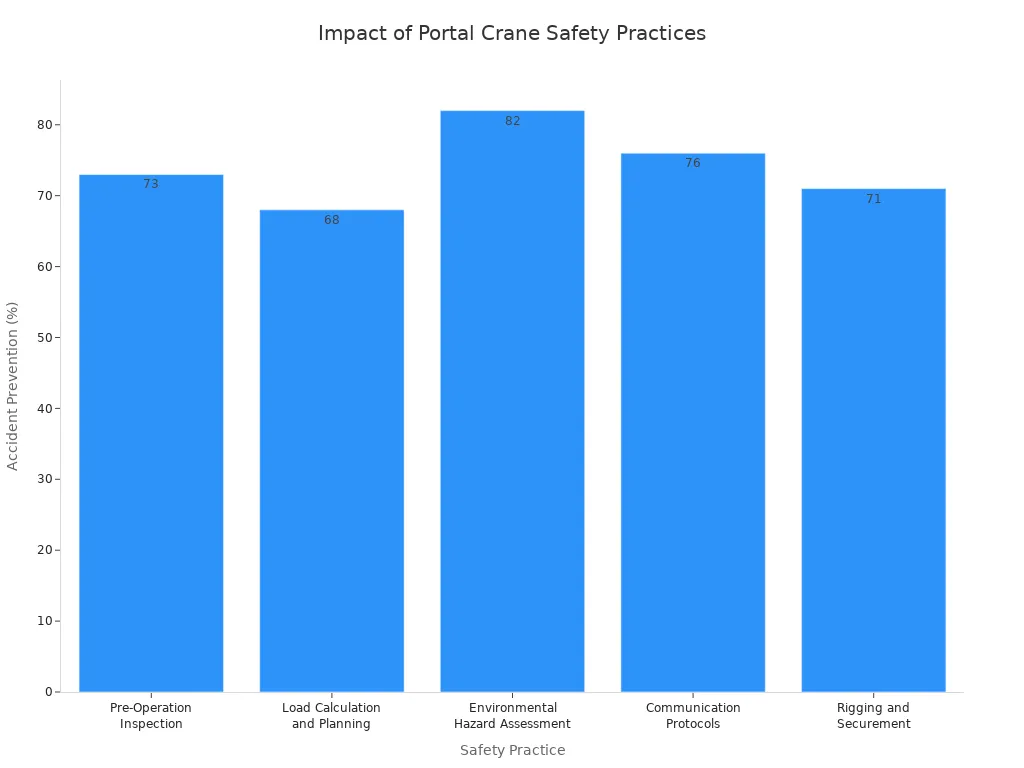
You can help your team work better by using safe steps for portal crane: hoist speed tuning. Always try out any changes and watch the load to keep everyone safe. Look at the table below to see the best ways to stay safe:
|
Safety Tip |
Description |
Impact |
|---|---|---|
|
Comprehensive Pre-Operation Inspection |
Check the crane every day for strong parts, wire ropes, and safety tools. |
Stops 73% of accidents with equipment. |
|
Accurate Load Calculation and Planning |
Make sure you know the exact weight and what the crane can lift. |
Stops 68% of overload problems. |
|
Environmental Hazard Assessment |
Look at the area for dangers and bad conditions. |
Stops 82% of accidents from the environment. |
|
Clear Communication Protocols |
Use clear rules for talking during work. |
Stops 76% of accidents from not understanding each other. |
|
Proper Rigging and Load Securement |
Use the right way to tie and balance the load. |
Stops 71% of problems with the load. |
-
Check the crane often and test the oil to find issues early.
-
Using predictive maintenance, anti-sway control, and strong parts for marine use helps your crane last longer and work well.
FAQ
How do you know if your portal crane hoist speed is set correctly?
You should see smooth lifting, no sudden stops, and little load sway. Check your system’s display for speed settings and alarms.
What is the best way to reduce load sway during peak shifts?
-
Use anti-sway systems.
-
Adjust hoist speed slowly.
-
Train your operators to handle loads with care.
Can you change hoist speed for different loads?
Yes. You can use VFD controls to set different speeds for light or heavy loads. This keeps your crane safe and efficient.


