
You want to boost Reach Stacker throughput: stop wasted travel moves and make your logistics run smoother. Wasted travel slows your logistics and increases costs at your port. CEGC helps you tackle these issues with advanced container handling equipment. You can save time and raise efficiency with the right approach.
Key Takeaways
-
Watch reach stacker operations to find wasted travel moves. Collect data to check how long cycles take and how much fuel is used.
-
Use motion coordination solutions to cut down extra moves. Real-time data helps make routes better and work faster.
-
Spend money on operator training and safety systems. Good training and technology can make work better and lower accidents.
What Are Wasted Travel Moves?
Defining Wasted Moves
Wasted moves happen when a reach stacker takes trips it does not need. These trips do not help your logistics process. For example, the reach stacker may pick up a container and put it in a spot for a short time. Then it moves the container again to where it should go. This extra work uses more time and energy. You can also notice wasted moves when equipment goes empty or repeats the same path for no reason. These actions make your work slower and less efficient.
Tip: You can plan each container’s path before the reach stacker starts. This helps you cut down wasted moves.
Impact on Throughput
Wasted moves affect your throughput right away. If you stop extra handling, your logistics get faster and you save resources. Studies show that rehandles can be 20–30% of all moves in yards without good planning. This causes more fuel use, more labor hours, and delays in your schedule. One case study showed that lowering rehandles from 25% to 10% made yard productivity go up by 12%. Every wasted move you remove helps your reach stacker work faster and keeps your logistics smooth.
Stopping wasted travel moves is important for your port’s performance.
Identifying Wasted Moves in Reach Stacker Operations
Data Collection and Observation
You can find wasted moves by watching reach stackers each day. Manual checks help you spot patterns and see where time is lost. You can also collect data from your machines. This data shows how long each move takes. It shows how much fuel you use. It tells you how often your equipment sits idle. Here is a table with common metrics you can track:
|
Metric Type |
Description |
|---|---|
|
Cycle Time |
Measures the average time taken for a full movement cycle of a reach stacker. |
|
Fuel Consumption |
Evaluates energy efficiency per container movement or operating hour. |
|
Equipment Availability |
Shows the percentage of time a machine is working versus out of service. |
|
Onboard Sensor Data |
Monitors system conditions in real time for predictive maintenance. |
When you use CEGC container handling equipment, you get advanced sensors and data logging. This makes it easier to collect and check important information. You can use these facts to make your logistics better and cut wasted travel.
Technology for Move Tracking
Modern technology helps you track every move your reach stacker makes. Real-time locating systems show where your machines are all the time. Automated tools send the right machine to the right job. These systems help you avoid empty runs and repeated paths. Here is a table of key features:
|
Feature |
Description |
|---|---|
|
Equipment Management |
Allocates and monitors terminal machinery, including cranes and reach stackers. |
|
Real-time Locating Systems |
Monitors equipment positions to prevent idling and improve usage. |
|
Automated Coordination |
Dispatches equipment based on needs, improving efficiency. |
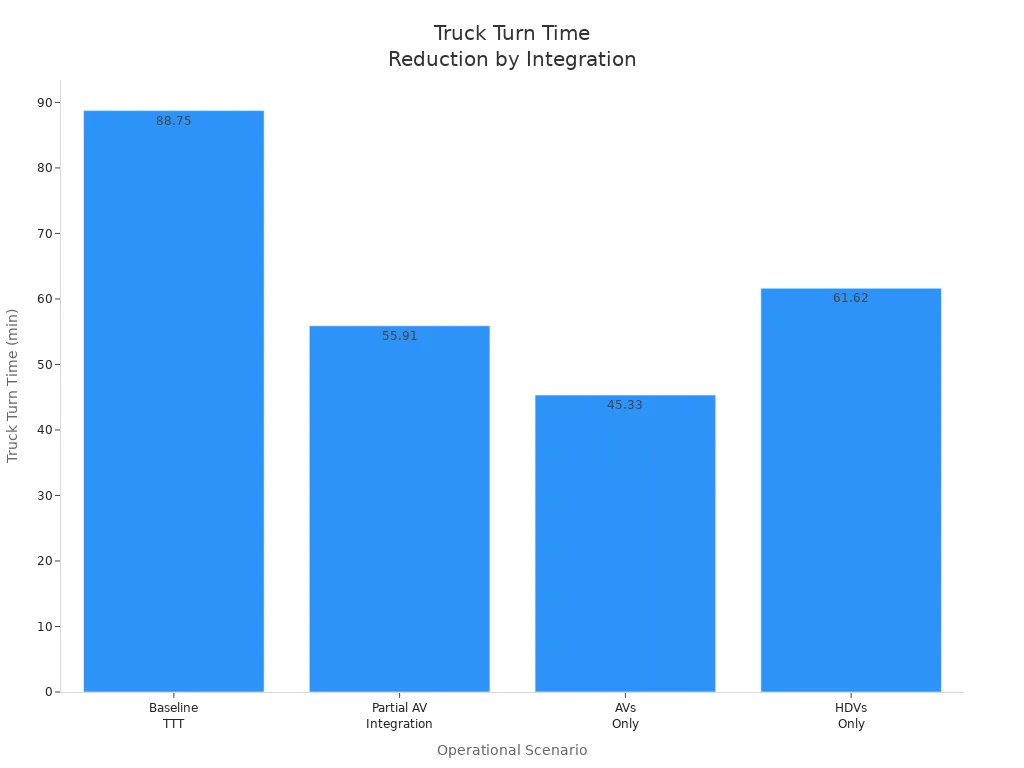
You can also use AI and computer vision to guess container flows and balance workloads. When you connect CEGC equipment with your terminal operation system, you get even better results. The chart below shows how using autonomous vehicles and appointment systems can cut truck turn times and boost logistics performance.
Reach Stacker Throughput: Stop Wasted Travel Moves
Motion Coordination Solutions
You can make reach stackers work better by using motion coordination. Real-time data helps machines know where to go. This means they do not move containers to the wrong place. It also stops extra moves that waste time. Heuristic optimization can cut unneeded moves by 15-25%. You will notice this change in your daily work.
Here is a table that shows how different strategies affect travel moves:
|
Strategy |
Impact on Travel Moves |
|---|---|
|
Real-time data integration |
Minimizes unnecessary relocations |
|
Heuristic optimization |
Cuts unproductive moves by 15-25% |
|
Supply chain synchronization |
Improves retrieval sequencing |
Smart planning helps you guess which containers you need next. This means you do not have to reshuffle as much. If you put containers you use a lot near the gate, you save travel time. Using stacking heuristics with machine learning helps you get containers faster. These ideas help you stop wasted travel moves and make your work better.
CEGC gives you equipment that works with these smart plans. You can set up your system for your yard size and how much you use it. The equipment connects with your terminal operation system. This makes it simple to watch and change your workflow to get the most done.
Note: If you plan hoist, trolley, and gantry moves together, you stop waiting and blockages. This keeps reach stackers moving and helps you work better.
Anti-Sway and Safety Systems
You can make reach stackers even better by using anti-sway and safety systems. Load sway makes it hard to put containers in the right spot. This can cause crashes or make you do moves again. CEGC’s anti-sway control uses special moves and brakes to stop sway. This helps you put containers exactly where you want.
Safety interlocks keep your team safe. Overload protection, limit switches, and emergency stops help prevent accidents. Zone-based collision prevention also lowers accident risk. These features keep your work smooth and your machines ready.
CEGC builds its systems to meet market rules. You can ask for special sensors, safety zones, and extra safety if you need them. The operator HMI shows clear alarms and updates. This helps you train your team fast and keep work steady.
When you use these tools, you waste fewer moves. Your reach stackers work better and safer every day.
Optimize Freight Routes for Efficiency
Freight Route Optimization Techniques
You can make freight routes better with smart planning and technology. Many yards use simple rules like FIFO, but these do not always work if things change. Advanced freight route optimization models help you cut down on travel and keep your plans safe. These models can lower average handling time by up to 18%. You can also use math tools like integer programming and deep reinforcement learning to find the best job order for your reach stackers.
-
Automated routing and dispatch systems help your deliveries go smoother.
-
Route optimization software checks real-time conditions and many factors to make routes better.
-
These tools mean you plan less by hand, so your team can do other logistics jobs.
CEGC’s smart systems use automation and AI to spot slowdowns and send resources fast. This helps you make freight routes better and speed up deliveries.
Task Sequencing and Yard Layout
How you set up your yard and plan tasks changes how much your reach stackers move. A good yard layout makes the space between quay cranes and trucks shorter. This helps you get more done and use less energy. Dynamic assignment lets you use space better and travel less. Automation and AI-based agents watch container moves and give the best tips.
|
Evidence Description |
Explanation |
|---|---|
|
Good yard layout makes transfer distances between quay cranes and trucks shorter |
This helps you get more done and use less energy, which stops wasted travel moves. |
|
Dynamic assignment uses space better and cuts travel distance |
This helps you change when demand changes, so you do not travel for no reason. |
|
Automation and AI-based agents watch container moves |
They give the best tips to balance work, which helps stop rehandles and keeps the terminal running well. |
When you use CEGC’s container handling equipment, you get automation, IoT, and robotics that help with freight route optimization. These tools make your logistics work better and stay steady.
Implementation and Monitoring
Steps for Deployment
You can make reach stacker work better by following a simple plan. First, write down and check your current process. Watch every step from when a truck comes to when it leaves. This helps you find where wasted travel happens. Next, use a mobile workstation with on-demand printing. This makes truck and pallet work faster and easier. Then, look at more than just barcodes. Check other parts of your warehouse to find new ways to work better. After that, fix your warehouse layout. Use good racking and ABC slotting. Put fast-moving items close to shipping areas. This cuts travel distance and helps you control traffic.
Tip: When you set up your system, always try to stop empty moves and use fuel better.
KPIs and Continuous Improvement
You need to watch the right KPIs to see if your changes help. Focus on these:
-
Vehicle Utilization: See how much time reach stackers work instead of waiting.
-
Empty Miles Ratio: Check how often machines move without containers. Lower numbers mean better logistics and less wasted fuel.
Predictive maintenance and condition monitoring help you keep getting better. You can use real-time data and alerts to find problems early. AI tools learn from old data and help you plan repairs at the best time.
|
Aspect |
Benefit |
|---|---|
|
Unplanned Downtime |
Cuts surprise equipment failures, so machines are ready more often. |
|
Maintenance Scheduling |
Helps you pick the best time for repairs using real data. |
|
Makes reach stackers work better and last longer. |
Watching your system all the time brings long-term good results. You get better efficiency, safer work, and more reliable machines. This keeps your logistics running well every day.
Overcoming Challenges
Change Management
When you start new reach stacker rules, some people may not like it. They might worry about how their work will change. You can help by letting your team join in the process. Ask them for ideas and listen to what they say. This makes them feel important and helps them accept the changes. Give clear training so everyone learns new skills. Use help desks and guides to answer questions during the change. Make a plan with easy steps, goals, and a timeline. This keeps everyone working together. Celebrate small wins to keep your team happy.
-
Let workers help make changes so they agree with them.
-
Listen to what workers say to help them feel in charge.
-
Give training and help so workers feel sure of themselves.
-
Set clear goals and celebrate when you reach them.
These actions help you build a strong team ready for better logistics.
Safety and Training
You need good training to keep your team safe and skilled. Motion-platform simulators let operators practice in a safe place. These tools give real feedback, so operators learn how to move and control machines. Immersive training helps your team do hard jobs and make fewer mistakes.
|
Evidence Description |
Key Benefits |
|---|---|
|
Motion-platform simulators help operators get better and safer. |
Less machine damage, more safety, better skill learning. |
|
Real feedback helps build muscle memory and awareness. |
This is needed for good crane work. |
|
Immersive training helps people learn skills faster. |
It makes them better at seeing space and reacting quickly. |
CEGC’s operator HMI makes work safer and easier. Anti-sway control keeps loads from swinging. Safety interlocks stop overloads and crashes. Clear alarms and updates help your team learn and act fast. With these tools, you can run logistics with fewer mistakes and more confidence.
You can help reach stackers work faster if you stop wasted travel moves. Using smart technology also helps a lot. Real-time data lets you see what is happening right away. Watching your machines all the time makes your logistics better. The table below shows how CEGC’s systems make your work easier and more reliable.
|
Benefit |
Description |
|---|---|
|
Makes moving containers faster for better logistics. |
|
|
Predictive Maintenance |
Stops breakdowns and keeps everything working well. |
FAQ
How can you reduce wasted travel moves with reach stackers?
You can plan smart and use technology. This lets you see every move the reach stacker makes. You can find trips that are not needed and stop them. This makes your logistics faster and better.
What role does automation play in logistics efficiency?
Automation helps you move containers quicker. It makes the work smoother and cuts down on mistakes. When you use automated systems, your logistics get better.
Why is operator training important for reach stacker performance?
Operator training teaches you how to avoid mistakes. You learn how to handle reach stackers safely. You also get faster at your job. This helps the whole yard work better.


