
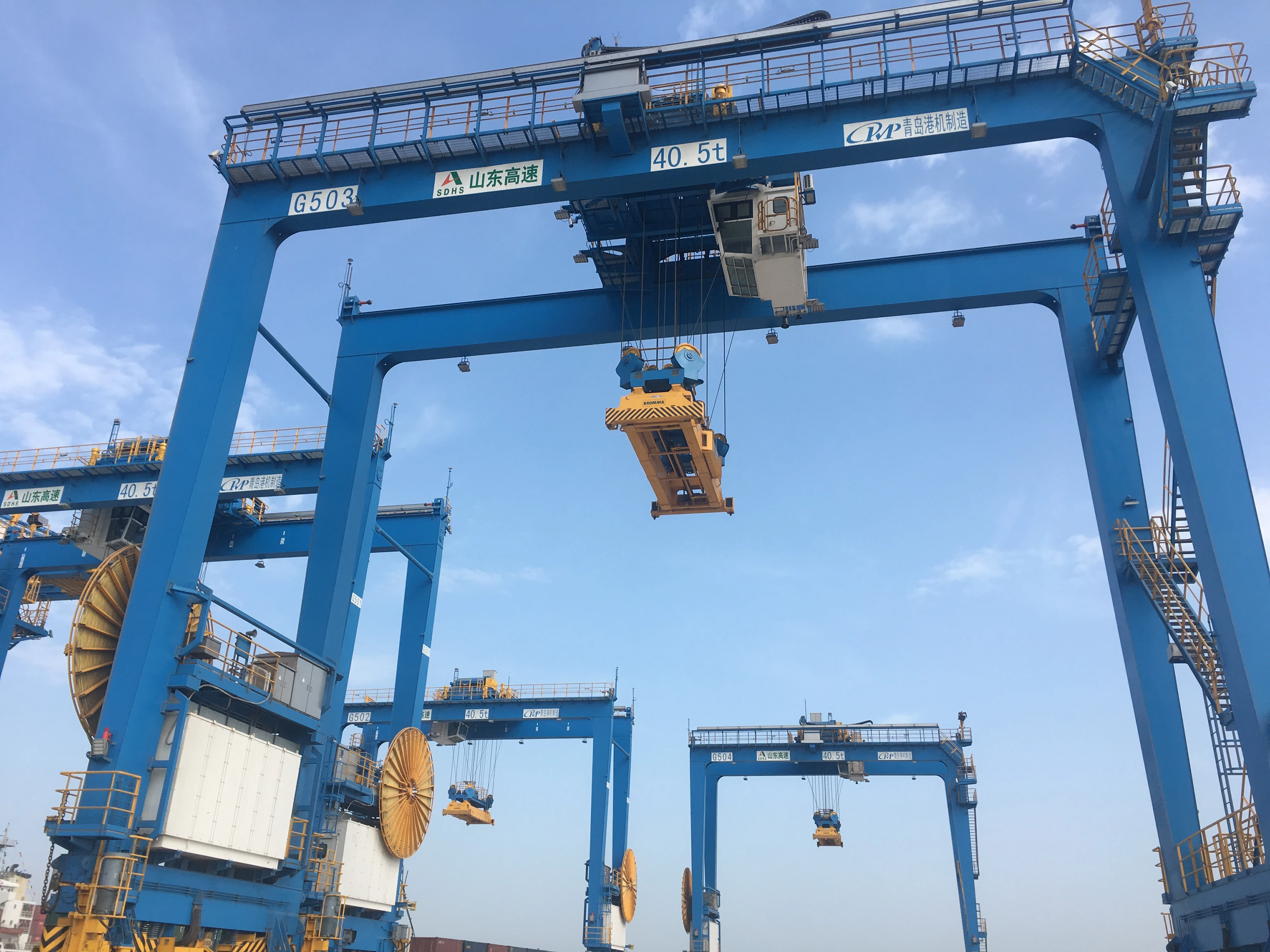
You might think that cargo crane throughput—faster is not always more—always means more work done at your terminal. Many people believe that using more cranes or making them faster always helps. But in real life, there are limits like how close cranes can be, safety spaces, and slow spots on land.
-
Terminal operations cannot work without limits.
-
More cranes do not always mean more work gets done.
-
Making cranes faster without fixing slow spots can cause more trouble.
CEGC provides port machinery that meets market standards and can be customized to fit your needs. These machines help you address these real-world challenges, ensuring that cargo crane throughput is optimized for your terminal’s unique requirements.
Key Takeaways
-
Cranes that move faster do not always get more done. Things like crowded yards and equipment waiting can make work slower.
-
Look at how the whole terminal works, not only crane speed. When cranes, yard machines, and trucks work well together, work gets done faster.
-
Use tools like anti-sway systems and smart maintenance to make things safer and better. These tools help lower dangers and keep work going without problems.
Understanding Cargo Crane Throughput and Terminal Productivity
What is cargo crane throughput?
Cargo crane throughput means counting how many containers a crane moves each hour. This number tells you how fast cranes load and unload ships. Most ports use something called Gross Crane Rate. It shows the total moves per hour, including loading and unloading. Modern terminals try to reach about 30 moves per hour for big container ships. Some ports, like the Port of Melbourne, can get up to 31 moves per hour when things go really well.
|
Metric |
Description |
|---|---|
|
Gross Crane Rate |
Number of container moves a crane completes per hour, including loading and unloading. |
|
Target Rate |
Around 30 moves per hour per crane on large vessels. |
|
Benchmark Example |
Port of Melbourne noted a benchmark of 31 moves per hour for efficient operations. |
Top ports around the world often do more than 30 moves per hour on ships bigger than 8,000 TEU. This proves that crane speed matters a lot for handling large ships.
Defining terminal productivity
Terminal productivity means how well your terminal moves containers from ship to shore and through the yard. It is not just about crane speed. You also look at yard space, how you use equipment, and how fast containers leave the terminal. Operators use important numbers to check terminal productivity:
-
Yard utilization shows how much space you use without making things crowded.
-
Gate moves per hour tell you how quickly containers go in and out.
-
Equipment utilization rate shows how well you use cranes and other machines.
-
Dwell time measures how long containers stay at your terminal.
Good management, training, fixing machines before they break, and using robots all help make terminal productivity better. CEGC gives you port machines that work well and can be made to fit your project. You can pick the right size, how much automation you want, and how strong the machines are for your terminal.
Why Faster Cargo Crane Throughput Is Not Always More
Bottlenecks beyond crane speed
You might think faster cranes always move more containers. But cargo crane throughput: faster is not always more. Other things can slow down your terminal, even with fast cranes. Yard congestion, vessel stowage, and equipment cycle times can limit how much faster cranes help. If the yard is full or trucks are slow, cranes must wait. This waiting time makes faster cranes less useful.
Here is a table showing common bottlenecks that can limit the effectiveness of faster cranes:
|
Bottleneck |
Description |
Impact on Operations |
|---|---|---|
|
Vessel Turnaround Time |
Sets the daily pace at the quay. |
Less throughput; 10% drop can boost throughput by 8%. |
|
Yard Congestion |
Causes stacking problems and extra moves. |
Raises operational costs. |
|
Gate Delays |
Makes long truck lines and idle workers. |
Lowers overall efficiency. |
You must look at the whole system, not just crane speed. Equipment dispatching, yard planning, and teamwork between quay cranes, yard cranes, and transport vehicles matter a lot. If you do not manage these well, bottlenecks will slow down your terminal.
Crane productivity vs. terminal productivity
You may see cranes moving faster and think your terminal is better. But cargo crane throughput: faster is not always more. Crane productivity counts how many containers a crane moves each hour. Terminal productivity checks the whole process, from ship to yard to gate. Sometimes, faster cranes do not help if other parts cannot keep up.
Let’s compare the two:
|
Factor |
Impact on Crane Productivity |
Impact on Terminal Productivity |
|---|---|---|
|
Containership Size |
Negative |
Negative |
|
Yard Congestion |
Main factor |
Affects total productivity |
If the yard is crowded, cranes must wait for space. This waiting means faster cranes do not always help the terminal. You need to balance crane productivity with yard flow, equipment cycle times, and vessel stowage plans. CEGC helps by offering container handling equipment and container gantry cranes that fit your needs.
You may also face problems like load sway, safety risks, and cycle time changes. When cranes move too fast, load sway makes it hard to place containers right. This raises the risk of crashes and slows things down. Operators get tired faster, which leads to mistakes and lower productivity. CEGC’s anti-sway and safe lifting control systems help lower these risks. These systems use motion profiles and safety interlocks to keep things stable and safe.
Coordination and process integration
You need more than fast cranes to get high productivity. Coordination and process integration are important. If quay cranes, yard cranes, and transport vehicles do not work together, you will see delays and idle time. Cargo crane throughput: faster is not always more if your workflow is not connected.
-
Efficient yard flow helps avoid waiting at the quay.
-
Good teamwork between cranes and yard equipment cuts idle time.
-
Real-time tracking and AI systems can predict truck arrivals and improve gate resources.
When you use integrated systems, you make operations smoother and improve data management. This helps you find problems and fix them fast. CEGC supports workflow integration with container handling gantry cranes and ship loading systems that connect with your terminal’s digital platforms. These solutions help keep all parts of your operation moving well.
Tip: Focus on the whole process, not just crane speed. Try to improve coordination and process integration to get the best results for your terminal.
Technical Solutions for Stable Terminal Productivity
Anti-sway and safe lifting systems
You deal with real problems like load sway and safety risks. Anti-sway systems help cranes keep loads steady. These systems use sensors and smart controls to stop loads from swinging. This makes crane moves safer and more predictable.
The Active Sway Control feature stops load sway by itself during crane work. It checks the rope angle all the time, which makes things safer and helps cranes work faster.
When you cut down on sway, you can work faster. Load sway can take up to 30% of move time. Active Sway Control lowers crash risks and makes things safer. Stopping sway also means your equipment lasts longer.
Cycle-time and motion optimization
You want to make your terminal work better and faster. If trucks move in and out quickly, you get more work done. Handling more trucks well means higher productivity. Good service helps goods move on time.
Real-time monitoring gives you fast updates and helps control sway. These systems lower crash risks and help cranes work better. Upgrading cranes with new drives or energy-saving systems uses less power but keeps speed high.
Predictive maintenance and energy efficiency
You can stop surprise breakdowns with predictive maintenance. Smart sensors and monitors find problems before things break. This lets you fix things when it is not busy, so work does not stop and you save money.
Smart sensors and monitors find problems early, so you can fix them before things break. This cuts down on surprise stops and keeps ships and terminals working longer.
Electric or hybrid machines use less energy and are quieter. They help you follow green rules and work better. CEGC lets you pick machines that fit your needs. You can handle different cargo and jobs, which helps you work better and faster.
You make your terminal work better by looking at more than crane speed. Good management helps everyone do their job well. Training operators makes them safer and faster. Safety upgrades keep workers safe. CEGC gives you solutions that fit your needs. These solutions help you fix slow spots and check how machines are working. You get steady performance and safer work at your port.
FAQ
How does crane performance affect terminal operations?
When cranes move containers fast and safe, things get better. This helps ships load and unload faster. It also means ships spend less time at the port.
What is grab cycle speed, and why does it matter?
Grab cycle speed tells how fast a crane grabs and moves cargo. If the grab cycle speed is faster, jobs finish sooner. This makes the whole terminal work better.
How can you improve loading and unloading productivity?
You can make loading and unloading better by using smart control systems. Training operators helps too. Planning how the yard works also helps. These steps cut down on waiting and make things run smoother.


