
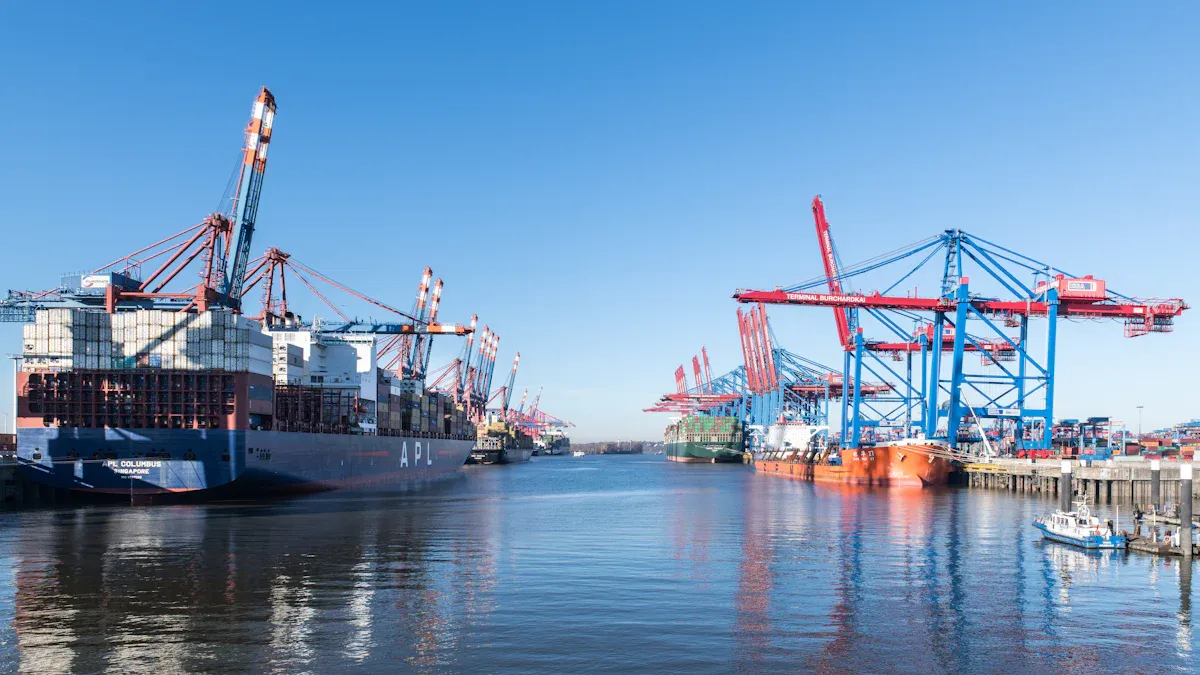
When you look at container gantry crane throughput, you’re measuring how many moves per hour your operation achieves. Typically, container gantry crane throughput ranges from 25 to 40 moves per hour, with some high-performing ports reaching up to 41 moves per hour. CEGC container handling equipment is designed to help you raise moves per hour, making your operations faster and more efficient. With CEGC, you can overcome challenges such as load sway, slow cycle times, corrosion, and unexpected downtime. Our technical solutions are engineered to address these issues, ensuring your container gantry crane throughput continues to improve.
Key Takeaways
-
Container gantry cranes usually do 25 to 40 moves each hour. More moves mean ships leave faster and ports work better.
-
Teaching operators and using good methods can raise moves per hour a lot. Safety and learning new skills help cranes work their best.
-
Adding new technology, like anti-sway systems and predictive maintenance, makes things safer and cuts down on waiting time. This helps the cranes work better.
Container gantry crane throughput: raise moves per hour
What is a container move?
A container move happens when a crane picks up a shipping container and puts it somewhere else. The crane might move the container from a ship to the dock, from the dock to a truck, or between stacks in the yard. Most ports now use Optical Character Recognition (OCR) technology to watch every move. Cameras on the crane read the container’s code and send it to the Terminal Operating System right away. The system checks the container’s type, size, and if there is any damage. This gives you exact records for each move. It helps you run your operation well and keeps things smooth.
Typical throughput ranges
Container gantry crane throughput: raise moves per hour is very important for your port. Most container gantry cranes do between 25 and 40 moves per hour. Some top terminals can reach 41 moves per hour at busy times. These numbers show how efficient ports can be. Big companies like CEGC, ZPMC, Liebherr, and Konecranes make their cranes to meet or beat these numbers. You can see how brands compare in the table below:
|
Manufacturer |
Throughput Performance |
Reliability |
Notes |
|---|---|---|---|
|
CEGC |
High |
High |
Customizable, market-standard |
|
ZPMC |
High volume |
Moderate |
Lower upfront costs |
|
Liebherr |
Moderate |
High |
Long-term investment focus |
|
Konecranes |
Moderate |
High |
Modular maintenance |
|
MAC PORT |
High-speed operation |
Moderate |
Port-specific designs |
|
Demag |
Moderate |
High |
Precision engineering |
You should try to keep your throughput steady in this range. Higher throughput means ships leave faster, you pay less for waiting, and you use your port better.
Factors affecting throughput
Many things can change container gantry crane throughput: raise moves per hour. You need to think about both technical and weather problems:
-
Load sway: If a container swings, it is harder to put it down right. This slows you down and can cause accidents.
-
Wind and weather: Strong wind can make containers swing and make crane work unsafe. Most cranes have wind monitors to warn you when it is too risky.
-
Operator skill: Skilled operators move containers faster and safer. If operators have different skills, throughput can change.
-
Cycle time variation: If crane moves are not timed well, you get delays between lifts. This lowers moves per hour.
-
Corrosion and maintenance: Salt, wet air, and dust can hurt crane parts. Regular care and anti-corrosion tech keep your cranes working well.
-
Unexpected downtime: If equipment breaks, your work stops. Predictive maintenance uses sensors and data to find problems early and fix them during slow times.
You can fix these problems with new technical solutions. Anti-sway systems and motion software help you move containers faster and safer. These tools lower operator stress, help with accuracy, and keep work steady. Special coatings and stainless steel parts protect cranes from rust. Predictive maintenance tools help you stop surprise breakdowns.
Tip: If you use predictive maintenance, you can cut non-productive moves by up to 25%. This saves fuel, lowers labor costs, and helps your cranes last longer.
Here is a summary of how technical solutions help container gantry crane throughput: raise moves per hour:
|
Benefit |
Description |
|---|---|
|
Enhanced operational safety |
Makes crane work less risky |
|
Lets you do more moves per hour |
|
|
Reduced cycle times |
Makes each lift take less time |
|
Improved positioning accuracy |
Helps put containers in the right spot |
|
Lower maintenance and wear |
Means less downtime and fewer repairs |
|
Greater suitability for automation |
Makes it easier to use automated systems |
When you pick CEGC container handling equipment, you get strong performance and can choose what fits your project. You can pick the right size, span, duty cycle, power, anti-corrosion level, and automation for your needs. This helps you get the most container gantry crane throughput: raise moves per hour and keeps your port working well.
Improving moves per hour
Operator training & best practices
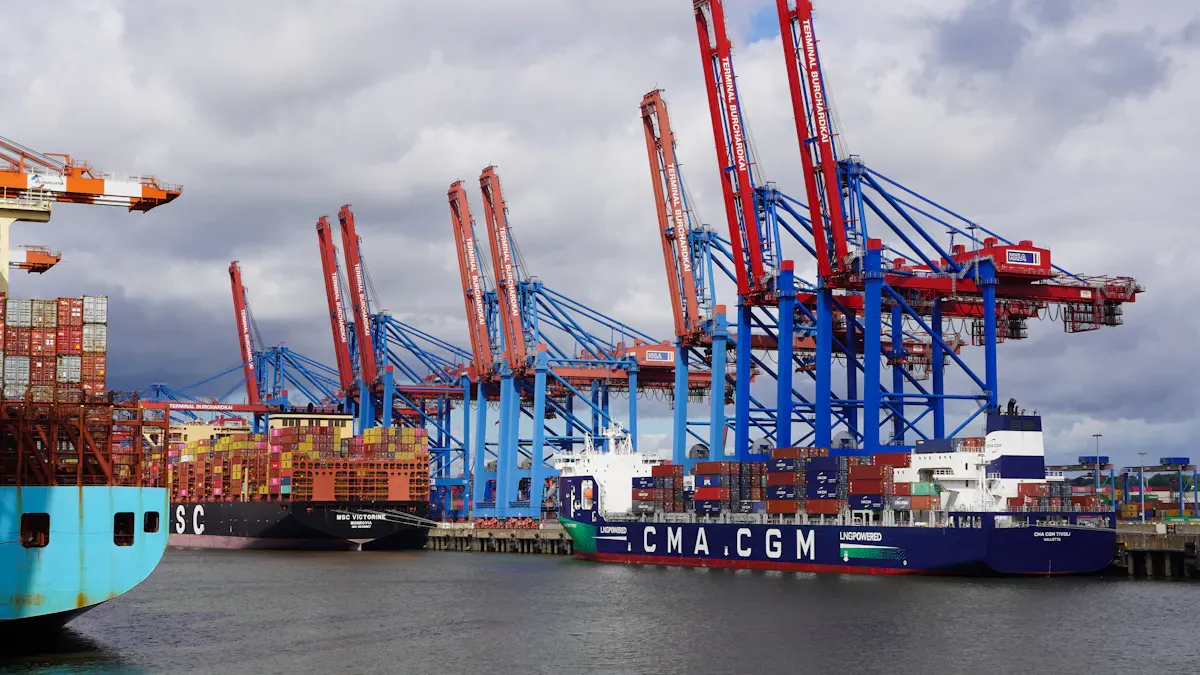
You can get more crane moves per hour by training operators well and using good habits. Training teaches operators how cranes work, safety steps, and how to use cranes the right way. Ports often use classroom lessons, practice with simulators, and real crane practice. AI now checks how operators do their jobs and helps them get better faster.
Here are important parts of good training:
-
Learning about crane rules and safety in class
-
Using simulators to practice safely
-
Doing hands-on training step by step
-
Watching operator progress with AI
Good habits in work also help a lot. Each thing below helps in its own way:
|
Factor |
Contribution to Throughput |
|---|---|
|
Scheduling and Planning |
Makes sure cranes are used well and not left waiting. |
|
Training |
|
|
Load Management |
Stops crane parts from getting too tired, so work is smoother. |
Technology upgrades & automation
New equipment can help you get more container gantry crane throughput: raise moves per hour. Modern cranes use variable-frequency drives (VFDs) to move containers more smoothly and safely. These systems save energy, lower damage, and help you place containers better. Automation, like remote control and AI, makes work faster and cuts down on stops.
|
Benefit |
Description |
|---|---|
|
Improved Motion Control |
Lets cranes start and stop smoothly for better container placing. |
|
Enhanced Safety |
Less swinging and better stopping make things safer. |
|
Data and Diagnostics |
Checks crane health in real time so you can fix problems early. |
|
Flexibility and Adaptability |
Lets you change speeds and add automation easily. |
You can also pick CEGC cranes that fit your needs. Choose the right size, span, work level, power, rust protection, and automation.
Cycle-time optimization
You can save time by planning where containers go and how they move. Put busy containers close to main roads and use a Terminal Operating System to track them. Keep import and export containers in different areas to avoid extra moves. When you match crane and yard schedules, you stop slowdowns and keep moves steady.
Tip: If you use smart stacking and connect your work steps, you can cut extra moves by up to 40%. This makes your port work better.
You can make your port work better by getting 25–40 moves per hour with container gantry cranes. Here are some things that change your results:
|
Key Performance Indicator |
Description |
|---|---|
|
Helps your terminal work faster and ships leave sooner |
|
|
Crane Performance (T1) |
Changes how well your port works overall |
|
Cargo Movement |
Shows how good you are at moving containers |
Smart control, remote maintenance, and safety systems fix problems. Pick CEGC for strong and flexible container handling equipment.
FAQ
How can you increase moves per hour with CEGC container gantry cranes?
You can use anti-sway systems. Operator training helps a lot too. Predictive maintenance finds problems early. These features let you move containers quicker and safer.
What is the main benefit of anti-sway control?
Anti-sway control helps you place containers in the right spot. It lowers load swing, so accidents happen less. Cycle times get faster.
Does CEGC offer custom solutions for different port needs?
Yes. You can pick capacity, span, duty cycle, power, anti-corrosion grade, and automation level. CEGC gives you what your project needs.


