
You can see how smart dispatch makes port crane peaks predictable. Smart dispatch utilizes real-time data and advanced software to achieve this. It assists your teams and your port in anticipating busy times. With smart dispatch, you can plan for peak periods and ensure worker safety. CEGC demonstrates that smart dispatch effectively helps you predict port crane peaks. This capability enables you to minimize errors, expedite loading, and enhance overall port operations.
|
Aspect |
|
|---|---|
|
Faster Loading/Unloading Cycles |
Ships wait less time, so work gets done faster. |
|
Reduced Manual Work |
Automation lowers mistakes and keeps workers safer. |
|
Improved Uptime |
Predictable schedules help busy ports run smoothly. |
|
Simplified Training |
Standard systems make operator training easier and safer. |
|
Efficiency Goals |
Advanced machines from CEGC help ports meet their efficiency targets. |
Key Takeaways
-
Smart dispatch looks at live data to guess when ports will be busy. This helps you plan crane work better.
-
Cranes with AI and IoT make things safer and cut down mistakes. This means loading and unloading happens faster.
-
Predictive analytics help use resources in a smarter way. This cuts down waiting time and makes port work better.
Smart dispatch and port crane efficiency
How smart dispatch optimizes cranes
Smart dispatch changes how you manage cranes at ports. These systems use ai-powered cranes and smart technology to check real-time data. They help you find slow spots and use resources better. You get quick updates about container locations with RFID antennas and readers. Cranes and automated guided vehicles use this info to follow work orders. This cuts down delays and helps workers do more.
When you use smart dispatch, you get many helpful features:
-
ai-powered analytics find slowdowns and give ideas to make things run better.
-
RFID watches containers and sends alerts if something is wrong, which keeps people safe.
-
Real-time monitoring lets you fix problems fast.
Ports like Singapore and Rotterdam use these systems. They have made their work over 30% more efficient. With ai and smart technology, cranes work smarter. You spend less time waiting, ships stay for shorter times, and your port runs well.
|
Feature |
Description |
|---|---|
|
Infrared and ultrasonic sensors spot things nearby and stop crashes. |
|
|
Automatic Slowdown and Stop Functions |
Makes sure cranes work safely in busy places. |
|
Crane Avoidance System |
Uses algorithms to stop crashes and cut slowdowns. |
|
Smooth Crane Movement |
Helps cranes move without slowing down, making work faster. |
Anti-sway control systems keep loads steady. They use special algorithms to stop swinging, so cranes stay safe and work well. Synchronized hoisting and dual trolley features balance heavy loads. This lowers stress on your equipment. PLC remote monitoring gives you updates about status and load data. It makes managing equipment easier.
Predictable peaks in port operations
Smart dispatch helps you know when port crane peaks will happen. You can use ai-powered cranes and machine learning to guess busy times. These models look at truck arrivals and automate document checks. They also pick gate lanes based on real-time traffic, which makes things run better.
IoT technology tracks trucks coming and going. Predictive analytics show you where traffic will be and tell you the best way to handle containers. Appointment systems and staggered schedules stop gates from getting too busy during peak times.
Tip: Longer gate hours and digital pre-clearance spread out demand and cut wait times.
When you know peak times, you get many benefits:
-
You plan crane jobs ahead, which makes work more efficient.
-
You cut moves that don’t help, saving time and energy.
-
You use resources better, matching staff and equipment to what’s needed.
-
You match operations with ship arrivals, keeping your terminal steady.
Using ai and smart technology helps you plan ahead instead of reacting. You can spot problems before they happen. This keeps containers moving and uses resources well. It lowers traffic jams and helps you reach your goals.
|
Operational Benefit |
Description |
|---|---|
|
Improved Efficiency |
Predictive analytics help plan crane work and cut waiting time. |
|
Reduced Non-Productive Moves |
By knowing demand, the system stops extra moves of cranes and containers. |
|
Enhanced Resource Allocation |
Resources are used better because you know when busy times will happen. |
|
Better Synchronization of Operations |
Predictive insights help match crane work with ship arrivals, making terminal flow smoother. |
CEGC solutions for container cranes
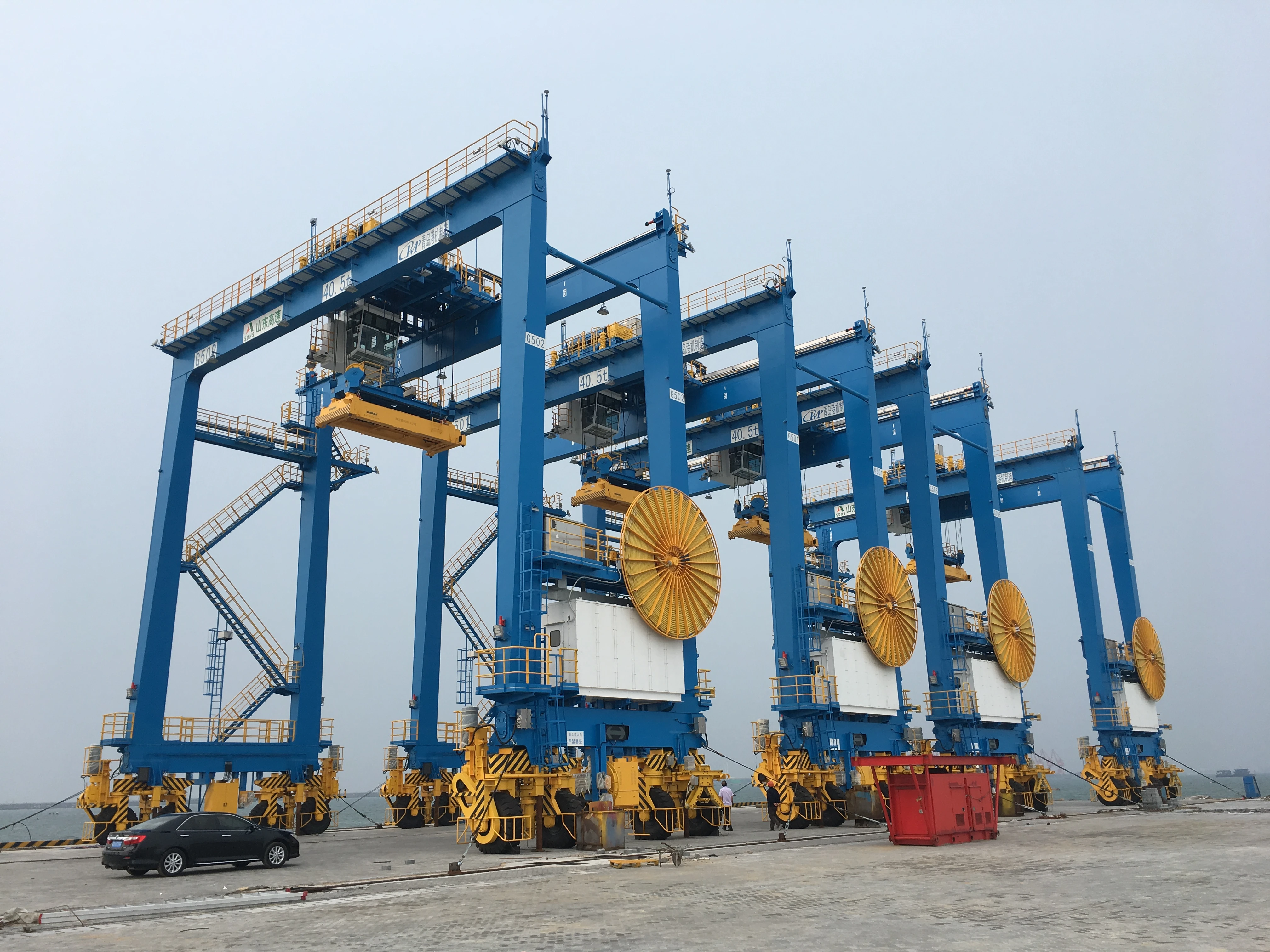
You can pick from many CEGC solutions to solve port problems. CEGC has portal cranes, container cranes, and handlers. Each uses ai-powered cranes and smart technology to make work safer and faster.
|
CEGC Solution |
Addressed Challenges |
Key Features |
|---|---|---|
|
Automated Container Gantry Cranes |
Load drift, slow cycles |
Anti-sway tech, predictive maintenance |
|
Rail-mounted Container Gantry Crane |
Heavy cargo, delays |
Fully automated, built for tough marine weather |
|
Rubber-tyred Gantry Cranes |
Bulk cargo, port traffic |
Flexible handling, fast cargo movement |
|
Automated Stacking Cranes |
Continuous work, less downtime |
Smart maintenance, automation |
You can connect CEGC machines to your terminal systems. This gives you updates about ship locations and job plans. You can work with supply chain partners, shipping lines, and customs for smooth operations. ai-powered cranes check sensor data to use machines and workers better. This cuts wait times and moves more containers.
CEGC’s technical solutions include:
-
Anti-sway control for steady lifting.
-
Motion coordination for cranes to move together.
-
Predictive maintenance to stop downtime.
-
Multi-layer safety systems to protect people and equipment.
You can change CEGC cranes to fit your port. You can pick different sizes, spans, duty cycles, power options, and automation levels. You also get marine-grade anti-corrosion protection and modular designs for easy care.
With CEGC, you make work faster, cut downtime, and keep people safe. You get your port ready for the future with smart technology and ai-powered cranes.
Smart port technologies driving results
AI and IoT for cranes
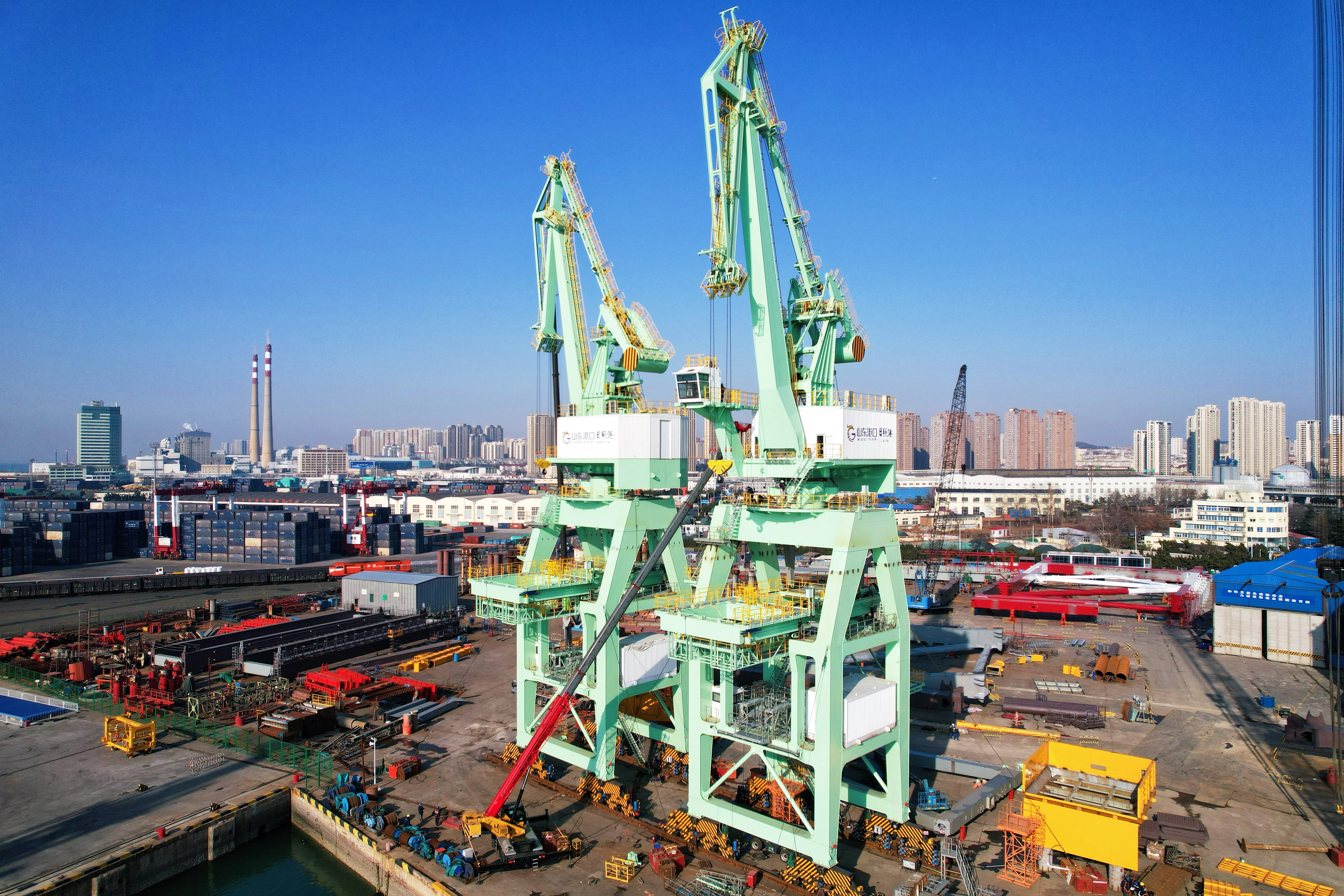
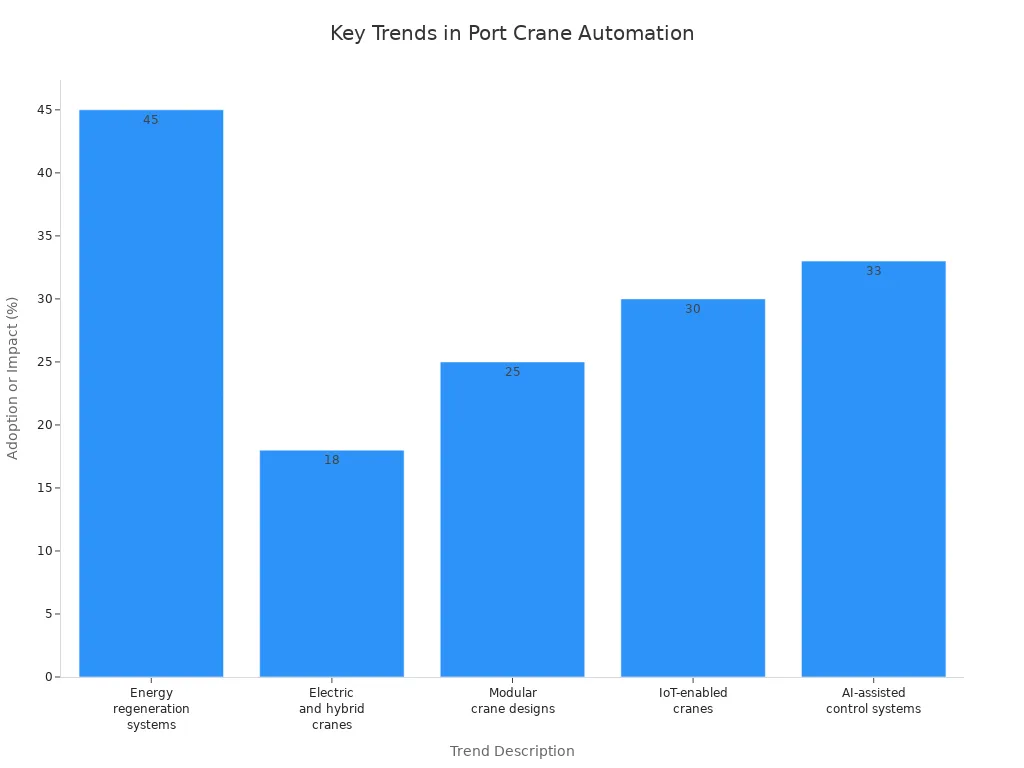
Smart port technology is changing crane management. AI and IoT work together to make ports run by themselves. IoT sensors check temperature, vibration, and weather. Cameras and processors help cranes see objects. Container tracking helps keep cargo safe and lowers loss risks. AI makes decisions and adjusts to new situations. Automation uses cranes and vehicles to follow yard plans. AI systems and terminal managers work together to use resources well. AI cranes can handle up to 40 containers each hour. This makes ports more productive. At Rotterdam, AI cranes move millions of TEUs. Ships spend less time at the port.
-
IoT lets you watch crane status in real time.
-
AI dispatch helps cranes respond quickly.
-
Autonomous cranes move containers faster and safer.
Data analytics and predictive maintenance
Big data analytics help keep cranes working. Predictive maintenance changes service from set schedules to checking equipment condition. You look at sensor data to find wear and predict repairs. This stops sudden breakdowns and saves money. Predictive maintenance uses sensors to check vibration and temperature. Machine learning finds problems and starts repairs. You make equipment last longer and improve throughput with fewer emergency fixes.
|
Benefit |
Description |
|---|---|
|
Reduced Downtime |
Predictive maintenance lowers unplanned downtime |
|
Extended Equipment Life |
Timely interventions improve longevity |
|
Lower Maintenance Costs |
Predictive models cut expenses |
|
Improved Throughput |
Steadier throughput with fewer repairs |
Real-world impact: Tianjin Port case
At Tianjin Port, driverless trucks and cranes work by themselves. Real-time monitoring takes the place of manual dispatch. The port runs all day and night, which cuts human mistakes and tiredness. Unplanned crane downtime dropped by 58%. Spare parts inventory turnover got better by 40%. Smart port technology brings steady performance and higher efficiency.
You can use smart dispatch and smart port technologies from CEGC to make port crane peaks easier to predict. These tools help you in many ways:
-
Cargo moves faster and downtime is less.
-
Work is safer and there are fewer mistakes.
-
Resources are used better and money is saved.
You get ready for the future by picking options that fit your port.
FAQ
What is smart dispatch in port crane operations?
Smart dispatch uses real-time data and AI. It helps you plan when cranes work. You can guess when things will get busy. This also makes the port safer.
How does CEGC improve crane safety?
CEGC uses anti-sway control and safety systems. These features help stop accidents. They also make it easier to control heavy loads.
Can you customize CEGC cranes for your port?
-
Yes, you can pick:
-
The size you need
-
The type of power
-
How much automation you want
-
The level of anti-corrosion protection
-


