
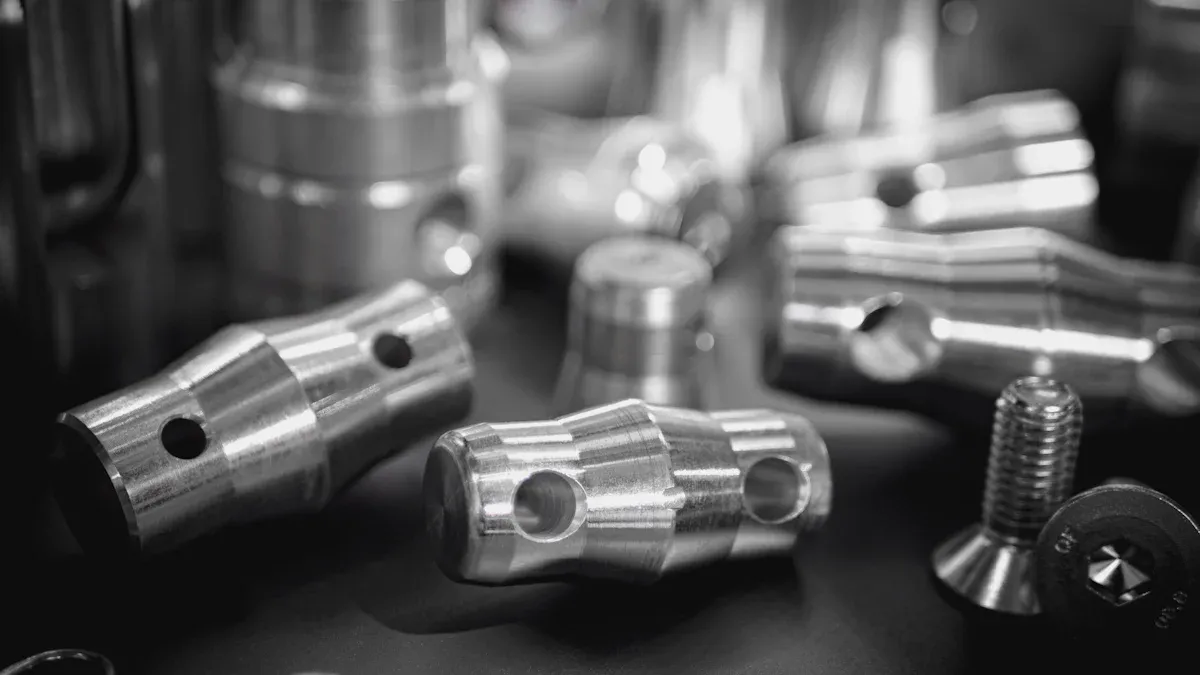
You see how trenchless drilling rig steel joint beats stress when you look at CEGC solutions. This trenchless drilling rig steel joint beats stress because you get a strong design. Smart design helps trenchless drilling rig steel joint beats stress in tough jobs. The right design fights stress and keeps trenchless drilling rig steel joint beats stress. You trust the design to beat stress and help your project win.
Key Takeaways
-
Strong steel joints are very important for trenchless drilling rigs. They help the rig handle stress and stop it from breaking. This makes sure the project works well.
-
Checking the joints often and using the right torque is important. These steps help find cracks early and lower the chance of joint failure when drilling.
-
Picking good materials and coatings makes joints last longer. Special coatings keep out rust and damage. This helps steel joints last more years.
Mechanical Stress & Fatigue in Steel Joints
Types of Mechanical Stress
Steel joints in a trenchless drilling rig face many stresses. Axial stress pulls or pushes the joint from end to end. Circumferential stress goes around the joint like a ring. Tension and compression make the steel change shape. Torsion twists the joint back and forth. Cyclic loading means these forces happen again and again. Strain monitoring lets you check stress during horizontal directional drilling. You can see how these forces affect the steel joint every day. CEGC’s horizontal directional drilling machine uses strong joints for tough jobs.
Fatigue Failure Risks
Fatigue happens when the same force repeats over time. Cracks can grow in the steel joint from fatigue failure. High doglegs bend the joint and make fatigue worse. Too much torque can twist and damage the joint. Corrosive places make steel weaker and cause more cracks. You need to check joints often to find tiny cracks. Controlling vibrations and buckling helps lower stress. Using the right torque helps stop fatigue failure. The table below shows how repeated force causes fatigue in steel joints.
|
Cause of Fatigue |
Description |
|---|---|
|
High Doglegs |
Sharp bends make more bending stress and faster fatigue. |
|
Over-torqued Connections |
Too much torque can split or twist the joint. |
|
Corrosive Environments |
H2S-rich places make steel crack and get weak. |
|
Mitigation Strategies |
Check drill pipe and collars often for small cracks or heat marks. |
|
|
Lower vibrations and buckling to cut down on repeated stress. |
|
|
Use G-grade or lower pipe in H2S areas, following NACE MR-01-75 rules. |
|
|
Use the right torque with API compounds and checked tools to avoid too much torque. |
Environmental Factors
Mechanical stress and fatigue change with temperature and soil chemicals. High H2S and heat make steel joints weaker. More fatigue failure happens when steel stretches less and gets stronger. The chart below shows how temperature and H2S change steel joint strength.
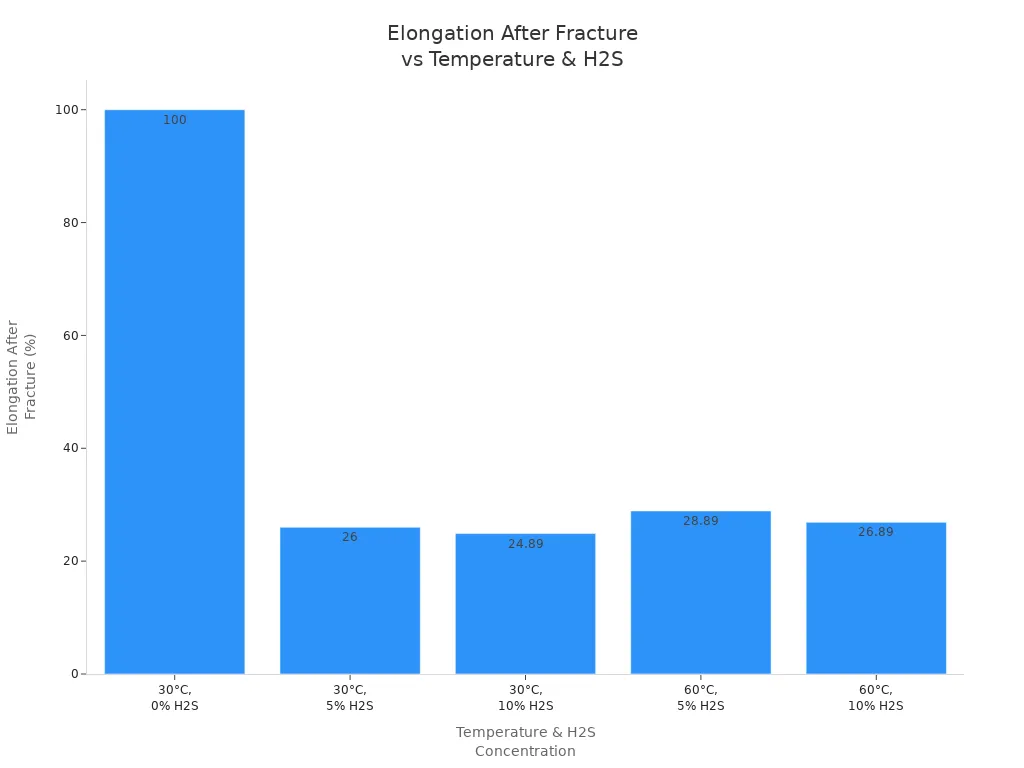
You need to watch for bore changes, stuck pipe, and tool damage. CEGC’s solutions help you handle stress and loading. You get better guidance, anti-stall power, and strong parts. These features help fight stress and fatigue so your project stays safe.
Steel Joint Design & Analysis
Material Selection & Metallurgy
You pick strong steel alloys for trenchless drilling rig joints. These alloys help the joint stay strong under stress. They keep the joint from bending or breaking. High yield strength and tensile strength make the steel better. Good materials help the joint work well in tough jobs. Heat treatments make the joint last longer and fight fatigue. Stress relief tempering lowers leftover stress and stops cracks from starting. The mix of chemicals and the steel’s tiny structure help make the joint stronger.
|
Property |
Value |
|---|---|
|
Yield Strength |
724 - 931 MPa (105,000 - 135,000 psi) |
|
Tensile Strength |
≥ 793 MPa (115,000 psi) |
|
Hardness |
≤ HB 285 (approximately HRC 30) |
|
Elongation |
≥ 13% |
|
Charpy V-notch impact energy |
≥ 40 ft-lb (54 J) |
-
Stress relief tempering helps lower leftover stress that can cause fatigue failure. This is important for welded joints that face repeated force.
-
How well heat treatment works depends on the steel’s chemicals and structure. These things are important for making steel joints last longer in horizontal directional drilling machines.
-
Good stress relief tempering lowers the risk of cracks by reducing pulling stress. This is very important in places where the air or ground can cause rust.
Joint Geometry & Thread Design
The shape of the joint and the threads help spread out stress. This stops too much stress from building up in one spot. Special thread shapes help the joint stay strong and not bend. Locking parts keep the joint together when forces change. Picking the right joint shape helps lower stress and makes the joint last longer. Good geometry spreads out the force and keeps the joint from breaking. Threaded connections should fit the rig and help it work better. The right thread design keeps the joint from bending and makes it strong.
Tip: You can ask CEGC for special specs for horizontal directional drilling hdd. You can pick rod size, joint specs, and thread shapes for your job. This helps you work in different soils and drill to special depths.
|
Customizable Feature |
Description |
|---|---|
|
Specialized Lengths |
Custom lengths for unique drilling depths. |
|
Adaptability |
Adjusts to different ground compositions. |
Coatings & Corrosion Resistance
You use special coatings to protect steel joints from damage. Polyguard IRO™ system helps stop scratches and damage from tough soil. TBK systems use a strong liquid epoxy to stop rust and protect the joint. ScarGuard systems add a fiber layer to make the coating even stronger. These coatings help the joint stay strong and not get damaged. You pick coatings that dry fast and bend without breaking. This keeps the joint safe and working well in hard places.
-
Polyguard IRO™ system stops scratches and damage from tough soil.
-
TBK systems use strong liquid epoxy to stop rust.
-
ScarGuard systems add fiber for more protection from hits and scratches.
Fatigue Analysis Methods
You use tests to see how well the joint works and lasts. Fatigue analysis helps you find where stress builds up and where the joint might bend. Hot-spot stress extrapolation finds the most stressed spots in welded joints. Notch effect modeling shows how sharp corners change how stress spreads. Traction structural stress extraction helps you see how the joint reacts to tough forces. Using these tests helps you make the joint stronger and last longer.
|
Fatigue Analysis Method |
Description |
|---|---|
|
Hot-spot stress extrapolation |
A method used to predict stress concentrations at critical locations in welded joints. |
|
Notch effect modeling |
This approach considers the effects of geometric discontinuities on stress distribution. |
|
Traction structural stress extraction |
A technique to derive stress from the structural response of the joint under loading conditions. |
Note: You can use these tests and changes to match CEGC’s top solutions. This gives you strong joints and less bending in your horizontal directional drilling machine.
Manufacturing & Performance
Precision Manufacturing
Precision manufacturing keeps steel joints strong. CNC boring and milling make exact shapes for centralizers. Advanced processes help drill rods fit together well. High-precision systems, like inertial navigation and GPS, let you watch and change rig placement as you work. These methods help stop stress from building up. They lower the chance of failure during drilling.
|
Technique |
Description |
|---|---|
|
CNC Boring and Milling |
Makes sure sizes are right and quality stays the same. |
|
Advanced Manufacturing Processes |
Keeps drill rods correct for smooth connections. |
|
High-Precision Positioning Systems |
Watches and changes rig placement to control stress. |
Tip: You can use simulation tools to see how stress affects steel joints before drilling. Simulation helps you find weak spots and stop failure.
Quality Control Standards
Strict quality control stops stress from causing failure. Double White Band marks tubes with at least 80% body wall left. API Premium Class gives you strong drill pipes. DS1-CAT5 sets the best safety and quality for drilling. Non-destructive tests like VT, PT, MT, UT, RT, and ET help you find problems before using the joints. These tests find surface and inside defects that could cause stress and failure.
|
Inspection Criteria |
Description |
|---|---|
|
Double White Band |
Has at least 80% body wall left. |
|
API Premium Class |
Makes sure pipes work well and last. |
|
DS1-CAT5 |
Best quality and safety standard. |
|
NDT Method |
Defect Type Detected |
Description |
|---|---|---|
|
VT |
Surface defects |
Looks for flaws you can see. |
|
PT |
Surface-breaking cracks |
Finds cracks on materials that are not magnetic. |
|
MT |
Surface and near-surface |
Finds flaws in magnetic steel. |
|
UT |
Internal flaws |
Uses sound waves to find inside defects. |
|
RT |
Internal weld structure |
Checks if welds are strong. |
|
ET |
Thin-wall tubing |
Looks at thin-walled parts. |
Note: Simulation lets you test joints for stress and failure before using them in the field.
Real-World Performance
CEGC drilling rigs show strong performance. Anti-stall powertrain stops stress spikes and failure. Durability package lowers tool wear and downtime. Customization lets you pick rod size, joint specs, and coatings for your job. Simulation tools help you guess stress and failure in different soils. You get good results and less risk of failure. Contractors and city projects use these solutions. You finish jobs faster and avoid expensive stress problems.
Simulation makes you sure about steel joint performance. You can trust CEGC to help you beat stress and failure every day.
You can see that smart design and careful making help stop stress in trenchless drilling rig steel joints. Fatigue analysis and HFMI treatment make the joints last longer. These steps lower the chance of fatigue failure. This means you can trust the joints more and have less work stoppage. Pick CEGC for solutions you can change to fit your needs. These choices help control stress and keep your project moving forward.
|
Benefit |
Description |
|---|---|
|
Fatigue Resistance |
Fatigue analysis and HFMI treatment help joints last longer and lower stress risk. |
|
Reliability |
Automated welding and post-weld treatment lower the chance of fatigue failure. |
|
Project Success |
Strong joints mean less downtime and better results. |
FAQ
What makes CEGC steel joints safe for trenchless drilling?
CEGC steel joints are safe because they use strong drill pipe design. They also have special coatings and careful quality checks. These things help keep workers safe and stop problems on the job.
How does analysis help improve operational safety and fatigue life?
Engineers use finite element analysis and fatigue life analysis to find stress spots. This helps them see where problems might happen. It also helps make the drill pipe last longer and work safely.
Why should you trust CEGC for safety and reliability?
Safety is very important at CEGC. They use mechanical analysis, simulation, and check materials. These steps help make sure every job is safe and the steel joints are strong.


