
You have problems with load sway, safety, and working speed when using container gantry cranes. The Container gantry crane: anti-sway tuning checklist helps lower these problems. CEGC gives technical help to keep loads steady and make moving containers better. You get safer and more dependable crane use.
Key Takeaways
-
Always check for safety before you tune your container gantry crane. This means you should look at the wind and make sure the area is safe. This helps stop accidents from happening.
-
Use the anti-sway tuning checklist to set up sensors and controls the right way. This keeps the load steady and makes work safer.
-
Write down test results and what you do for maintenance often. Good records help you find problems early and make the crane work better.
Pre-Tuning Checks for Container Gantry Crane
Safety and Risk Assessment
Check for safety problems before tuning your container gantry crane. Look for things that might cause tipping or hurt workers. Make sure the area around the crane is clear. Check the weather and see how fast the wind is blowing. If the wind is too strong, stop working. Wind can make the load swing and cause tipping. Operators must know what to do in emergencies. CEGC cranes use market-standard safety checks to help you avoid danger and keep your team safe.
Industry-standard safety checks include:
-
Making sure the load is balanced on hoist ropes
-
Checking wind speed before starting work
-
Making sure operators are trained and ready
-
Looking for damage and checking safety features
-
Using anti-sway technology to control load movement
Tools and System Readiness
You need the right tools to tune anti-sway technology. Make sure sensors are set right and you have working communication devices. Update your software to the newest version. Check that all safety switches and interlocks work. CEGC container gantry cranes use advanced anti-sway technology to help stop load sway and prevent crashes. Always check your tools before you start.
Initial Condition Verification
Check the crane’s condition before tuning. Look at the hoist ropes, spreader, and trolley for damage. Make sure the load is safe and balanced. Check that all sensors and monitors are working. This step helps you find problems early and keeps tuning safe. Careful checks help stop tipping and keep your equipment working well.
Container Gantry Crane: Anti-Sway Tuning Checklist
System Inspection and Load Stability
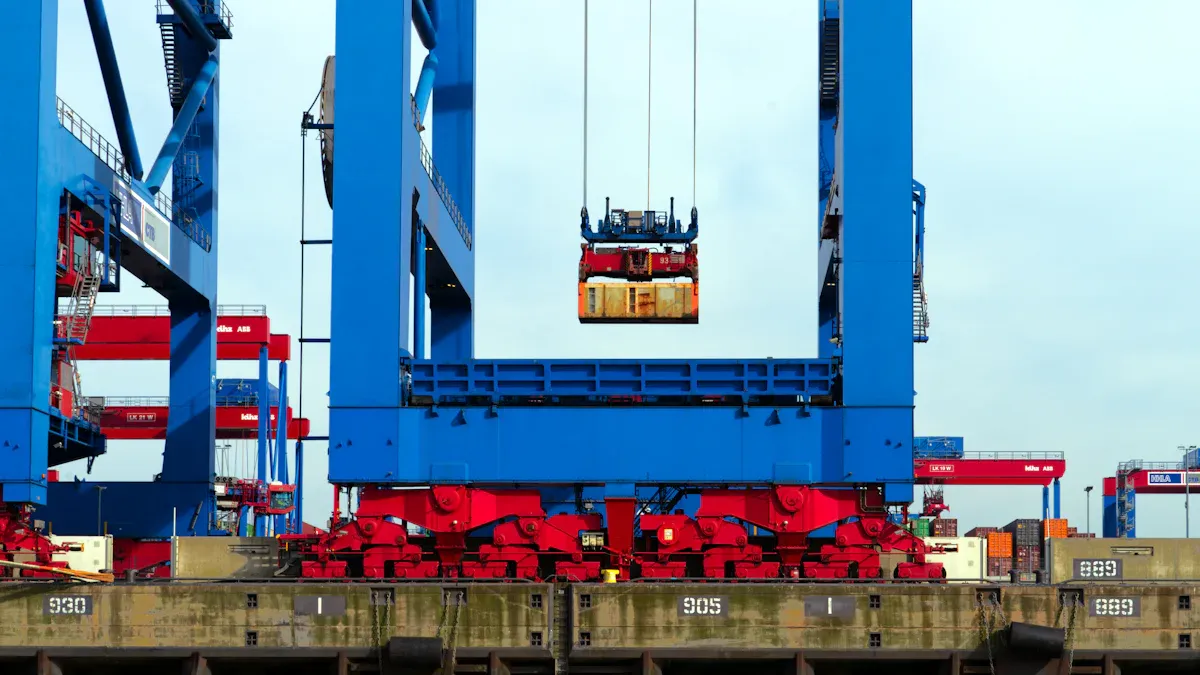
First, you look over the crane system. You check the hoist, trolley, and spreader for damage. You make sure all sensors are working right. You see if the load is balanced and safe. You check the wind and weather before starting. You look around to make sure the area is safe. Keeping the load steady helps stop accidents and keeps work smooth. CEGC container gantry cranes meet safety and performance standards. You check the anti-sway parts and make sure safety interlocks are on. You want the port gantry crane to move loads with little sway.
Tip: Always check if the load is steady before tuning. This step stops surprise movement and keeps your team safe.
Parameter Setup and Sensor Calibration
Next, you set up the crane’s control settings. You adjust the sensors for load, angle, and wind. The anti-sway tuning checklist helps you with each step. You change how sensitive the anti-sway system is. You make sure the sensors show the right numbers. You test by lifting a load and watching the sensor feedback. You use advanced control methods like sliding mode and neural network. These help you guess and control how much the load sways. Deep learning-based model predictive control makes winch signals better and lowers sway. You keep the load steady at every step.
|
Control Method |
Effectiveness Description |
|---|---|
|
Deep Learning-based Model Predictive Control (DMPC) |
Makes winch control more exact and lowers load sway during STS work. |
|
Sliding Mode Control |
Gives good anti-sway tuning for container gantry cranes. |
|
Neural Network Approaches |
Predicts how much the load will sway and how far the winch moves. |
You pick the best control method for your crane and site. The anti-sway tuning checklist helps you set every setting for the best load stability.
Software and HMI Configuration
You check the software and set up the HMI. You update the crane’s software to the newest version. You set up the operator screen to show alarms and status clearly. The anti-sway tuning checklist helps you set up the HMI. You make sure the HMI shows load stability, wind speed, and sensor info. You set up steps to guide your team. CEGC’s HMI helps operators work safely and well. You set up anti-collision zones and emergency stop logic. You make sure the software works with advanced anti-sway parts. You focus on keeping loads steady and talking clearly.
Note: A good HMI helps operators act fast and keeps loads steady.
Test Procedures for Load Stabilization Mechanisms
You run tests to check the load stabilization parts. You follow the anti-sway tuning checklist step by step.
-
Start with a no-load run. You watch how it moves and listen for odd sounds.
-
Add loads in steps: 25%, 50%, 75%, and 100%. You check how it works each time.
-
Check wire rope tension, bending, and load stability during each test.
-
Do overload tests if needed. Be careful to test safety limits.
-
Look over the crane after testing. Check for damage and make sure all systems work.
These tests show if the anti-sway parts work right. You focus on steady loads and safe container moves. CEGC container gantry cranes help you get better results.
|
Outcome |
Improvement Range |
|---|---|
|
Productivity |
|
|
Cycle Time Reduction |
12% to 18% lower |
|
Load Positioning Accuracy |
Up to 60% better |
|
Sway Suppression |
Between 5 and 15mm |
You see more work done, faster cycles, and steadier loads. The anti-sway tuning checklist helps your crane stay safe and work well.
Troubleshooting Load Stability and Handling Issues

Sensor and Parameter Faults
Problems with load stability can happen if sensors are not set right. Check each sensor for loose wires or wrong numbers. Make sure the load, angle, and wind sensors match what is real. If you see strange numbers, fix the sensors. Look at the parameter settings in your anti-sway system. Wrong settings can make the load swing or stop in the wrong spot. Always use the CEGC checklist to check every setting. This helps you keep the load steady every time you move it.
Tip: If the load moves in a strange way, check the sensors first. Small mistakes can cause big trouble.
Software, Communication, and Mechanical Errors
You should look for software, communication, and mechanical problems. These can change how steady the load is in many ways:
-
Software bugs can stop the anti-sway system from working.
-
Communication problems can block sensor data from getting to the control system.
-
Mechanical problems, like old cables or loose parts, can make the load swing.
Anti-sway systems use sensors, PLCs, and smart software to keep the load steady. These parts work together to help you move containers safely. If you find a problem, check each part one by one.
Solutions for Persistent Load Sway
There are different ways to fix load stability problems that keep happening. The table below shows some common ways to help:
|
Technology/Method |
Description |
|---|---|
|
Uses sensors and smart controls to lower swinging and keep the load steady. |
|
|
Active Acceleration Control |
Predicts movement and changes power to keep the load steady. |
|
Cavotec Connect |
Lets you watch the crane for early signs of trouble and helps keep the load steady. |
|
Cable management |
Keeps cables safe and spaced right for better load stability. |
You should use predictive maintenance and condition monitoring to watch load stability all the time. These tools help you find problems early and fix them before they get worse. CEGC cranes have these features, so you can keep your equipment working well. Automatic fault checks and performance tests make it easier to keep the load steady and stop downtime.
Post-Tuning Validation for Container Handling
Test Runs and Performance Checks
You must test the crane after tuning. Start with easy moves and watch how the crane works. Check if the load stays steady each time you lift. Write down how the crane acts in wind and when it stops fast. Use different weights to see if the crane keeps the load steady. Try moving containers at slow and fast speeds. Change directions and see if the load stays steady. You can use a table to keep track of your tests:
|
Test Step |
Result |
Load Stability |
Notes |
|---|---|---|---|
|
No-load movement |
Pass/Fail |
Yes/No |
|
|
Partial load |
Pass/Fail |
Yes/No |
|
|
Full load |
Pass/Fail |
Yes/No |
|
|
Wind simulation |
Pass/Fail |
Yes/No |
|
Checking each step helps you work better. You make sure handling containers is safe and smooth. Testing often means you have fewer problems with cargo.
Tip: Always check if the load is steady before full operations. This keeps your team safe.
Documentation and Reporting
You need to write down your test results. Record each step and note any load stability problems. Keep a log for every container handling cycle. Report any changes in how well the crane works. Share your notes with your team. Use simple charts and clear notes. Good records help you find problems early. You can use these reports to plan maintenance and make handling better. You keep your crane ready for every job.
Note: Good records help you keep the load steady and work better.
You make your crane safer and faster by using the anti-sway tuning checklist.
-
Anti-sway systems help stop the load from swinging and keep people safe.
-
High wind alarms warn you when wind is strong and safety scans protect your team.
-
Advanced anti-sway features help move containers smoothly.
|
Technical Solution |
Description |
|---|---|
|
Move containers automatically in your port. |
|
|
Predictive Maintenance |
Watch equipment and fix things before they break. |
Checking your crane often keeps it tuned and ready for quick and accurate work.
FAQ
How often should you tune the anti-sway system on a container gantry crane?
You should check and tune the anti-sway system every month. Tune it sooner if you notice more load sway or after major maintenance.
What sensors help reduce load sway on CEGC container gantry cranes?
You use load, angle, and wind sensors. These sensors work together with the anti-sway system to keep the load steady and safe.
Can you use CEGC anti-sway tuning on different types of port cranes?
Yes, you can use CEGC anti-sway tuning on portal cranes, ship cranes, and container handlers. The system adapts to many container handling equipment types.


