
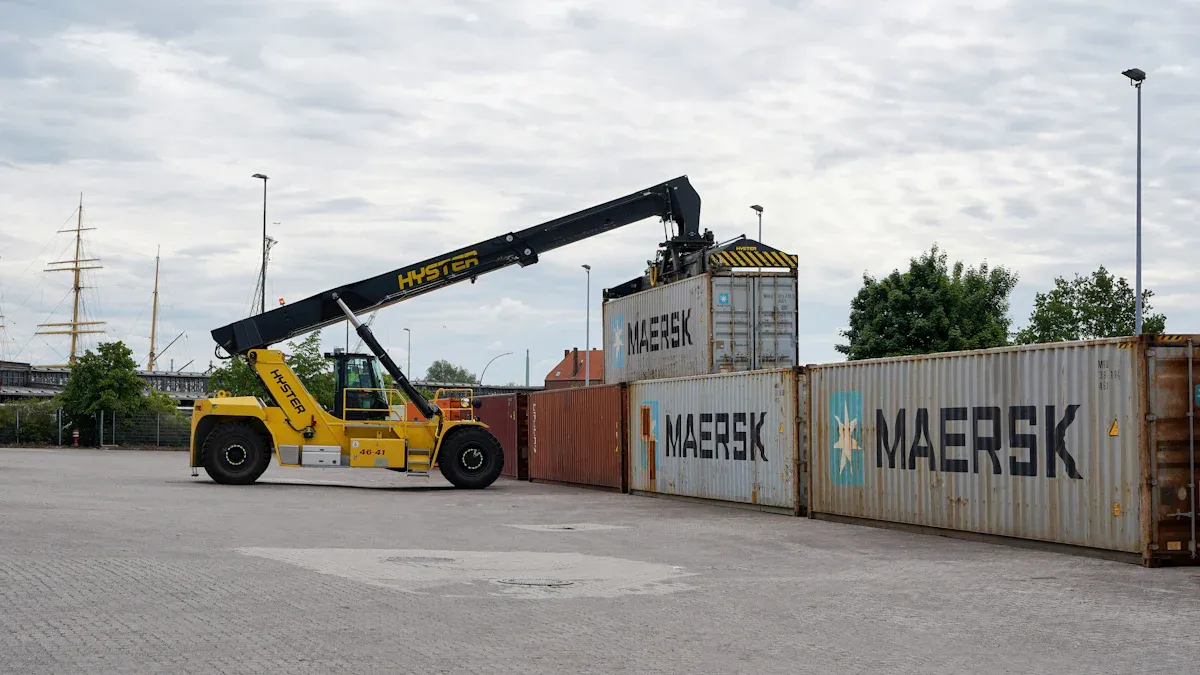
When operating a Reach Stacker forklift, especially during high stack applications, safety is a top priority. Sway control in high stack jobs is essential for maintaining stability and preventing accidents. CEGC provides advanced forklift safety solutions that enhance operator visibility and support precise stacking operations. These tools deliver stability assistance and integrate electronic stability control systems, ensuring operators remain safe and confident. Comprehensive training on load handling further improves both performance and safety for Reach Stacker forklift operators.
|
Forklift Safety Features and Practices |
Benefit |
|---|---|
|
Reach Stacker forklift: sway control in high stack |
Prevents load movement and maximizes forklift stability. |
|
Multi-layer safety interlocks |
Reduces accident risk and keeps operators protected. |
|
Enhances safety and alerts operators to potential issues. |
|
|
Collision avoidance systems |
Improves operator awareness and visibility. |
|
Emergency braking logic |
Safeguards operators and ensures rapid response. |
With CEGC’s integrated safety systems, operators can maintain awareness and operate safely during every high stack Reach Stacker forklift job.
Key Takeaways
-
Sway control technology helps keep the forklift steady. This lowers the chance of accidents when stacking things high.
-
Good training on how to handle loads makes work safer. It also helps Reach Stacker forklift drivers do better at their jobs.
-
Many safety locks and protection systems keep workers safe. These stop accidents and make the workplace safer.
Safety Risks in High Stack Forklift Operations
Load Sway and Collision Exposure
There are many risks when you use a forklift in high stack areas. Load sway makes it harder to control the forklift. This can make collisions more likely. If the load swings, it is tough to put it down safely. Proximity and collision avoidance tools help keep loads steady. These tools also help stop accidents. Sensors warn you if something is in the way. This lowers the chance of hitting things. CEGC has anti-sway control and collision avoidance systems. These systems meet safety standards in the market. You can look at the table below to see common safety risks:
|
Safety Risk Description |
Details |
|---|---|
|
Visibility Issues |
Drivers have blind spots, so they cannot always see people or things. |
|
Interaction with Pedestrians |
Pedestrians may think drivers can see them, but this is not always true. This can be dangerous. |
|
Operational Hazards |
Some work areas do not have clear safety signs. This makes accidents more likely. |
|
Night Shift Risks |
It is hard to see at night, and workers get tired. This makes accidents happen more often. |
|
Psychological Misperception |
Drivers and pedestrians might not notice all risks. They may take unsafe actions again and again. |
Operator Challenges and Inconsistent Outcomes
Different operators get different results. Some have more training than others. This means safety is not always the same. Training helps you move loads better. It also helps you use safety tools the right way. EPC contractors use special forklifts to make work faster. This means less heavy lifting by hand. It also makes the job easier and safer. Here are some ways they help:
-
Materials are moved and unloaded faster
-
Workers are safer when handling loads
-
It costs less to move equipment
-
Work gets done faster in all areas
Wind Load and Inertia Effects
Wind and inertia can make loads sway even more. You need to drive the forklift carefully to keep loads steady. Proximity and collision avoidance tools help you act fast if the load moves or you get close to something. CEGC lets you pick safety systems that fit your needs. These include anti-sway control, speed limiters, and safety interlocks. These tools help you move loads safely, even when it is hard. Training on these tools makes you feel more sure and helps stop accidents.
|
Description |
|
|---|---|
|
Operator Presence Systems |
The forklift stops if the driver gets out of the seat. |
|
Load Sensing Technology |
Stops the forklift from carrying too much weight or tipping over. |
|
Cameras and Sensors |
Help you see better and avoid accidents. |
|
Emergency Stop Buttons |
Let you turn off the forklift quickly if there is an emergency. |
|
Automatic Braking |
Stops the reach stacker if it finds a hazard. |
Sway Control and Stability Solutions for Reach Stacker Forklifts
Anti-Sway Technology and Safe Lifting Control
Operating a reach stacker forklift in a busy port is tough. Sway makes it hard to place containers where you want. Anti-sway control systems help with this problem. These systems check the rope angle all the time. They change how the forklift moves right away. This keeps the load steady and cuts down on sway. You do not need to wait for the load to stop moving. You can set it down faster and safer. This lowers the chance of accidents and damage. Using anti-sway technology helps you place loads better. It also makes your work faster. CEGC’s port machines use these systems to help you handle containers with confidence.
Motion profiles and braking coordination help you move smoothly. These features keep the load steady when lifting or lowering. You get more control and better stability. This makes every job easier and safer. You can trust these systems in every high stack job.
Tip: Anti-sway systems let you move containers faster and safer. You spend less time waiting for loads to settle. This helps you finish jobs quicker and move more containers.
Load Handling and Stability Aids
You need the right tools to keep loads steady and safe. Load handling and stability aids help you every day. Here are some common aids you use with your reach stacker forklift:
-
Keep loads low to make the forklift more stable.
-
Make sure the load is even so it does not shift.
-
Use load backrests to stop loads from falling backward.
-
Check that the load is secure before moving the forklift.
These aids work with anti-sway technology. They give you more control and stability. You can handle heavy loads with less effort. You also keep yourself and others safe from accidents. CEGC offers many options for load handling and stability aids. You can pick the ones that fit your needs best. This helps you get more out of your forklift and work better.
Operator comfort is important too. Using these aids makes you feel more confident and less tired. You do not worry about sudden shifts or unstable loads. This comfort helps you stay focused and alert during long shifts.
Multi-Layer Safety Interlocks
You need strong safety systems to protect yourself and your team. Multi-layer safety interlocks give you this protection. These systems include overload protection, limit switches, emergency stop logic, and zone-based collision prevention. Each layer works in a different way to keep you safe.
Operator-centered HMI systems make your job easier. These systems help you manage complex machines. The interface is simple and clear. You can see alarms and updates right away. This helps you react quickly to problems. Both new and experienced operators benefit from these systems. You get faster training and more consistent results.
Operator protection systems are important too. They have features like seat sensors and automatic brakes. If you leave the seat, the forklift stops. This keeps you safe all the time. You also feel better knowing the forklift will protect you if something goes wrong.
Here is a table showing how overload protection and collision prevention work:
|
Type of Overload Protection |
Description |
|---|---|
|
Mechanical devices |
Stop the hoist if too much force is found. |
|
Electric overhead protection |
Check motor current and stop if too much force is needed. |
|
Electrical/Mechanical combination |
Use sensors to change voltage based on load force. |
|
Technology Used |
Functionality |
|---|---|
|
Laser sensors |
Find obstacles and set up safety zones. |
|
Anti-collision systems |
Stop crane-to-crane collisions and hits with fixed things. |
You can trust CEGC to give you safety and operator protection systems that meet market standards. You also get project-based customization. This means you can pick the right safety level, control features, and comfort options for your port machines. You work better and keep your team safe every day.
Note: Multi-layer safety interlocks and operator protection systems help you feel safe. You know your forklift will help you avoid accidents and keep your work area safe.
Real-World Impact and Safety Benefits
Enhanced Stability and Reduced Accidents
You notice a big change with advanced sway control. These systems keep loads steady and help stop accidents. When you move containers, you do not worry about swinging loads. This helps you stay safe every day. Your team and equipment are also safer from damage.
-
Anti-sway systems stop loads from swinging into things.
-
These systems help you finish jobs faster with fewer accidents.
-
You lower the chance of hitting people or machines.
Using CEGC’s forklift safety systems helps you meet market rules and keeps your port working well.
Improved Throughput and Operator Confidence
You want to work fast and stay safe. Forklift systems with dual-axis sensors help you control load sway right away. These sensors let you handle the forklift better and keep loads steady. Anti-sway algorithms change speed and timing so you do not lose control.
-
You get more safety and better work results.
-
Extra sensors and smart checks make your forklift work better.
-
You feel more sure because the systems help you all the time.
When you trust your forklift, you work faster and make fewer mistakes.
Case Studies: Sway Control in Port Machinery
Many ports use sway control to make forklifts safer and better.
-
Anti-sway control stops loads from swinging when you change speed.
-
The shortest time start-up feature lets your forklift change speed for each load.
-
Tension control keeps the load steady when you start or stop.
Automation systems look for problems and help you fix them before accidents happen. At the Port of Newark, new safety systems made operators feel safer and work better. You see fewer accidents and less downtime when you use these forklift systems.
You make high stack jobs safer and faster with sway control and stability aids. These features help you in many ways.
|
Feature |
Role in Safety |
|---|---|
|
Automatic load sway dampening |
This feature stops loads from swinging too much. It keeps the forklift steady when lifting high. |
|
Electronic stability control (ESC) |
This system helps stop tip-overs. It slows down the forklift when turning to keep it safe. |
|
Stability limits enforcement |
This tool checks if the load is too heavy. It stops the forklift from lifting more if it is unsafe. |
CEGC gives you safety tools that meet market rules. You can also get special features for your needs. These advanced anti-sway systems help your port machines work well every day.
FAQ
What is sway control in a reach stacker forklift?
Sway control helps keep loads steady when you lift containers high. This technology lowers accidents and helps you put loads in the right place.
How does CEGC’s anti-sway system improve safety?
You get load checks all the time and the system changes things by itself. These features help you stop crashes and keep your team safe during high stack jobs.
Can you customize safety features for your port machinery?
Yes. You can pick different sensors, safety interlocks, and operator aids. CEGC lets you choose what you need for your port jobs.


