
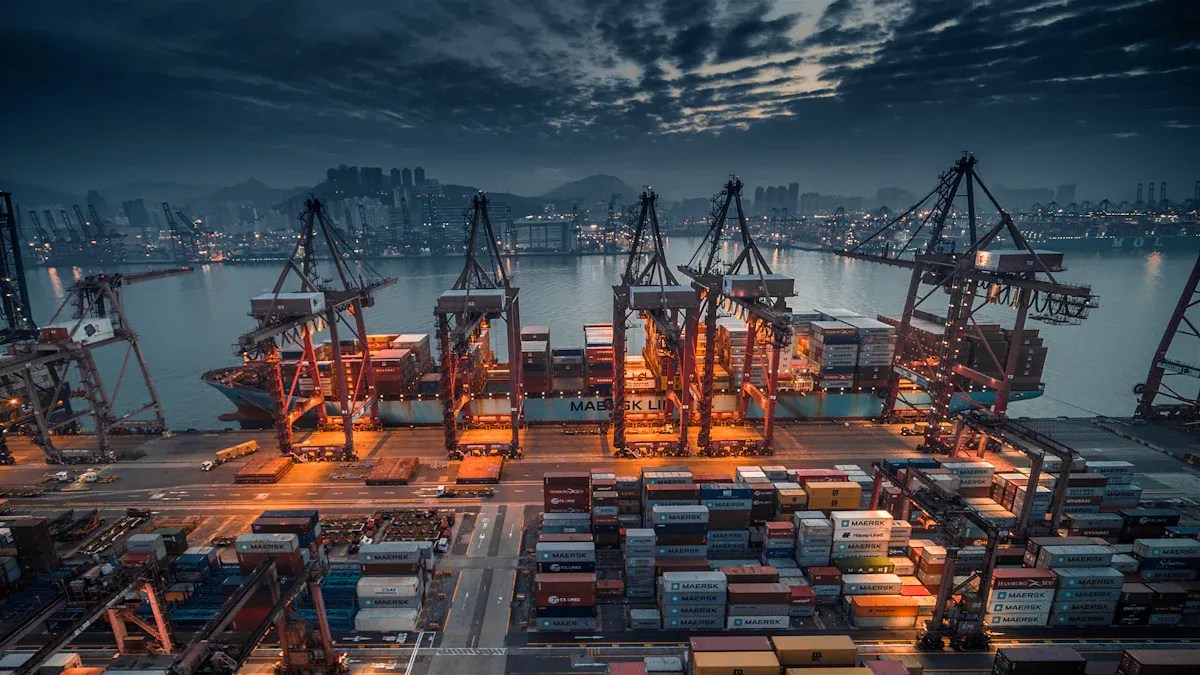
You can reduce unnecessary container movements by optimizing container handler dispatch: fewer rehandles mean smoother operations and improved efficiency. When you use CEGC’s advanced container handler dispatch systems, you benefit from fewer rehandles, smarter machine coordination, and streamlined loading processes. Safety risks remain a critical concern, with crush-by-cargo accidents accounting for 27% and vehicle impacts for 23%.
CEGC delivers technical solutions that address load sway, enhance operational performance, and reduce long-term costs, making your container handler dispatch safer and more efficient with fewer rehandles.
Key Takeaways
-
Make container handler dispatch better to cut down extra moves. Less rehandles help things run easier and make work faster.
-
Use smart dispatch and anti-sway systems. These tools make things safer and help people work together. They also mean fewer empty trips and quicker container moves.
-
Train operators well to boost safety and work speed. Good operators use safety features the right way. This lowers accident risks and keeps work going smoothly.
Container handler dispatch: fewer rehandles and higher efficiency
Smart dispatch and anti-sway systems
Smart dispatch and anti-sway systems can make your port work better. These tools help you have fewer rehandles and keep things moving. They also make the workplace safer. Machine learning models help you guess how long containers will stay. This means you move containers less and keep the yard neat. AI helps cranes and container handlers work together. This cuts down on empty trips and waiting. IoT and sensors show you what is happening right now. You get updates about container moves and equipment use. This helps you decide faster and keeps everything flowing.
-
Machine learning models guess how long containers stay, so you move them less and keep the yard flowing.
-
AI helps vehicles and cranes work together, which means fewer empty trips and less waiting. This makes port work better.
-
IoT and sensors give you updates all the time, so you know what is happening and can decide quickly.
CEGC’s anti-sway technology keeps loads steady. Sway control works with crane management to make port work better and safer. Advanced systems spot load sway and stop crashes. This keeps your team safe. These systems also help place containers more accurately and prevent damage. This is important for keeping things moving.
-
Sway control and crane management make port work better.
-
Safety features like load sway detection and anti-collision stop accidents when cranes work.
-
These systems help you place containers right and prevent damage, which keeps things moving smoothly.
CEGC’s solutions have safety interlocks and operator-centered HMI. Safety interlocks use limit switches, emergency stops, and zone-based crash prevention to keep everyone safe. The operator-centered HMI shows clear alarms and updates. This helps your team learn fast and work well. New HMI screens follow ISA 101 standards. They are clean and not distracting. The alarm system only warns when needed, so your team can focus.
Real-time data and predictive maintenance
Real-time data and predictive maintenance can make port work better. Real-time data uses sensors and IoT to show live updates about cranes and container handlers. This lets you plan jobs ahead and cut down on waiting. Predictive maintenance uses sensors to guess when equipment might break. This helps you avoid surprise breakdowns and keeps things moving. When you use real-time data, port leaders and shipping planners see the same information. This helps everyone decide better and avoid delays.
|
Evidence Type |
Description |
|---|---|
|
Real-time Data Systems |
Sensors and IoT give live updates, so you can plan ahead. |
|
Predictive Maintenance |
Sensors help guess equipment failures, so you avoid downtime and keep things moving. |
|
Stakeholder Alignment |
Real-time data lets everyone see the same thing, so decisions are better. |
Virtual Arrival and better timing cut idle time and energy waste by 15-20%. Crane teams get job updates right away. They work faster and wait less, so things keep moving.
Predictive maintenance gives clear benefits for container handler dispatch. You get fewer rehandles and higher efficiency. You can save 25-30% compared to fixing things only when they break. Downtime drops by 35-50% because you stop surprise failures. Equipment lasts 20-40% longer when you plan maintenance.
-
Save 25-30% compared to fixing things after they break.
-
Downtime drops by 35-50% because you stop surprise failures.
-
Equipment lasts 20-40% longer with planned maintenance.
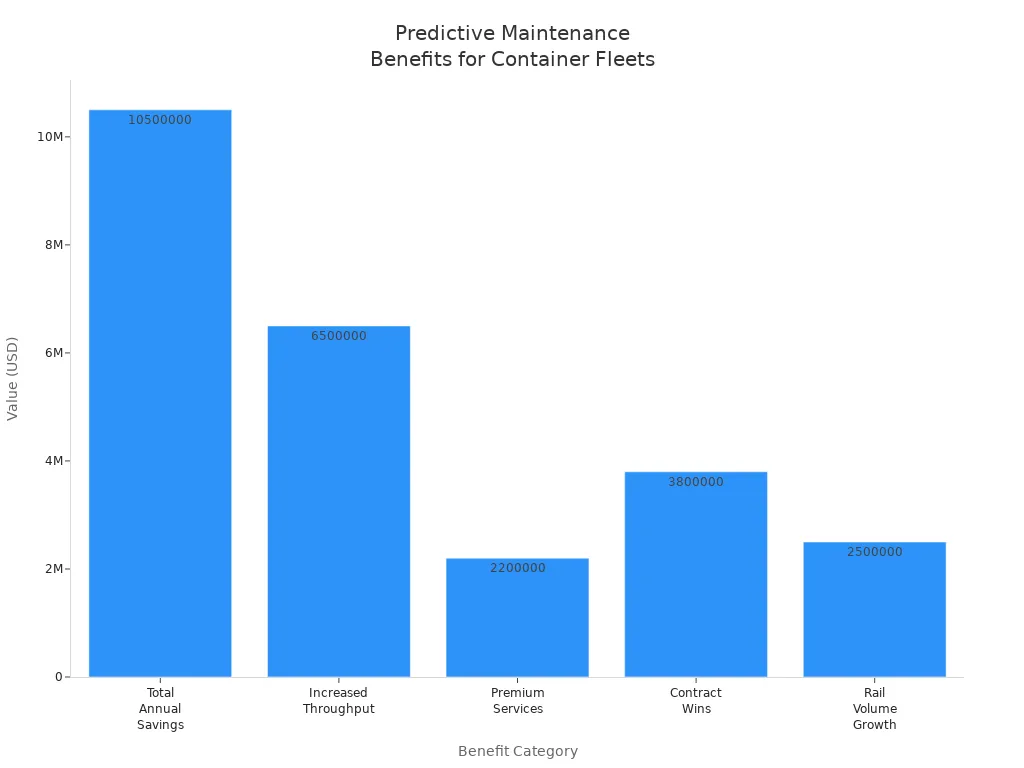
You can get a 4:1 ROI in 18 months and save a lot of money each year. More throughput, better services, and new contracts help your business. Predictive maintenance keeps container handler dispatch smooth, with fewer rehandles and better port work.
Operator training for safe loading and unloading
Operator training can make port work even better. Skilled operators help with container handler dispatch. You get fewer rehandles and keep things moving. When your team knows how to use safety features like anti-sway and safety interlocks, they work safer and faster. Operator-centered HMI helps your team learn quickly and respond to alarms fast. This keeps things flowing.
-
Safety interlocks stop overloads and crashes, so your team stays safe.
-
Operator-centered HMI shows clear alarms and updates, so your team learns fast and works well.
-
New HMI screens and focused alarms cut distractions, so operators can focus on safe and smooth work.
You can check how well container handler dispatch works by tracking key numbers. These include container throughput, yard use rate, gate throughput, incident rate, equipment downtime, and carbon emissions per container.
|
KPI Name |
Description |
|---|---|
|
Container Throughput |
Shows how well containers are handled, usually in TEU per hour, shift, or day. |
|
Yard Utilisation Rate |
Shows how much storage is used, which affects how well things work. |
|
Gate Throughput |
Counts trucks going through gates, which matters for busy terminals. |
|
Total Recordable Incident Rate |
Measures safety by counting injuries per 200,000 hours. |
|
Equipment Downtime |
Shows how often important equipment is not working. |
|
Carbon Emissions per Container |
Measures CO₂ per container, which is important for being green. |
When you focus on operator training, you lower accident risks and keep things moving. You also make port work better and achieve container handler dispatch with fewer rehandles, more flow, and safer workplaces.
Yard flow, productivity, and loading/unloading optimization
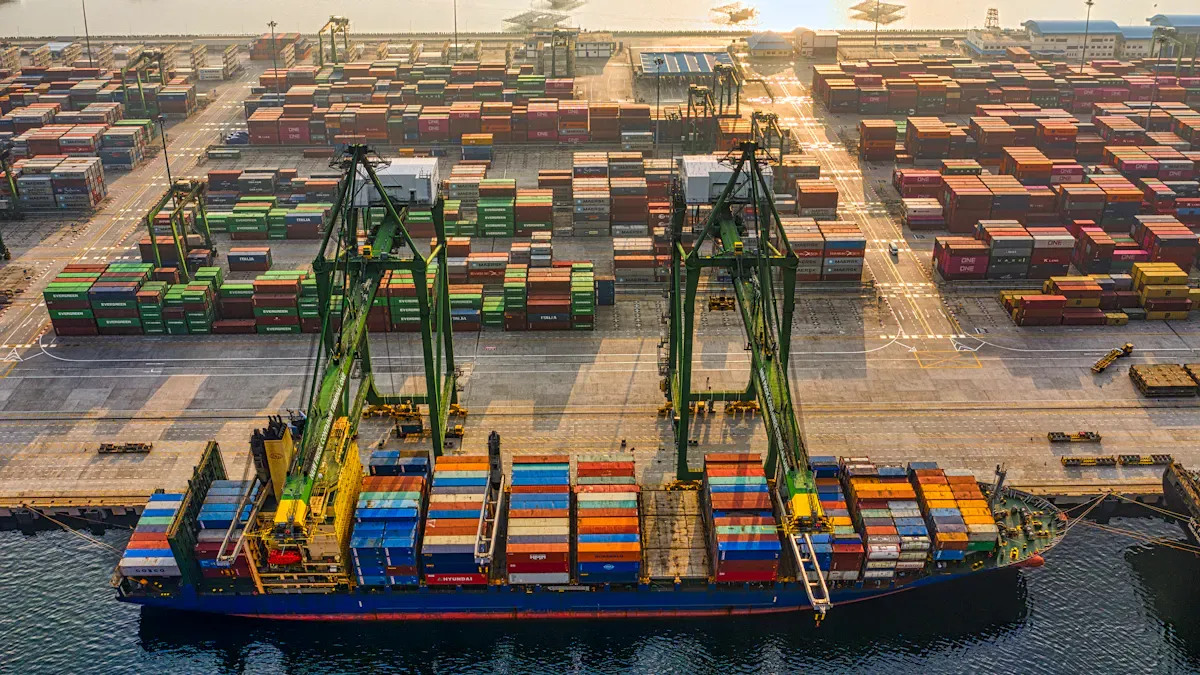
Yard layout and stacking strategies
You can make your yard work better by using smart layouts. The way you put containers in the yard affects how fast you load and unload. If you use intelligent stacking, you can fit more containers in the same space. This does not slow down cargo flow. Heuristic optimization, like genetic algorithms, helps you find the best yard layout. These strategies help you plan better, so you move containers less and keep things neat.
|
Strategy |
Description |
|---|---|
|
Intelligent Stacking |
Stacking rules that allow higher densities without hurting performance. |
|
Heuristic Optimization |
Using methods like genetic algorithms to find the best yard layouts for faster loading and unloading. |
|
Lashing Force Integration |
Adding lashing force limits to planning for safer and more efficient loading and unloading. |
You can also use lashing force integration to make loading and unloading safer. This keeps your team safe and helps you work better. When you use these strategies together, you see real improvement in how many containers you can handle. You also make your port work better. You avoid extra moves, which keeps cargo moving and helps with loading and unloading.
Motion coordination and workflow integration
You can make loading and unloading much better by syncing your equipment. When cranes, reach stackers, and container handlers work together, you cut down on waiting. Many big ports have seen up to a 30% drop in extra container moves by planning together. You can also cut container shifts by about 15%. Idle times for cranes get shorter too.
-
Big terminals that plan together have fewer container shifts and faster ship turnaround.
-
Yard clash-aware stowage planning helps match loading order with yard layout.
-
Operators see up to a 30% drop in extra handling moves.
"Stowage and yard planning must work together for modern ports to do well."
You can use workflow integration to connect your loading and unloading with digital tools. This step helps you avoid slowdowns and keeps cargo moving. CEGC’s solutions help your equipment work at the right speed for each job. You can match speed and acceleration to the load and wind. This helps with loading and unloading and makes your port work better.
Automation and genetic algorithms help a lot with making things better. A hybrid genetic algorithm can make loading and unloading faster by using quay crane dual-cycling and cutting down on rehandles. This can lower total work time by 15–20% for big ships. You see fewer manual moves and better terminal management. Digital twin models let you test yard layouts and traffic before you make changes. This helps you plan better and avoid slowdowns.
You can see how top ports use digital tools to work better:
-
Singapore uses AI scheduling and connected systems, raising throughput by about 20% with better planning.
-
Rotterdam uses digital twins and system links, cutting idle time by about 15% and making loading and unloading faster.
-
Shanghai uses blockchain for paperwork, cutting delays by 30%.
-
5G networks make data faster, so you can control equipment in real time and move more containers.
-
Automated Guided Vehicles (AGVs) help move containers on time, which helps with ship and yard planning.
-
Digital twin models help plan better and cut wasted moves, so loading and unloading gets better.
When you use these ideas, you see real improvement in port work, can handle more containers, and keep cargo moving smoothly.
Marine durability and lifecycle protection
You need strong equipment to handle tough marine weather and keep working. Marine-grade durability and anti-corrosion features help your equipment last longer and cost less to fix. CEGC’s container handling equipment uses special coatings and materials to lower repair costs and make machines last longer. This helps you work better and keeps your port running strong.
|
Benefit |
Description |
|---|---|
|
Advanced coatings lower repair frequency and costs, saving you money. |
|
|
Extended Equipment Life |
Better durability means your equipment lasts longer, so you avoid early replacements. |
|
Increased Efficiency |
Smart technologies improve precision and response, boosting productivity and supporting improvement. |
Easy-to-fix equipment is important for lifecycle protection. If your machines are simple to maintain, you spend less time fixing them. This means you can load and unload more. This design cuts downtime, which is important when it is hard to get to equipment. You get more time working and spend less money over time.
The right marine durability package helps you work better for longer. You keep loading and unloading on time, avoid slowdowns, and see steady improvement in your port. When you use strong protection and smart loading and unloading, you build a good base for terminal management and cargo flow.
You can make container handler dispatch better by using advanced machines and digital tools. Automation helps ports become safer and more productive.
|
Improvement Type |
Description |
|---|---|
|
Safety Improvement |
Automation lowers mistakes made by people at the port. |
|
Productivity |
Automation helps move more containers, up to 30% more. |
|
Congestion Reduction |
Multimodal links use fewer trucks and speed up port flow. |
You will have fewer rehandles and better efficiency. When port machines work together, they save energy and cut waste.
-
Digital twin technology and real-time data let ports watch cargo and vessel movement.
-
Automation and intent-driven optimization keep port work smooth.
-
Experts say ports should use predictive analytics and digital tools for better flow.
CEGC gives you solutions you can change for your port. You can have safer, more productive, and greener port operations.
FAQ
How does better visibility improve container operations?
Real-time data gives you better visibility. You can track where containers go. This helps you plan container operations. You see where containers are right now. This makes your work easier and improves performance.
What is the impact of fewer container rehandles on performance?
Fewer container rehandles save time and money. You move containers less, so work goes smoother. This boosts performance. You can handle more containers with less work.
Why should you focus on container handler performance?
Advanced systems help you work faster and safer. You move containers quickly and safely. This improves operations and raises throughput. Your container operations stay efficient every day.


