
You have real problems with container handler: slot accuracy in tight lanes. Safety risks get worse when loads swing and hit things. How well the operator works can change each shift. You need good technical solutions you can trust. CEGC gives you standard choices and custom options to help your port’s needs.
Key Takeaways
-
Load sway can cause accidents and hurt equipment. Use anti-sway systems to make things safer and faster in tight lanes.
-
Use advanced guidance systems to get real-time data. This helps operators make fewer errors and improves slot accuracy.
-
Use predictive maintenance to stop sudden breakdowns. This keeps work going well and keeps slot accuracy high.
Slot accuracy challenges in tight lanes
Safety risks and load sway
Working in tight lanes can be dangerous. Load sway makes your job harder and can cause accidents. When a container swings, you might not see everything nearby. This can make equipment break or crash into things. Sway also makes it hard to move containers in small spaces.
-
Load sway makes equipment more likely to break during container handling.
-
It can block your view, so you cannot see what is around you.
-
Sway makes it harder to move containers in tight port lanes, which means more accidents can happen.
International safety standards help you stay safe.
|
Standard |
Description |
Relevance to Slot Accuracy |
|---|---|---|
|
SOLAS |
Sets rules for safety at sea, including how to store and secure cargo |
Makes sure containers are put away right so they do not move, which helps with slot accuracy |
|
VGM |
Says you must know the correct weight of containers |
Knowing the right weight keeps things steady and helps put containers in the right slots |
|
CTU Code |
Gives rules for packing and securing cargo |
Tells you how to spread out and tie down loads, which helps containers fit in slots |
|
CSC |
Sets rules for how containers are made and cared for |
Makes sure containers are strong enough, so they go in slots without breaking |
Operator skill and environmental factors
How well you work and the weather matter a lot for slot accuracy. Wind, rain, and bad lighting make it tough to place containers. If operators are not always careful, mistakes happen and work slows down. Grade control systems help you be more accurate, even if you are new.
-
Grade control systems help new operators be more accurate and make fewer mistakes.
-
These systems let companies hire new workers because they can learn the technology fast.
-
New grading technology means less guessing, so there are fewer expensive mistakes.
Throughput and cycle time issues
Problems with slot accuracy slow down your port and cost money. If you have trouble with container handler: slot accuracy in tight lanes, you get more traffic and waiting. You lose money when ships wait longer. Automation and seeing things in real time help move things faster and cut down on delays.
|
Benefit |
Impact on Port Efficiency and Costs |
|---|---|
|
Faster vessel & cargo turnaround |
|
|
Reduced congestion & idle time |
Saves money on running the port |
|
35% gate congestion reduction |
Moves more cargo and saves time |
|
Real-time visibility |
Makes planning and moving cargo easier |
|
AI, ML & Blockchain automation |
Makes work faster and costs less |
Technical solutions for container handler: slot accuracy in tight lanes
You have many problems with container handler: slot accuracy in tight lanes. You need good technology to keep your port safe and working well. Here are some of the best solutions you can use now.
Anti-sway and safety control systems
You can stop load sway with special systems. These systems help you put containers in the right spot, even in tight lanes. There are a few main types you can pick:
-
Passive systems use dampers and buffers. These parts help stop the load from swinging too much.
-
Semi-active systems use stabilizers and tuned mass dampers. They react to sway with only a little outside help.
-
Active systems use sensors and actuators. They find and stop load swing right away.
Anti-sway systems make your port safer. You lower the chance of accidents and crashes. You also move containers faster because you do not have to wait for the load to stop moving. This helps you put containers in the right place, even in small spaces. CEGC gives you container handling equipment with anti-sway and safety features. You can also ask for special options for your project.
Tip: Anti-sway systems help you work faster and safer. You spend less time waiting and more time moving containers.
Advanced guidance (DGPS, sensors, HMI)
You can use advanced guidance systems to help with container handler: slot accuracy in tight lanes. These systems use DGPS, sensors, and easy-to-read screens (HMI) to show you where to put each container. You get real-time data about your machines and the area around you. This helps you make fewer mistakes and feel more sure about your work.
Here is how these systems help you:
|
Evidence Description |
Impact |
|---|---|
|
PORTS system gives real-time data on currents, tides, winds, waves, temperatures, and salt in the water. |
Makes navigation safer and work better. |
|
DGPS and ECDIS together promise better safety and work at sea. |
Needs new equipment for the best results. |
You can use these systems with CEGC container cranes, portal cranes, and other container handling machines. You get better slot accuracy and make fewer mistakes, even when the weather is bad or the yard is busy.
Equipment and workflow optimization
You can make your port work better by improving your equipment and how you do things. When you organize your yard and use smart systems, you get better container handler: slot accuracy in tight lanes. You can use automation, warehouse management systems, and smart storage plans.
Here are some ways you can do this:
|
Benefit |
Description |
|---|---|
|
Looks at how fast items move, their size, and storage needs to find the best spots. |
|
|
Reduces Picking Errors |
Puts items in order to cut down on walking and mistakes. |
|
Increases Throughput |
Makes the warehouse work better and more accurate by putting things where they are needed most. |
-
Use automation for picking, packing, and shipping. This helps stop mistakes.
-
Use warehouse management systems to watch materials in real time.
-
Put fast-moving items close to shipping areas. This saves time and cuts mistakes.
You can ask CEGC for equipment that fits your way of working. You can pick the right size, speed, and automation for your port.
Predictive maintenance and energy efficiency
You want your machines to work all the time. Predictive maintenance helps you keep your container handler: slot accuracy in tight lanes high. You can use sensors to check your cranes and other machines. If you see a problem early, you can fix it before it breaks.
-
Predictive maintenance stops surprise breakdowns. This keeps your work going.
-
You can fix things before they stop working. This keeps your slot accuracy high.
-
Good machines help you move more containers without waiting.
You can also save energy with smart systems. CEGC has energy-saving choices for all container handling machines. You can pick electric, diesel, or hybrid power. You can also use remote checks to fix problems faster.
Note: When you use predictive maintenance, you stop costly downtime. You keep your port open and your customers happy.
How do you measure success?
You can check your progress with key numbers. These numbers show how well your solutions work for container handler: slot accuracy in tight lanes.
|
Metric |
Description |
Target Range |
|---|---|---|
|
Overall Productivity |
Average worker productivity percentage |
95-110% |
|
Labor Cost per Unit |
Total labor cost divided by units handled |
Going down |
|
Standard Attainment |
Percent of workers meeting goals |
80-90% |
|
Productivity Variance |
Difference in worker productivity |
Going down over time |
You get better results when you use CEGC’s technical solutions. You get more work done, spend less money, and put containers in the right place. You can also change your equipment to fit your port’s needs.
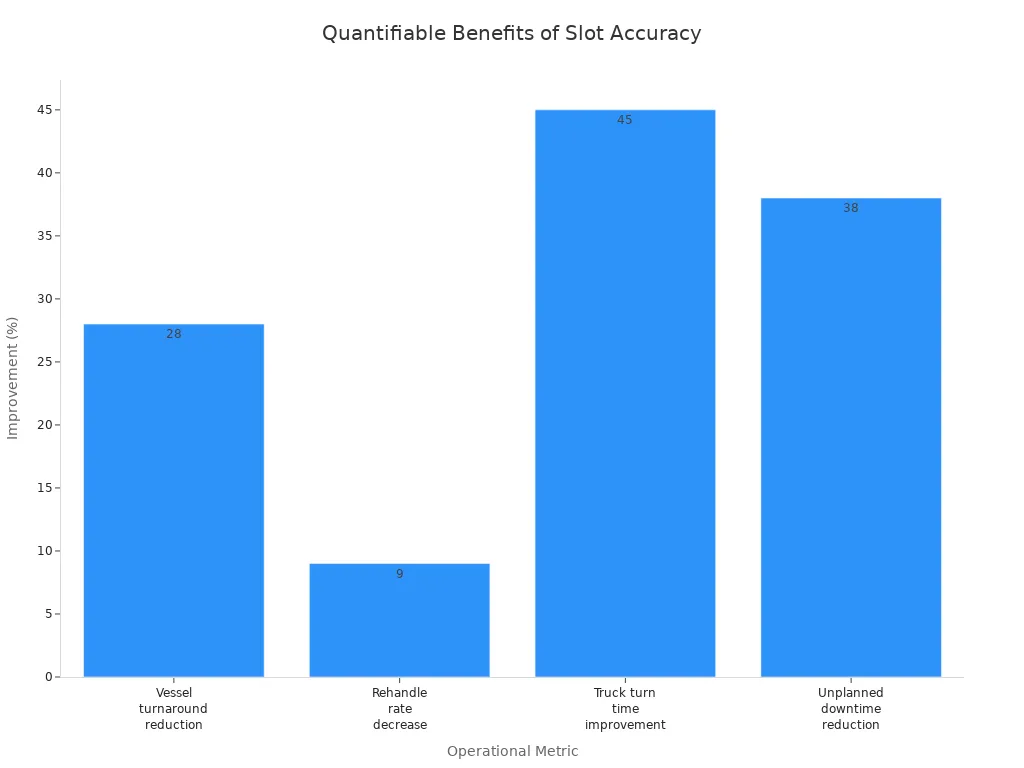
You make your port safer when slot accuracy gets better. You also have less downtime and move more containers. Look at the results in the table below:
|
Metric |
Client Result |
|---|---|
|
Vessel turnaround reduction |
28% at a Mediterranean container terminal |
|
Unplanned downtime reduction |
38% across crane fleet at a European terminal |
You can count on CEGC for special solutions. Automation and digital tools will help container handling in the future.
FAQ
What is slot accuracy in container handling?
Slot accuracy means you put containers in the right place. You do not make mistakes. This keeps your port safe.
How do anti-sway systems help you?
Anti-sway systems stop containers from swinging around. You move containers faster and safer. There are fewer accidents in tight lanes.
Can you customize CEGC equipment for your port?
|
Option |
Available? |
|---|---|
|
Size |
✅ |
|
Power Source |
✅ |
|
Automation |
✅ |
You pick what works best for your port.


