
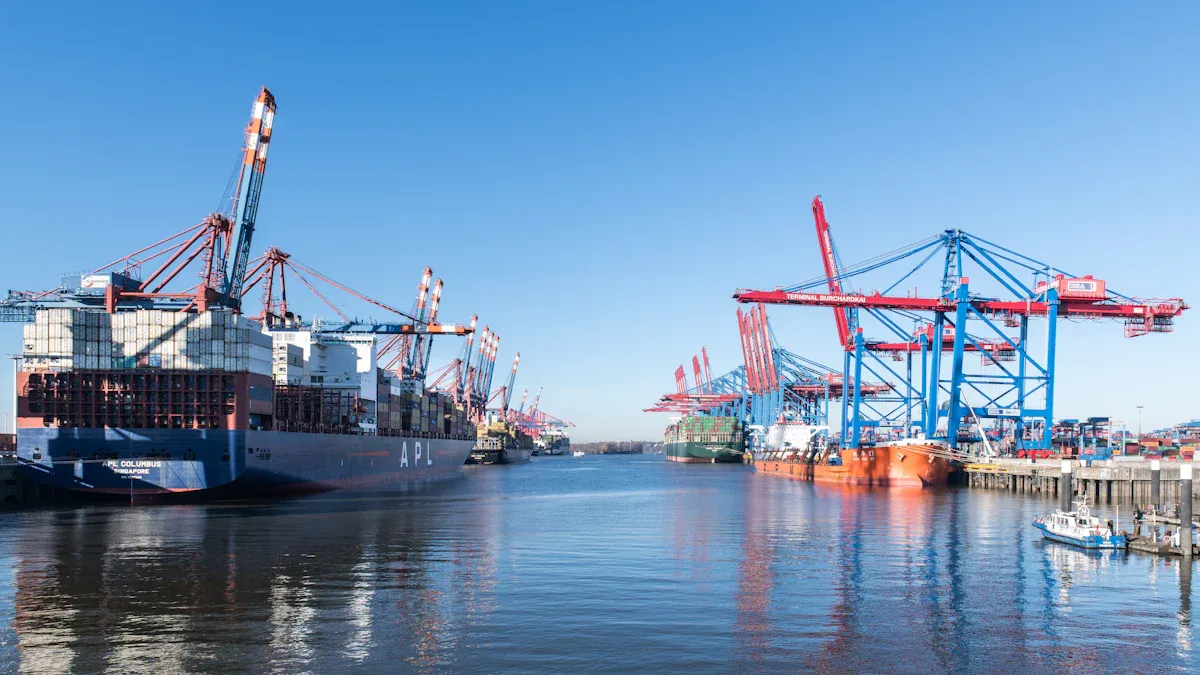
Idle travel in container handling gantry crane operations can waste a significant amount of time, often accounting for 30–40% of total work hours. When a container handling gantry crane is not in motion, operational costs increase and container throughput drops. To reduce idle travel, automation, improved planning, and routine maintenance are essential strategies. These measures help boost efficiency and streamline operations. CEGC offers specialized solutions designed to reduce idle travel in container handling gantry crane systems, addressing these critical challenges and enhancing overall productivity.
Key Takeaways
-
Use automation and smart scheduling to cut idle travel. This helps lower downtime and makes work faster.
-
Give operators regular training to boost their skills. Show them real-time data so they can decide quickly and stop delays.
-
Try predictive maintenance to spot problems early. This saves money and lets cranes work longer.
Automation and digitization for container handling gantry crane
Automation and digitization have changed how you run container handling gantry crane operations. These tools help you cut down on idle travel, work faster, and get more done. CEGC gives you choices that fit market rules and lets you change things for your project. You can pick the right size, span, duty cycle, and power for your port. These choices help you use your equipment well and not waste anything.
Smart scheduling to reduce idle travel
Smart scheduling helps your rtg cranes move only when needed. Sensors and IoT devices collect real-time data so you know where cranes and containers are. Automated operation uses AI to plan the best routes and cut down on idle travel. Remote monitoring lets you control many rtg cranes from one room. This setup stops extra moves and keeps your cranes working well.
-
Real-time data collection gives you the latest info on crane and container spots.
-
Automated operation picks the fastest and safest moves for your rtg cranes.
-
Remote monitoring and control let you watch many rtg cranes at once.
-
Predictive maintenance finds problems before they slow you down.
These tools help you have less downtime and work better. You also use your equipment more and keep your port running well. Smart scheduling software stops bottlenecks and keeps your rtg cranes busy with useful jobs.
Anti-sway and collision control for safe, efficient moves
Safety is very important when you use rtg cranes. Load sway makes it hard to put containers in the right place. It can also cause crashes and slow down your work. Advanced control systems, like anti-sway technology, keep loads steady and safe.
|
Benefit |
Impact on Cycle Times |
Impact on Safety |
|---|---|---|
|
Higher crane throughput |
Makes container handling faster |
Lowers risk of dropped loads |
|
Shorter container cycle time |
Lets you place loads quicker |
Cuts down on crashes and injuries |
|
Improved ship turnaround time |
Makes the terminal work better |
Keeps workers safe near the crane |
|
Reduced operator fatigue |
Helps you work faster |
Lowers chances of accidents |
|
Lower maintenance costs |
Keeps things running fast |
Makes the work area safer |
Anti-sway systems on your rtg cranes help you move containers faster and safer. These systems use motion plans and brakes to keep loads steady. Safety interlocks, like overload protection and emergency stops, help you avoid accidents. Operator HMI displays show clear alarms and updates, which makes it easier to train new workers and keep everyone safe. With these features, you have less downtime and keep working well.
Data integration to improve efficiency
Data integration links your rtg cranes with your terminal operating system. This link lets you see all your work as it happens. You can check container spots, crane status, and yard flow on one screen. When you match berth allocation with quay crane scheduling, you stop small fixes that hurt the whole terminal.
The TOS brings together lots of data and turns it into a real-time control center. It helps you watch important equipment and use your resources better.
Here are some ways data integration helps you:
-
Real-time monitoring and support stop problems before they start.
-
Live yard and berth views let you track containers and rtg crane work.
-
Automated alerts warn you about traffic and slowdowns.
-
Action tips help you move containers and stop bottlenecks.
-
Scenario tests let you try changes before you do them.
With data integration, you can make your work better, cut idle times, and use your resources well. Dynamic planning helps you change plans fast and use your equipment more. Good TOS setups can cut idle time by about 15–25%, which helps you work better. Automation, like automated stacking cranes and predictive monitoring, also lowers costs and helps you reach your goals.
You can count on CEGC to give you container handling gantry crane: reduce idle travel solutions that fit your needs. With automation and digitization, you can work better, have less downtime, and get more done at your port.
Operational strategies to reduce downtime and improve efficiency
Operator training and best practices
You can make your team work better by teaching operators new skills. Training with the latest technology helps them make fast choices. Dashboards show real-time info for crane scheduling and maintenance. Operators can check important numbers like how much cranes are used and how long they wait. This helps them change what they do to keep rtg cranes moving and avoid delays.
-
Technology lets operators use dashboards for planning and fixing cranes.
-
Real-time checks show how busy cranes are and how long they wait.
-
Small test programs try new ways to work and help teams get better.
Start with small test programs to try new ideas. These programs often help teams work faster and better. When you cut down on idle travel, you move more containers and make your terminal work smoother. Training also helps your team deal with load sway and cycle time problems. Anti-sway systems and motion tools from CEGC help your operators and make container handling gantry crane: reduce idle travel possible.
Real-time monitoring and predictive maintenance
Watching your rtg cranes in real time and using predictive maintenance helps you stop delays and keep cranes working longer. AI and machine learning look at data to guess when things might break. Some models learn from past problems, while others spot things that look wrong. Other models guess how long parts like bearings, cables, and motors will last. Reinforcement learning helps pick the best order for fixing things.
-
You see fewer sudden breakdowns that cost a lot.
-
You make cranes last longer by planning when to fix them.
-
You save money by fixing small problems before they get big.
-
You need fewer spare parts because you know what to fix.
-
You call for emergency repairs less often.
-
You use your maintenance team better by knowing what needs work.
Regular maintenance for rtg cranes gives you real results. You can get your money back in four months and stop over 20% of surprise breakdowns. Cranes are ready to use almost all the time. You see everything that happens and can manage repairs for many terminals at once. Predictive maintenance helps you work 20%–30% better. This way, your rtg cranes are always ready and help with container handling gantry crane: reduce idle travel.
Workflow optimization and load consolidation
You can work faster by making workflows better and putting loads together. Scheduling quay cranes and AGVs at the same time makes sure all parts work as one team. When you match how quay cranes, AGVs, and stacking cranes work, you save time and move more containers.
Making workflows better helps match crane speed with cargo. This stops overloads and crashes, so loading is smoother and faster.
Putting loads together is also important. When quay cranes and AGVs work together, waiting times go down and the terminal works better. Good scheduling means less idle time and more work done. Changing capacity limits into time windows for AGVs helps quay cranes and AGVs work together, so both wait less.
|
Evidence Description |
Impact on Crane Utilization and Idle Travel |
|---|---|
|
Synchronizing operations between quay cranes (QCs) and AGVs |
Reduces waiting times and enhances terminal efficiency, leading to better crane utilization. |
|
Optimizing collaborative scheduling to minimize idle time |
Directly improves overall terminal productivity by ensuring QCs and AGVs operate efficiently together. |
|
Transforming capacity constraints into time window constraints for AGVs |
Aligns QC operations with AGV capabilities, reducing both AGV waiting time and QC idle time. |
You can connect portal cranes and reach stackers with rtg cranes for better teamwork. Linking machines to the terminal system gives you live updates on ship spots and job plans. AI looks at sensor data to help machines and workers do more, wait less, and move containers faster. Good planning and data use make the port safer and more productive.
Each crane has a special job at the port. Quay cranes load and unload ships quickly. Yard cranes move and stack containers in the yard. Reach stackers move containers to trucks or trains for transport. Working together helps avoid delays and move more containers.
You can fix problems like load sway and slow cycles with technology. Anti-sway systems use sensors to stop loads from swinging. Motion tools match crane speed with cargo to save time. Real-time data and automation let you watch loaders and change plans fast, so you work better.
You can trust CEGC to give you rtg solutions that cut downtime, help you work better, and get more done. When you focus on training, real-time checks, regular maintenance, and good planning, you make your container handling gantry crane: reduce idle travel and keep your port running well.
You can make idle travel and downtime less by following these steps: Train your operators so they know what to do. Check your equipment often to find problems early. Use automation and digital tools to watch cranes in real time. Pick cranes that have safety features and are simple to fix. These ideas help you work faster and better. Look at CEGC’s solutions to find what fits your port best.
FAQ
What is idle travel in a container handling gantry crane?
Idle travel happens when the crane moves but does not lift or set down a container. This makes your port lose time and use more energy.
How does automation help reduce idle travel?
Automation helps the crane pick the shortest and safest path. You move containers quicker and stop trips with no load.
Which CEGC solutions help improve crane efficiency?
|
Solution Type |
Benefit |
|---|---|
|
Smart Scheduling |
Cuts down idle travel |
|
Anti-Sway Control |
Moves are safer and faster |
|
Data Integration |
Helps you make choices quickly |


