
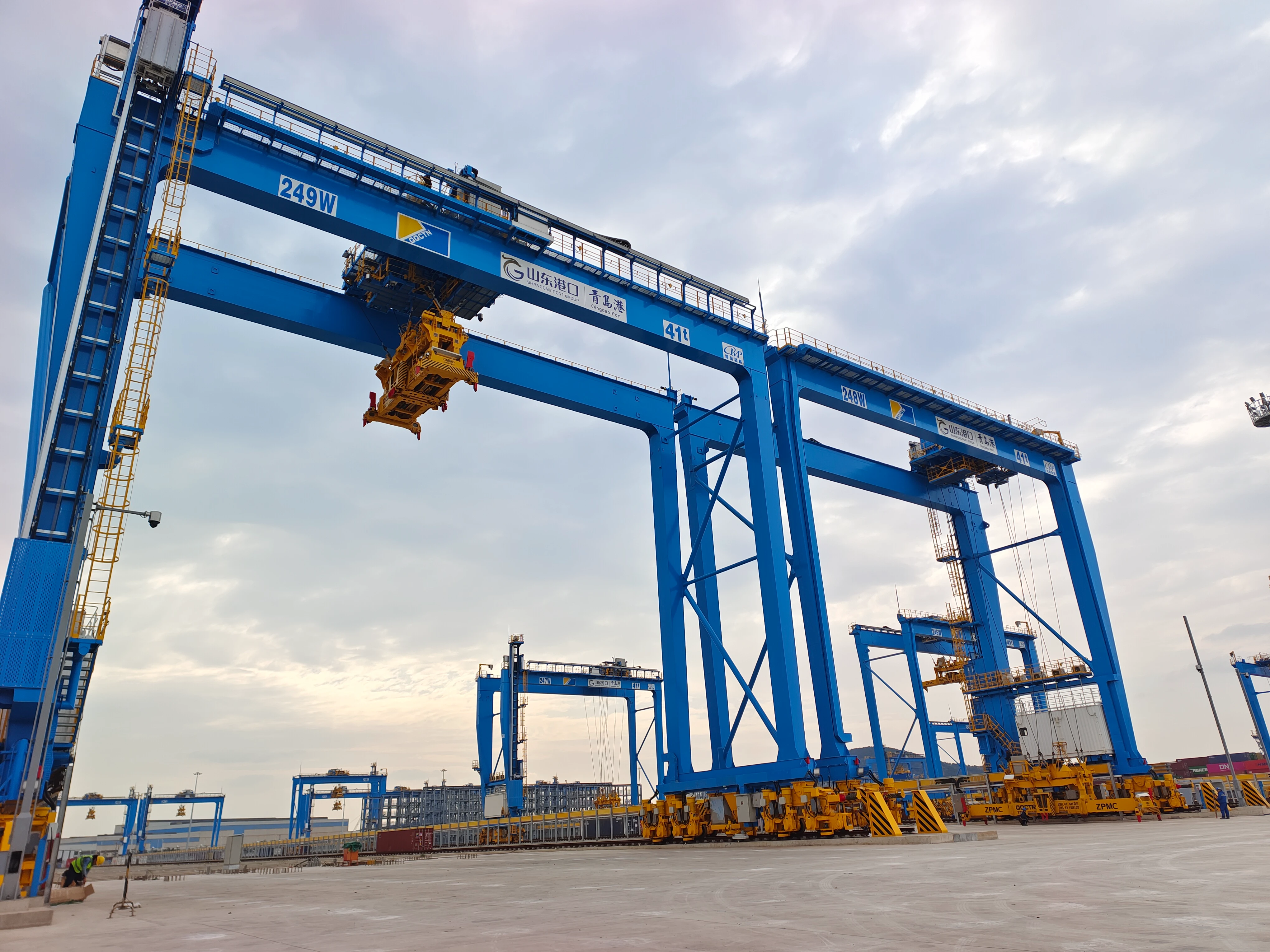
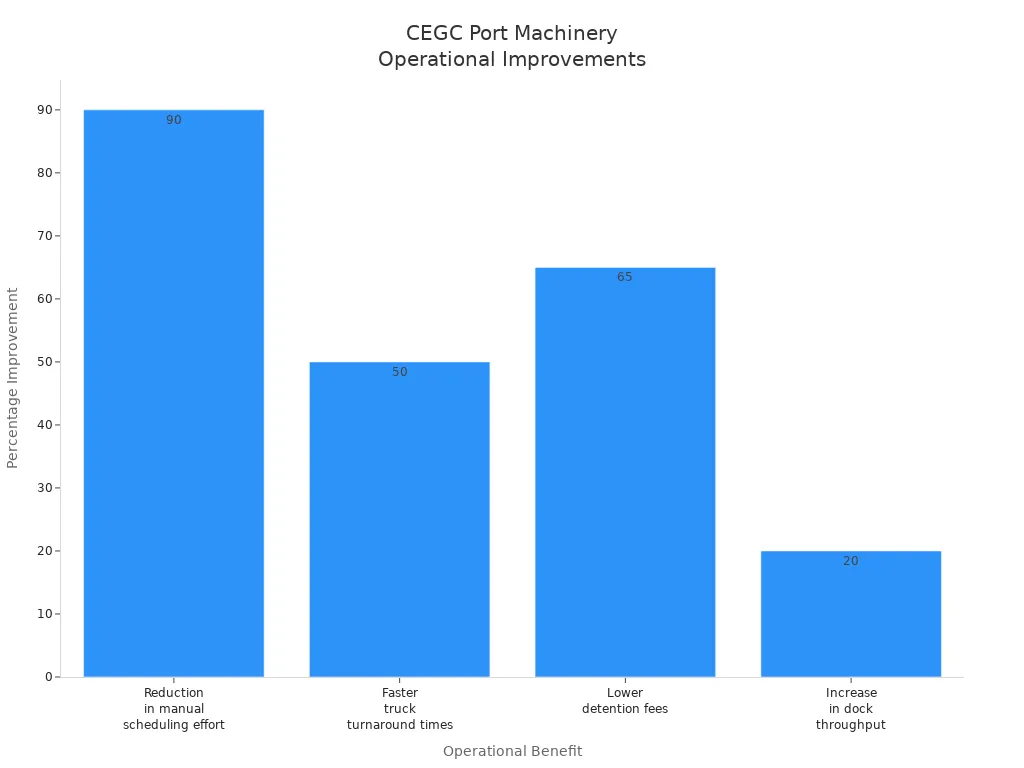
Ship loader fault warnings reduce spillage rework by providing early alerts and actionable steps to resolve issues before they escalate. With CEGC, ports benefit from advanced port machinery designed to enhance both safety and efficiency. CEGC’s ship loader fault warnings reduce spillage rework, ensuring smoother cargo movement and minimizing the need for corrective actions. Integrated anti-sway control systems keep loads steady, helping operators achieve more precise handling and reducing the risk of accidents.
|
Benefit |
Percentage Improvement |
|---|---|
|
Reduction in manual scheduling effort |
|
|
Faster truck turnaround times |
Up to 50% |
|
Lower detention fees |
Up to 65% |
|
Increase in dock throughput |
Up to 20% |
With CEGC’s real-time ship loader fault warnings, you gain greater confidence and control over your operations. Predictive maintenance and advanced operator support ensure your ship loader and container handling equipment consistently deliver optimal performance, reducing downtime and maximizing throughput.
Key Takeaways
-
Ship loader fault warnings give early alerts to stop spills and cut down on extra work. This helps save both time and money.
-
Adding predictive maintenance and real-time monitoring makes things safer and more efficient. It also helps equipment last longer and lowers repair costs.
-
Using anti-sway technology and safe lifting controls makes cargo handling better. It helps prevent accidents and makes loading and unloading faster.
Ship loader fault warnings reduce spillage rework
Fault warning systems overview
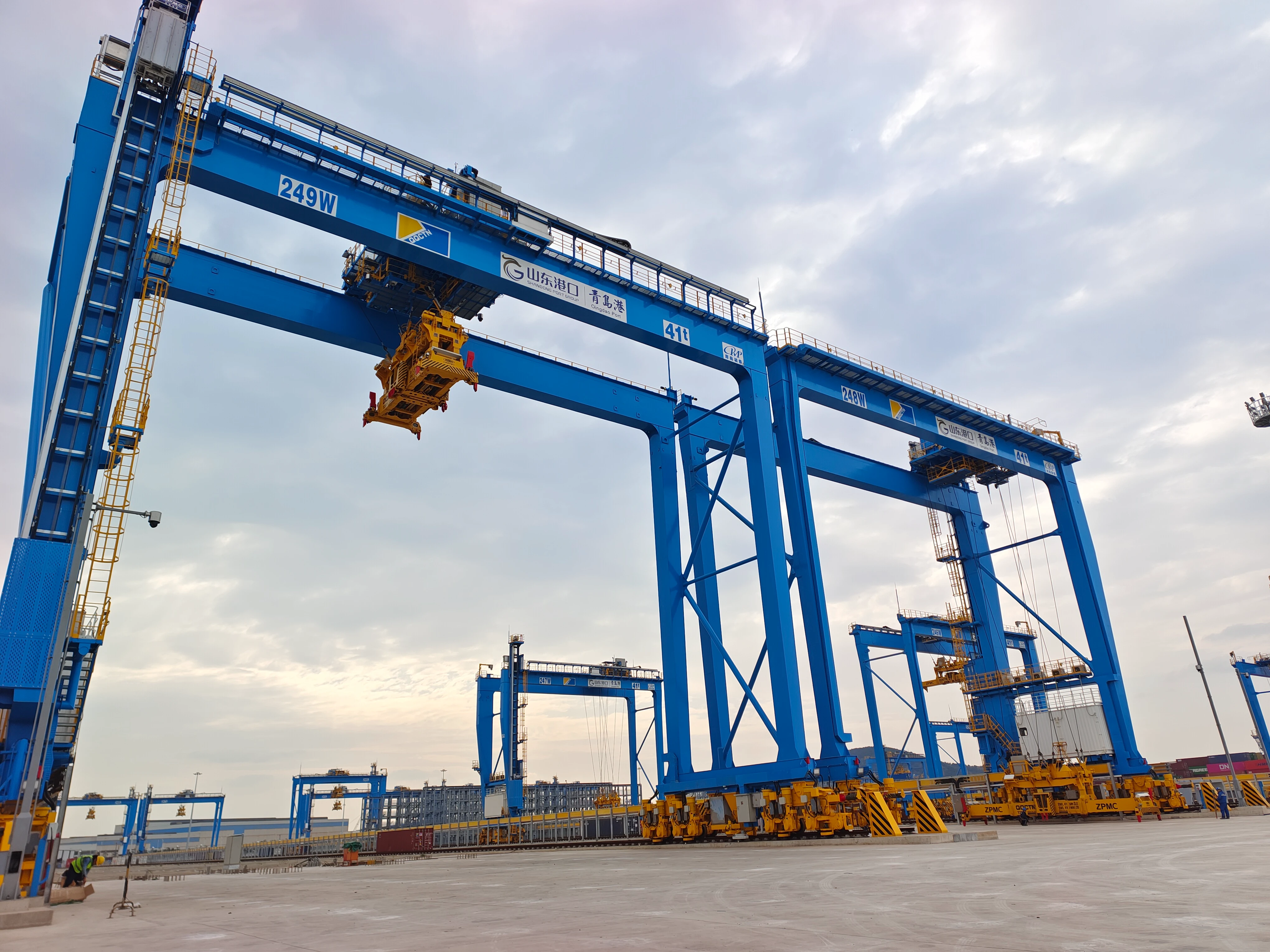
It is important to keep your port safe and working well. Ship loader fault warnings help by giving you early alerts about problems. These alerts come before things get worse. The systems use smart technology to watch your equipment. They send alerts if something is wrong. You can find problems early and fix them fast. This helps stop spills and extra work.
Modern fault warning systems use different smart tools. These tools help your ship loader and container handling equipment work better. Here are some main features you will see:
-
Vibration analysis checks for odd shaking in machines.
-
Temperature monitoring watches heat levels to stop damage.
-
Acoustic emission analysis listens for strange sounds.
-
Wear debris analysis looks for tiny bits in oil.
-
Motor current signature analysis checks how electricity flows.
-
Non-destructive testing finds hidden damage without taking things apart.
These systems give you alerts right away if something is wrong. This lets you act fast and stop bigger problems. For example, if a motor gets too hot or shakes, you get an alert. You can stop the machine and check it. This keeps your team safe and your cargo protected.
Many spills and extra work happen when people miss early warnings. Here are some common reasons for spills and more work in ship loading:
-
Crew members ignore alarms or do not act fast.
-
Overflow alarms do not work or are missing.
-
Workers do not watch tank levels closely.
-
Teams do not talk well during emergencies.
-
People skip steps or do not follow checklists.
-
Suppliers push too much pressure or flow.
-
Broken pipes or tanks cause leaks if not fixed.
A good fault warning system gives you alerts to help avoid these problems. Early detection saves money and time. For example, finding a small oil stain early led to a quick fix and saved $500,000. In another case, early gas detection stopped a $3 million failure. These stories show that ship loader fault warnings help reduce spillage rework and save money.
CEGC port machinery integration
You want your port machines to work well together. CEGC makes it easy to add fault warning systems to your cranes. These systems connect to your equipment and send real-time alerts to your computer or phone. You can check the status of your container handling equipment anytime.
CEGC has many ways to add fault warning systems to your port machines. Here is a table with some main options:
|
Solution Type |
Description |
|---|---|
|
Sends alerts if the motor gets too hot. |
|
|
Hoist Motor Vibration Analysis |
Tells you when to do maintenance. |
|
Crane Operation Usage Monitoring |
Checks how much you use the crane. |
|
Load and Overload Monitoring |
Makes sure you use the right load. |
|
Motor Brake Fault Monitoring |
Finds safety problems with the brakes. |
|
SCADA, VFD, and PLC Integration |
Checks control settings and system status. |
|
Real-Time Monitoring |
Gives nonstop updates about crane performance. |
|
Enhanced Safety |
Watches safety details to lower risks. |
|
Mobile Integration |
Lets you see crane data on your phone. |
|
Data-Driven Insights |
Gives helpful information for decisions. |
When you use CEGC’s solutions, you get alerts to help you act fast. If your crane or container handler has a problem, the system sends an alert to your operator and emergency team. This helps you stop a spill before it happens and cuts down on extra work.
You also get better safety and less downtime. The system watches for problems like overloads, brake faults, or overheating. You get alerts right away, so you can fix things before they cause spills or damage. This is how ship loader fault warnings help reduce spillage rework and keep your port running well.
Tip: Use CEGC’s real-time monitoring and alerts to keep your ship loader, container vessel, and offshore platform safe and efficient. Acting early saves money and keeps your team safe.
Technical solutions for spillage and rework
Anti-sway and safe lifting controls
You can make cargo work safer with anti-sway and safe lifting controls. These systems help keep cargo steady when loading oil or unloading. Anti-sway technology stops cargo from swinging. This lowers the chance of accidents and spills. You can place loads more exactly, so cargo does not fall or break. High level alarm systems warn you if cargo moves too much. This helps you avoid mistakes. Safe lifting controls make things easier for crane operators. They also help cargo work go faster. You do not need to spend as much time making cargo steady. This means you finish loading oil and unloading more quickly.
-
Your team and cargo are safer
-
Cargo work is more efficient
-
Cranes last longer with less damage
-
There is less chance of spills or broken cargo
Predictive maintenance and energy efficiency
You can use sensors to watch cargo equipment in real time. Predictive maintenance lets you find problems early, like too much heat or shaking. You get alerts before something breaks, so you can fix it and stop spills. Real-time data helps you watch cargo work and plan repairs. You save money by having less downtime and making machines last longer. Predictive maintenance also helps you manage spare parts better and spend less on repairs. High level alarm systems give you quick warnings, so you can act fast and lower risk.
|
Benefit |
Description |
|---|---|
|
Lower Maintenance Costs |
Predictive maintenance can cut repair costs by 18-25%. |
|
Longer Equipment Life |
Better checks and quick repairs help machines last longer. |
|
Less Unplanned Downtime |
Predictive plans help stop surprise breakdowns and save time. |
|
Better Spare Parts Management |
You only change parts when needed, so you do not store too many. |
Operator-centered HMI and training
You can make cargo work safer with operator-centered HMI and training. Real-time data and clear alarms help you make good choices. Training teaches you how to move cargo safely and what to do when alarms go off. You learn to see danger and act fast. This helps stop spills and keeps cargo safe. Ports with better training have fewer accidents and safer teams.
Watching how operators work in real time makes cargo work safer and cuts down on accidents. Seeing danger early and using alarms the right way helps you make fewer mistakes and stay safe.
Ship loader fault warnings and CEGC’s technical solutions help stop spills and extra work. These systems make your port safer and help you save money. They also help your port work better every day. If you use CEGC’s port machinery, you get alerts you can trust. Your terminal or port authority will see better results and smoother operations.
FAQ
What is ship loader turnaround and why does it matter?
You improve ship loader turnaround when you reduce waiting time for ships. Faster turnaround means less pollution and lower costs for your port.
How do ship loader fault warnings help with pollution and spill cleanup?
You get early alerts that help you stop pollution before it spreads. This makes spill cleanup easier and lets you use oil spill cleanup equipment only when needed.
What contingency actions should you take during a pollution event?
You should follow your contingency plan. You must use the right equipment and act fast to control pollution. Quick action protects your port and the environment.


