
Strong signals reduce TBM machine troubleshooting time, making it easier to quickly identify and resolve issues. Effective condition monitoring allows you to detect problems early, preventing delays before they occur. CEGC provides solutions tailored to address the common challenges you encounter with TBM machines. Here’s a quick overview of the main pain points and the solutions CEGC offers:
|
Pain Points |
Solutions Offered |
|---|---|
|
Utility conflicts |
Customized TBM machine configurations |
|
Heritage settlement |
Slurry optimization |
|
Flood ingress |
Improved segment gaskets |
|
Interface risks |
Customized TBM machine configurations |
Strong signals reduce TBM machine troubleshooting time by delivering high-quality data, enabling you to operate tunnel machines safely and efficiently. With CEGC, you benefit from advanced monitoring and customized solutions for your TBM machine needs.
Key Takeaways
-
Strong signals give clear data from TBM machines. This helps you find and fix problems fast.
-
Condition monitoring lets you spot problems early. This lowers downtime and saves on maintenance costs.
-
Predictive maintenance uses real-time data to stop failures. This makes sure your TBM works well and does not break down.
Strong signals reduce TBM machine troubleshooting time
Condition monitoring in TBM operations
You need strong signals to fix TBM machines faster. In tunnel boring machine projects, strong signals give you clear and correct data from every sensor and system. This data shows what is happening inside your TBM or Microtunnelling Machine all the time. CEGC builds its machines to give you data you can trust.
Condition monitoring uses this data to check if your TBM is healthy. You can see how important parts like the cutterhead, drive system, and hydraulic parts are working. The system gets data from sensors that measure things like temperature, pressure, and vibration. This information helps you find problems before they stop your work.
|
Key Component |
Description |
|---|---|
|
Multi-source information perception |
Brings together different data sources to watch TBM conditions closely. |
|
Online assessment |
Checks how parts are doing right now. |
|
Fault information self-diagnosis |
Finds problems in TBM systems by itself. |
|
Sensors |
Uses sensors for acceleration, temperature, pressure, and other important parts. |
|
AI big data warning models |
Uses AI to guess when main drive, hydraulic, and tail seal systems need fixing. |
|
Predictive maintenance services |
Gives advice for fixing things based on real-time data. |
|
Remote monitoring |
Lets workers see information from many places, making work easier. |
Condition monitoring helps you because it gives you live data about your equipment. You can use smart ways to do maintenance and keep your machines working longer. This way, you use your resources better and stop expensive breakdowns. You also get tips that help you stop problems before they start.
Strong signals help with predictive maintenance. Research shows TBM and Microtunnelling Machines use smart systems to guess how well they will work. Sensors watch angles like yaw, pitch, and roll while digging. This live data helps you change the machine’s path to stay correct. You can keep your tunnel machine inside design rules and make fewer mistakes.
You face dangers like ground settlement, face instability, and water getting in on many jobs. Strong signals help you handle these dangers by:
-
Checking if buildings are settling
-
Keeping track of groundwater levels
-
Measuring pore pressure
-
Making sure things stay safe and lowering risks
With CEGC’s solutions, you get strong signals that keep your TBM safe and working well. You can act fast when ground conditions change and protect your project from surprises.
Real-time fault detection and diagnostics
You need real-time fault detection to keep your TBM working well. Strong signals help you fix TBM machines faster by giving you instant data about every part. When something goes wrong, you see it right away. This means you can fix small problems before they get worse.
Condition monitoring (CM) is a way to check if machines need fixing before they break. It watches for things like vibration, overheating, and current signals to see if the machine is healthy. This way of working is important for finding problems in TBM machines right away.
You use live data to find problems fast. Studies show that looking at cutting force signals helps you know when tools are wearing out and how smooth the surface is. You can use models that watch cutting force and chip thickness to see how much each cutter tooth is worn. This helps you plan repairs at the best time and avoid sudden stops.
|
Study |
Findings |
|---|---|
|
Rimpault et al. |
Looking at cutting force signals can tell you about tool wear and surface quality. |
|
Ding et al. |
Made a model to watch cutting force in real time and see what affects tool wear. |
|
Liu et al. |
Watched each cutter tooth using chip thickness and cutting force signals. |
|
Wu et al. |
Studied cutting force and acceleration signals to see how tool wear grows. |
|
Choudhury et al. |
Found tool wear by looking at the link between flank wear and cutting force. |
|
Kamm et al. |
Studied how rolling force and pushing force are connected and made an energy equation for cutter tools. |
You can trust the data from CEGC’s TBM and Microtunnelling Machines. Strong signals help you fix TBM machines faster by making it easier and quicker to find problems. You get the information you need to keep your project going and your machines in great shape.
Predictive maintenance and troubleshooting efficiency
Predictive strategies for TBM maintenance
You need a good maintenance plan to keep your tunnel boring machine working well. Predictive maintenance helps you find problems before your machine stops. There are different ways to keep your TBM in good shape. The main ways are preventive maintenance, condition-based maintenance, and time-based maintenance. Each way helps you stop failures and make your machine more reliable.
|
Maintenance Strategy |
Advantages |
|---|---|
|
Regular checks and fixes help your machine last longer and stop early failures. |
|
|
Condition-Based Maintenance (CBM) |
Real-time data checks your machine’s health, so you only fix what needs fixing and avoid extra work. |
|
Time-Based Maintenance (TBM) |
You check or fix parts at set times to stop failures and keep your machine working well. |
Preventive maintenance means you check your machine often. This helps you find small problems before they get big. Condition-based maintenance uses sensors to watch your machine in real time. You get alerts when something changes, so you can fix it fast. Time-based maintenance means you fix parts at certain times, which helps you avoid sudden breakdowns.
Predictive maintenance uses special tools like vibration prediction and vibration signals. These tools help you see when a part might break. You can use a vibration prediction model to watch for changes in your machine. When you get early warnings, you can plan repairs and stop downtime. This keeps your TBM working longer and saves money.
Reducing downtime with advanced monitoring
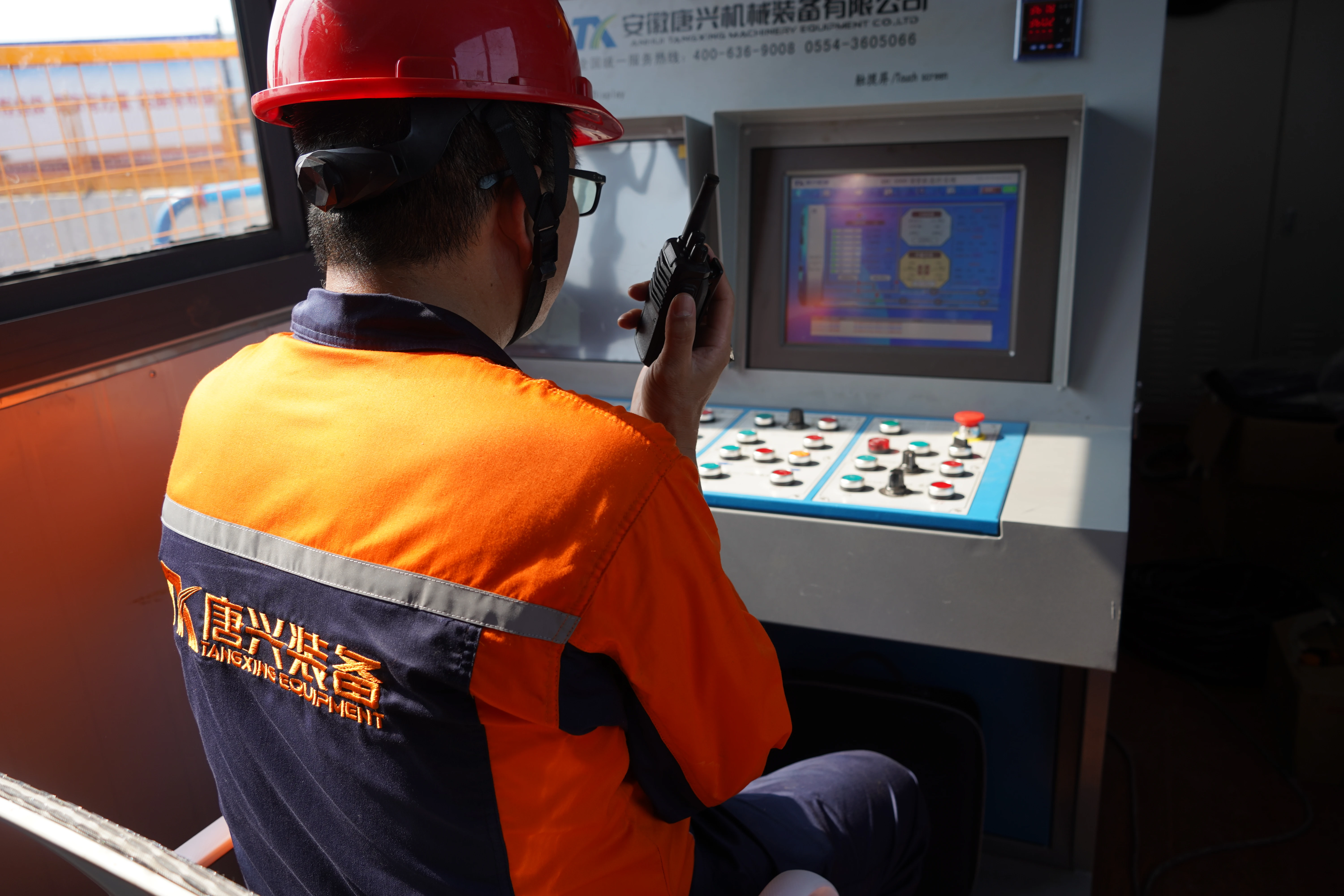
You want your tunnel boring machine to keep working without long stops. Advanced monitoring systems give you real-time information about your machine. These systems use sensors to track vibration, temperature, and pressure. When something goes wrong, you get alerts right away. This helps you fix problems before they cause your machine to fail.
-
Real-time monitoring helps you find problems fast. You can fix things quickly and avoid delays.
-
Sensors, like ultrasonic sensors, measure cutter wear. This helps you plan maintenance and stop sudden failures.
-
Good monitoring systems send alerts when something is wrong. You can act fast and keep your machine safe.
-
Continuous monitoring lets you watch your TBM all the time. You get early warnings if something changes.
Predictive maintenance uses big data to guess when failures might happen. For example, your TBM can make 200 gigabits of data. You can use this data to see when a failure might happen. Algorithms can warn you about problems, like a main drive motor failure, with high accuracy. This helps you make better choices and avoid surprises.
Preventive maintenance stops failures before they happen. Condition-based maintenance lets you fix only what needs fixing. This saves time and stops extra work. Predictive maintenance helps you avoid emergency repairs and lowers downtime. You get more value from your TBM and spend less on repairs.
Case study: CEGC TBM machine performance
You can see how predictive maintenance and monitoring help in real projects. CEGC’s tunnel boring machines use strong signals and continuous monitoring to work better. Here are some results from recent projects:
|
Aspect |
Result |
|---|---|
|
19.25% |
|
|
Advance Rate Improvement (Geo-grades III) |
17.98% |
|
Specific Energy Reduction (Geo-grades IV) |
5.39% |
|
Specific Energy Reduction (Geo-grades V) |
7.43% |
|
Prediction Accuracy (R²) |
> 0.95 |
You get faster digging and use less energy. The real-time prediction is very accurate, so you can trust the alerts and warnings. This helps you plan maintenance and avoid downtime.
Trenchless contractors and city utilities save a lot of money with predictive maintenance. You use less material and energy, which is good for the environment. Automation and AI lower labor costs by stopping manual checks. You also avoid emergency repairs, so your TBM works longer.
You face many reasons for machine downtime, like wear, age, and surprise failures. Predictive maintenance helps you find these problems early. You can use vibration signals and real-time alerts to spot issues before your machine stops. This gives you more control and helps you finish your project on time.
Tip: Use continuous monitoring and predictive maintenance together for the best results. You will get early warnings, less downtime, and keep your TBM working well.
You get lots of good things from strong signals, predictive maintenance, and condition monitoring in your tunnel machine.
-
Condition-based maintenance helps you spend less on repairs and have less downtime.
-
Predictive maintenance uses live data to find problems early.
-
These ways help your TBM last longer and work better.
|
Customization Option |
Description |
|---|---|
|
Tailored Equipment Solutions |
Made for special tunneling and mining jobs |
|
Expert Technical Consulting Services |
Helps you plan and make your project better |
|
On-Site Installation Services |
Skilled teams put together and test your machine |
|
Comprehensive Engineering Support |
Support for hard ground and trenchless jobs |
Check out CEGC’s project-based customization and support packages to keep your TBM working well.
FAQ
What is the role of monitoring in TBM tunnelling maintenance?
Monitoring helps you watch TBM tunnelling conditions all the time. It lets you spot problems before they get worse. You can plan repairs early and stop long delays. Monitoring also helps you know if your machine is healthy. This makes tunnelling work better.
How does prediction help reduce downtime in TBM tunnelling projects?
Prediction helps you know when TBM tunnelling parts need fixing. You can stop sudden breakdowns. Prediction uses monitoring to keep your project moving. It helps lower the time your machine is not working.
Why is maintenance important for TBM tunnelling machines?
Maintenance keeps TBM tunnelling machines running well. It helps stop long delays. Good maintenance uses both monitoring and prediction. This means you get better results and less time when your machine is stopped.


