
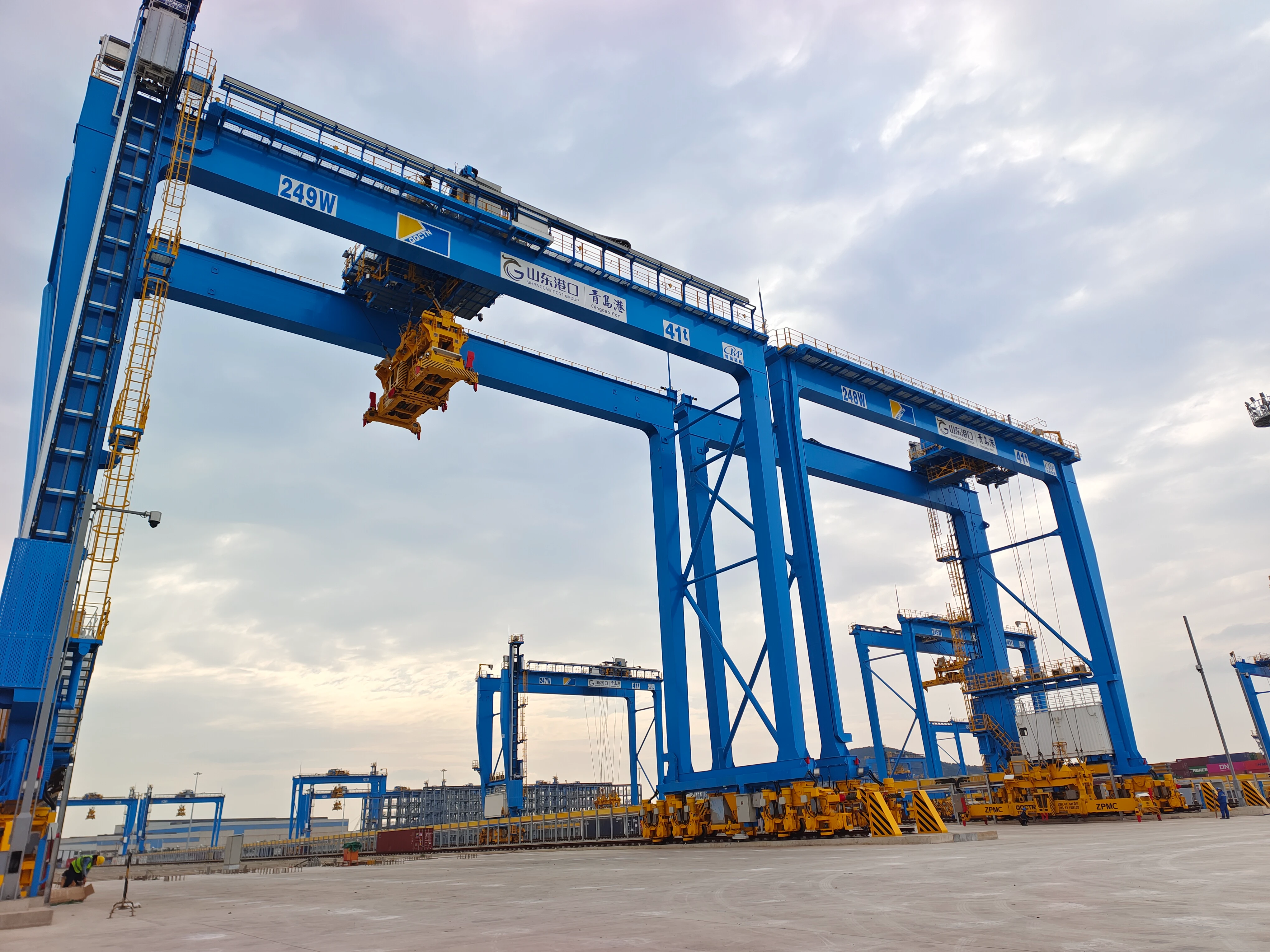
You see how container handling gantry crane: stable landing tech helps every day. This technology lets you control the crane better and makes it safer. You get stable landings, less load swinging, and cranes work well. CEGC gives you standard specs and custom choices. Your work gets easier with container handling gantry crane: stable landing tech.
-
Operators have less chance of hitting things.
-
Terminal teams can put cranes in the right spot.
-
Maintenance workers see cranes work the same way each time.
-
Port authorities count on container handling gantry crane: stable landing tech for good results.
Key Takeaways
-
Stable landing technology makes cranes safer and more accurate. It lowers the chance of accidents when moving containers.
-
Smart systems and anti-sway technology help cranes work faster. They let cranes move more containers each hour. They also cut down on waiting times.
-
CEGC has cranes you can customize. These cranes follow industry rules. You get the right crane for your port’s needs.
Stable landing technology in container gantry cranes
Key features and anti-sway systems
Stable landing technology helps your container gantry cranes work safely. It uses smart systems to control how the crane moves. This means the load does not swing as much. You can move each container with more accuracy. The main parts of this technology work together for good results.
Here is a table that lists the main technical parts you find in stable landing technology for container gantry cranes:
|
Component |
Description |
|---|---|
|
Gantry Structure |
Tall, strong legs with a horizontal beam. These let the crane move along rail tracks. |
|
Trolley System |
Carries the spreader and moves it sideways for exact container placement. |
|
Spreader Mechanism |
Uses hydraulics and linkages to grip and release containers safely. |
|
Hoisting System |
Uses winches and wire ropes to lift and lower containers with control. |
|
Anti-Sway Technology |
Uses sensors and smart algorithms to stop loads from swinging during transfers. |
Each part helps the crane stay steady and accurate. The anti-sway technology is very important. It uses sensors and controls to keep the load still. Your rmg container cranes can move containers with less chance of accidents.
Your rmg container cranes also have these smart features:
-
Vector frequency control makes every movement smooth and saves energy.
-
Smart systems use sensors to help the crane land containers perfectly.
-
Auto-steering lets the crane follow a set path for perfect alignment.
-
Collision avoidance systems use sensors to find obstacles and stop crashes.
Anti-sway systems are important for your daily work. Different types of anti-sway systems help your rmg container cranes in many ways:
|
Anti-Sway System Type |
Description |
|---|---|
|
Standard Two-Way Flexible Resistance Anti-Swing |
Uses two-way flexible resistance to stop unwanted movement. This keeps the load steady and lowers accident risk. |
|
Optional Multi-Function Frequency Control |
Uses sensors and control logic to change crane movements right away. This gives you more stability and less sway, even when loads change. |
|
Electronic Anti-Swing Technology |
Adjusts the crane’s response to reduce any extra sway. You get high accuracy and better safety. |
You can trust CEGC to give you container gantry cranes that meet top industry rules. These include ISO, FEM, CEN, and ASME. Your cranes follow strict safety and performance rules.
How stability improves safety and precision
Stability is very important for your rmg container cranes. When you use stable landing technology, your work is safer and more accurate. You do not need to worry about the load swinging or sudden bumps. The crane’s anti-sway technology and collision avoidance systems keep every move safe.
Your rmg container cranes have these safety features:
-
Multi-layer safety interlocks stop unsafe actions and protect your team.
-
Overload protection and emergency stop logic keep your crane safe when it is busy.
-
Zone-based collision avoidance systems help you avoid accidents in crowded yards.
Operator-centered HMI makes your job easier. You get clear alarms and updates. You can always see what the crane is doing. This helps you learn faster and work more accurately. You do not need to guess or only use your experience.
Here is a table that shows how these features help you be more precise:
|
Feature |
Contribution to Precision |
|---|---|
|
Anti-sway technology |
Stops loads from swinging, preventing accidents. |
|
Impact detection |
Makes handling safer and more accurate. |
|
Safety interlocks |
Ensures safe operation, which leads to precision. |
CEGC’s rmg container cranes use automation and anti-sway technology for stable landings. You can see this at places like Qingdao Port Automated Terminal. There, the cranes work as part of a full automated system. You get more stability and better results.
When you use stable landing technology, your port changes a lot. Your rmg container cranes move more containers each hour. You can get up to 30 moves per hour, and your equipment works better. Trucks wait less, and ships spend less time at the dock. You get more capacity and use your cranes better.
You can trust CEGC to give you container gantry cranes that fit your needs. You get standard specs and custom options for every project. You can pick the right capacity, span, duty cycle, and automation level. You also get the best anti-corrosion grade and structure for your port.
Stable landing technology gives you safety, stability, and accuracy. Your rmg container cranes work better, and your team stays safe. You get the best results for every container move.
Operational impact and integration
Efficiency and cycle time optimization
When you use stable landing technology, cranes work better. The cranes move containers faster and with more accuracy. This means less waiting and more containers moved in the terminal. Automated moves help the gantry crane put containers on trucks and trains right away. You use all the space in your yard and get more room for trains. Fewer trucks are needed, and everything runs smoother.
-
Automated container gantry cranes have smart sensors. These sensors help the crane put containers in the right spot.
-
You do not need to fix as many mistakes. The crane puts containers in place, so you save time.
-
You get more work done and move more containers each hour. The crane keeps working and does not stop for long.
-
You make each move faster. The terminal keeps running without problems.
Smart systems help the crane work well. They control how the crane lifts, moves, and travels. The crane changes speed and power to match the load and wind. This keeps the crane safe and steady. The crane also uses less energy because it moves smoothly and does not stop too much.
Integration with port systems and maintenance
You can connect stable landing technology to your port’s computer systems. The crane sends live data to people who run the yard, plan ships, and work at the gate. Everyone sees the same data and works together. You do not have problems from using different systems for different cargo. You put all your work into one system.
-
It can be hard to add new technology. You need to know what each person should do. You keep everyone working together.
-
You add stable landing technology to your rules and plans. This can be tough, but it helps a lot when you do it right.
-
You use your own rules to help people use the new tech. Even if you do not have outside rules, you can still grow your system.
You make your work better by using machines to do jobs and share resources. You stop slowdowns and waiting. Sensors check the crane’s health and tell you when it needs fixing. You get warnings if something is wrong with heat, shaking, or power. You can fix things before they break. The crane stays ready and does not stop working for long.
You also save energy. The crane uses DACV technology, which is faster and cleaner than old machines. You use less power and go faster. You spend less money on fuel and make more money.
|
Feature |
DACV |
Hovercraft |
Hydrofoil |
Planing Boat |
|---|---|---|---|---|
|
Energy Efficiency |
High |
Moderate |
High |
Low |
Real-world examples and CEGC solutions
You can see stable landing technology at places like Qingdao Port Automated Terminal. There, cranes use sensors and smart controls to move containers fast and safely. More containers move, and trucks and ships wait less.
CEGC gives you cranes with standard features and special choices for your port. You pick the size, how much it can lift, how often it works, and how it gets power. You choose the best protection and how much automation you want. You get cranes that fit your work and your port.
-
Port bosses use CEGC cranes to make work safer and faster.
-
People who run the terminal see the cranes work well and have fewer accidents.
-
Builders and repair teams like that the cranes are easy to fix and keep working.
-
Offshore workers and ship crews use CEGC cranes for safe and steady moves.
You can count on CEGC to give you the cranes you need. You get better work, safety, and smooth moves for every container. You see real changes in your port and everything works better each day.
When you use stable landing technology for your container gantry cranes, you make things safer. You also help the cranes work better and more often. CEGC lets you pick special solutions for any port you need. As ports get newer, you see more machines and smart systems.
|
Description |
|
|---|---|
|
Automation of entire yard blocks |
Used for certain feeder services or shipping lines. |
|
Advanced software for optimizing container move sequences |
Figures out and improves moves for connecting ships. |
|
Integration of automation data with shipping networks |
Helps people plan ahead for their work. |
|
Development of compact automated stacking systems |
Made for places where there is not much space. |
|
Emphasis on resilience |
Tries to stop problems from one part breaking everything. |
These new ideas help you spend less money. They also get you ready for what comes next.
FAQ
What is remote operation in container handling gantry cranes?
You can control the crane from far away. Cameras and sensors show you what is happening. Remote operation lets you work safely. You can also work fast, even when the weather is bad.
How does stable landing technology improve energy efficiency?
The crane uses less power because it moves smoothly. It does not stop or start suddenly. This saves you money. It also helps keep the environment safe.
Can stable landing technology handle different container sizes?
You can move many sizes of containers. The system changes to fit each load. This keeps loading and unloading safe and correct every time.


