

Port crane operations come with tough challenges—equipment breakdowns, electrical faults, and varying operator practices can disrupt workflow and create safety risks. With CEGC, you benefit from both project-specific customization and reliable standard features. By implementing port crane: limit protection improves uptime, your equipment operates more consistently and safely, ensuring higher availability and reduced downtime. Trust CEGC to deliver solutions that keep your port crane systems running efficiently and securely.
Key Takeaways
-
Limit protection systems make cranes safer by stopping overloads and accidents. They help cranes work safely, which lowers the chance of damage or injuries.
-
Using predictive maintenance can cut downtime a lot. Real-time data finds problems early, so repairs happen fast. This can make cranes available up to 30% more.
-
Regular operator training and maintenance checks are very important. Teaching operators safety rules and doing routine checks keep cranes safe and reliable.
Limit protection systems for port cranes
What is limit protection
Limit protection helps keep port cranes safe and working well. It sets rules for how far cranes can move and how much they can lift. The system stops cranes from going too far or picking up too much weight. Portal cranes, container cranes, and ship cranes all use limit protection to stop accidents and damage. For example, portal cranes have overload limit systems that warn you and can turn off the crane if needed. These systems help your work go smoothly and lower risks.
Key components: limit switches, load limiters, anti-sway
A limit protection system has several important parts:
-
Limit switches make sure cranes do not go past safe points.
-
Overload protection systems check the weight you lift. They warn you if you get close to the crane’s limit.
-
Anti-sway devices help keep loads from swinging. They sense movement and change how the crane moves to keep loads steady.
|
Type of Limit Switch |
Function Description |
|---|---|
|
Hoist Travel Limit Switch |
Stops the load from hitting the ground or overhead things. |
|
Bridge Travel Limit Switch |
Controls how far the crane moves on the rails. |
|
Trolley Travel Limit Switch |
Keeps the trolley from going to the ends of the bridge. |
These parts work together to stop overloads, crashes, and mistakes. You get safer and steadier crane handling.
Integration with crane controls and safety interlocks
You get more benefits when limit protection systems connect with crane controls and safety interlocks. The system can turn off power or sound alarms if you reach a limit. CEGC gives you solutions with regular checkups, strong protection for marine use, and automatic features. You can pick options like faster hoists, upgrades that save energy, and sensors that help predict problems. These features help you make cranes more reliable and keep them working in hard conditions.
Reduce port crane downtime and improve reliability
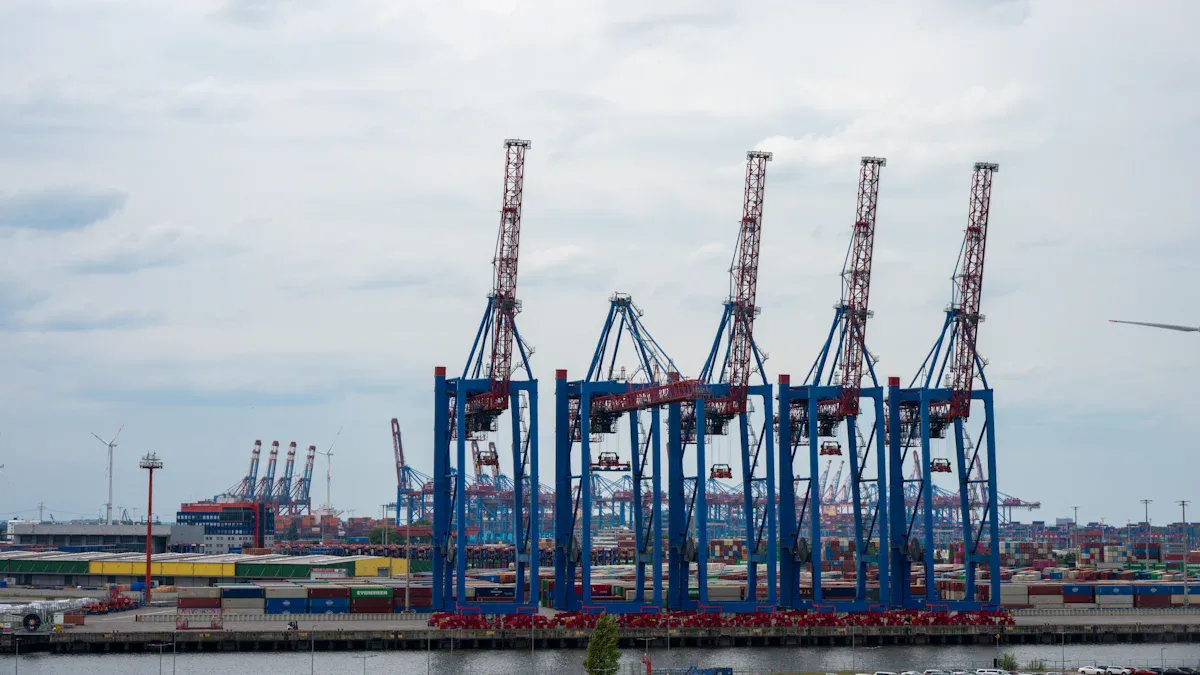
Main causes of downtime in port cranes
Operating port cranes is hard. Many things can cause them to stop working. Mechanical failures, mistakes by people, and bad weather often lead to downtime. Mechanical problems include worn gears, broken motors, or snapped cables. People make errors too. These mistakes happen because of tiredness, not paying attention, or ignoring safety rules. Sometimes, operators do not get enough training. Distractions and poor choices also cause errors.
Weather and the environment affect cranes a lot. Saltwater and humidity make metal parts rust faster. High winds can make cranes unsafe and put stress on their structure. Extreme heat or cold changes how oils and materials work. Dust and sand from moving cargo wear down crane parts and make them weak.
|
Impact on Crane Reliability |
|
|---|---|
|
Corrosive Atmosphere |
Saltwater makes metal parts rust quickly, especially at coastal ports. |
|
Abrasive Contaminants |
Dust and sand from cargo can wear out crane parts and make them tired. |
|
Extreme Weather Conditions |
High winds and big temperature changes can hurt the crane’s structure and how it works. |
You need to fix these problems to keep cranes working and reliable.
How limit protection addresses downtime and safety risks
Port crane: limit protection helps stop accidents and damage. Limit switches keep cranes from moving too far. Overload protection warns you if you lift too much weight. Anti-sway devices keep loads steady and help avoid crashes. These systems work together to keep cranes safe.
Limit protection systems, like limit switches, make cranes safer and help prevent downtime. They stop dangerous things like crashes and lifting too much, which can break equipment or hurt people. For example, the upper hoist limit switch stops ‘two-blocking,’ which happens when the hook block hits the top machinery. Cross-travel limit switches keep the trolley from hitting the ends of the bridge. These features help you avoid sudden stops and breakdowns.
Advanced anti-collision systems use sensors to watch for obstacles. The control unit checks sensor data to find dangers. The system turns on alarms and can slow down or stop the crane to prevent accidents. You get safer crane work and better reliability.
Predictive maintenance and condition monitoring
Predictive maintenance uses real-time data to spot problems early. Sensors collect information about how long parts work and their condition. You get alerts when something is wrong, so you can fix it before the crane breaks down. This method stops too much maintenance and cuts down on downtime.
Condition monitoring lets you check important parts. You can watch temperature, vibration, and electrical signals. Using predictive maintenance makes cranes more reliable and cuts eot crane downtime. Data shows that predictive models can lower unscheduled downtime by about 25%. Crane availability goes up by 20%–30% when you use condition-based maintenance. Container ships get faster service and fewer delays with these solutions.
Best practices for implementation and operator training
You need to follow best steps to keep cranes reliable and avoid downtime. Start by checking your crane type and how you use it. Pick devices that fit your crane’s design, lifting power, and work area. Make sure they connect with your crane’s controls and monitoring systems.
Train operators to spot warnings and act fast. Safety training should cover container handling, crane safety, and moving cargo between places. Operators must know how cranes work and what people below do. This helps them respond well in emergencies.
Do regular maintenance checks. Follow the maker’s advice for inspections and calibration. Use load indicators and smart sensors for real-time updates. Overload protection, like load limiters and alarms, keeps cranes safe. Connecting with SCADA lets you control things remotely, like stopping the crane if the trolley goes too far. Add safety interlocks and sensors to stop unsafe actions. Use CMMS to manage maintenance, record problems, and make work orders automatically. Automated alerts warn you when something goes wrong, helping with predictive maintenance. Digitize standard procedures to give operators tips based on real-time data.
Tip: CEGC gives you strong specs, marine durability, and easy service. You can choose sensor sets, anti-collision zones, and maintenance plans for your port crane. Port crane: limit protection improves uptime and keeps all port machines reliable.
You can make port cranes work longer with good limit protection and reliable solutions. CEGC gives you new upgrades and choices that fit what you need.
-
Check your systems by looking at safety plans, watching how things work, and practicing drills often.
Using new controls and safety tools helps cranes work better, keeps people safe, and follows the rules.
FAQ
What is the main benefit of limit protection for port cranes?
Limit protection helps keep your crane safe. It stops accidents from happening and protects the crane from getting damaged. This means your crane works more and needs fewer repairs.
How does CEGC customize limit protection for different cranes?
You can pick things like sensor sets, anti-collision zones, and maintenance plans. CEGC makes sure these fit your portal crane, container crane, or ship crane.
Can limit protection help reduce operator errors?
-
Yes, limit protection gives easy-to-understand alarms and can stop the crane by itself.
-
This makes using the crane safer and helps stop mistakes, even if operators have different skills.


