
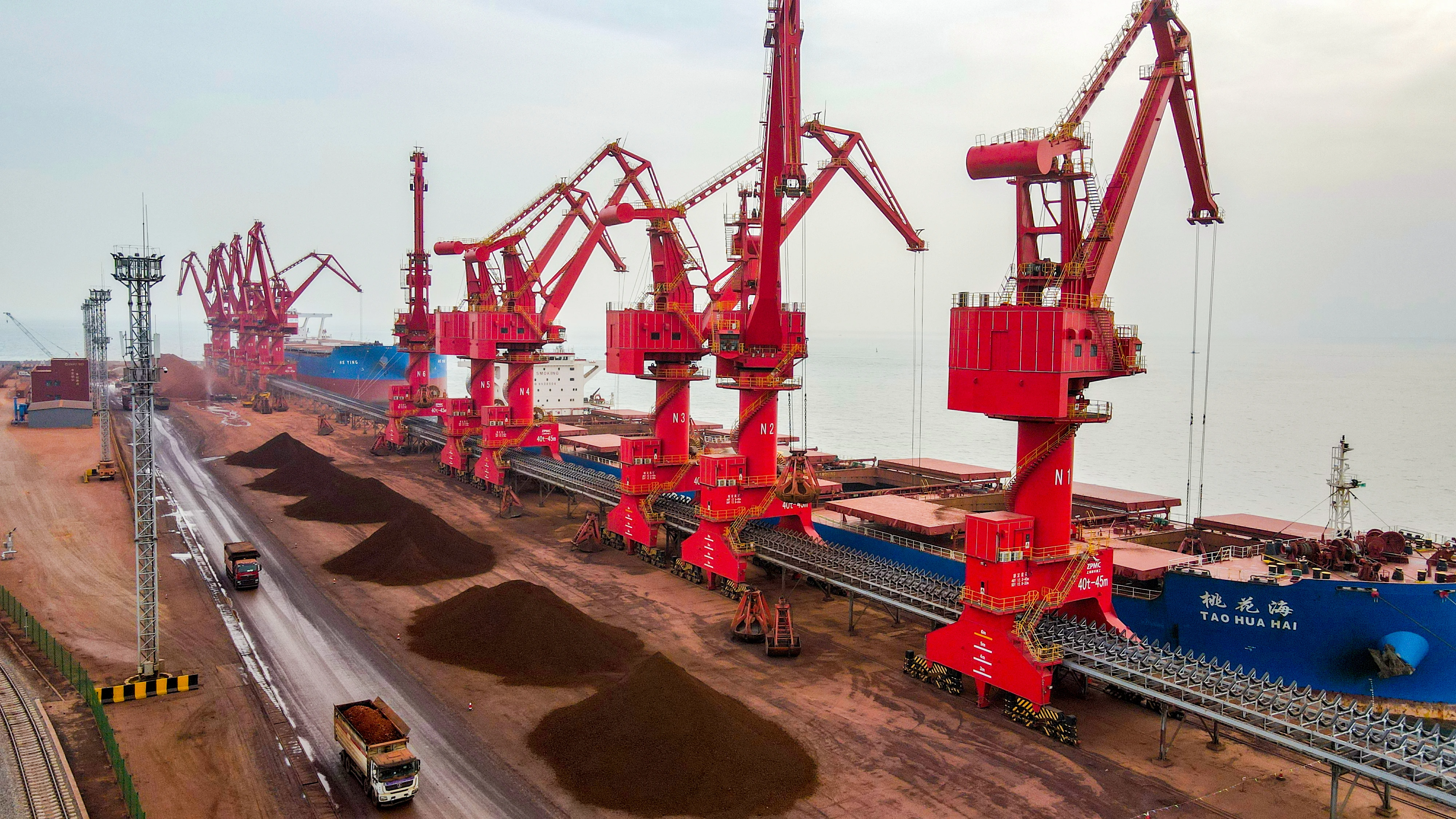
You rely on ship loading systems fault warnings to stabilize flow, especially during peak port activity. CEGC delivers advanced lifting equipment and integrated safety control systems designed for optimal performance. With real-time monitoring, anti-sway technology, and predictive maintenance, CEGC ensures your operations remain stable and efficient. The table below provides supporting evidence:
|
Evidence Type |
Description |
|---|---|
|
Market Growth |
The Ship Loading & Unloading Systems Market is projected to grow at a CAGR of 6.7% from 2026 to 2033, highlighting strong demand for enhanced efficiency through technologies like real-time monitoring and ship loading systems fault warnings to stabilize flow. |
|
Technological Impact |
Innovations such as IoT and AI are reducing labor costs and accelerating cargo handling, helping ports maintain stable operations with the support of CEGC solutions. |
Key Takeaways
-
Ship loading systems fault warnings keep cargo moving steady. They stop delays and make things work better.
-
Real-time monitoring finds problems fast. It makes the port safer and lowers accident risks.
-
Predictive maintenance cuts repair costs and downtime. It helps your equipment work well and stay reliable.
Ship loading systems fault warnings stabilize flow
Flow regulation components
You need good flow regulation parts to keep your port running well. Ship loading systems fault warnings help you control bulk material movement. They also stop problems before they start. Telescopic loading chutes are very important for this job. Their special design and automation make work faster and keep the area safe. Rotary feeders help keep things steady and under control. These feeders set the flow speed and keep pressure steady. This is important for ship loader work.
A good telescopic loading chute keeps dust down and loads materials well. This means you lose less material and your system works better. Rotary feeders also help stop sudden changes in material flow. When you use CEGC ship loader tools, you get advanced flow regulation parts. These parts meet market standards. You can change these parts to fit your port’s needs. For example, you can make the chute longer or change the feeder size.
You may have some technical problems in your daily work. The table below lists common issues in ship loading systems:
|
Pain Point |
Description |
|---|---|
|
Inefficiencies in Workflows |
Operational silos and lack of unified systems create friction and inefficiencies in processes. |
|
Maintenance Challenges |
Regular upkeep of equipment is often neglected, leading to operational delays. |
|
Cargo Handling Issues |
Mismatches between unloading, storage, and shipping rates cause yard congestion and delays. |
|
Storage Capacity Constraints |
Insufficient planning for storage capacity leads to idle equipment and operational disruptions. |
|
Silo Design Problems |
Poor silo layout affects cargo flow, hindering overall efficiency despite high-efficiency equipment. |
You can fix these problems by picking the right flow regulation parts. Ship loading systems fault warnings help keep flow steady. CEGC lets you customize lifting equipment for your project. You can pick portal cranes, container cranes, or ship loaders. You can choose fixed or telescopic beams, lifting frames with fork pockets, and custom spans or power options. This helps you set up your yard better and work more efficiently.
Real-time monitoring and control
You need real-time monitoring and control to keep your port machines safe and working well. Ship loading systems fault warnings give you quick updates about your portal crane, container crane, or ship loader. Automated systems and real-time tracking help you spot dangers early. You can find misplaced cargo or unsafe spots before accidents happen.
Safety sensors in your machines send alerts to stop crashes and injuries. These sensors work all the time, so you always know what is happening. Real-time hazard detection uses AI to watch video feeds and find risks right away. This works better than old methods and keeps your work smooth.
You also get help from OT monitoring, which finds problems early. This lets you fix things before they get worse. Predictive maintenance uses real-time data to plan repairs and stop surprise breakdowns. You can trust CEGC to give you monitoring systems that meet market standards. The table below shows what modern real-time monitoring systems can do:
|
Specification |
Description |
|---|---|
|
Monitoring Capability |
Non-intrusive wired and/or wireless sensing for machinery systems and subsystems |
|
Data Management |
Centralized node for continuous monitoring with automated data collection methods |
|
Data Transfer |
Standard and non-proprietary methods for data transfer and exfiltration |
|
Data Processing |
Capability to ingest, process, and analyze aggregated data for diagnostics and prognostics |
|
Sensor Metrics |
Includes acceleration, vibration, thermal, acoustic, ultrasonic, optical, pressure, power, and electrical responses |
|
Data Format |
Standard, non-proprietary formats for accessible management and processing |
|
Cybersecurity |
Compliance with NAVSEA Cybersecurity requirements for data acquisition, storage, and transmission |
You can change your monitoring system to fit your port. Pick how many sensors you want and what kind. Set alarm levels and choose your favorite way to send data. CEGC helps you connect with your current systems and gives you remote access and predictive analytics.
Ship loading systems fault warnings help you control load sway, collision risk, wind load, and operator skill differences. Real-time monitoring systems give you fast updates about your machines. Anti-sway technology uses motion sensors to see load movement and change crane actions. Operators get clear warnings about unsafe situations, so you can fix problems early.
Modern cranes use safety management systems that work together. These systems handle anti-sway control and load monitoring. Advanced communication makes sure all safety features work as one. You get safer and more reliable work every day.
You can also change your lifting equipment for your port’s needs. For example, pick a fixed lifting beam for low lifts or a telescopic beam for quick changes. Choose the right crane type, span, and power supply for your yard. CEGC lets you match your equipment to your work, making sure ship loading systems fault warnings keep flow steady in every case.
Fault detection and management systems
Types of faults and warnings
There are many kinds of faults in port machines. These include overloads, electrical failures, sensor errors, and mechanical breakdowns. Ship loading systems fault warnings help by telling you about problems early. This stops delays before they happen. Safety interlocks and alarms let you find issues fast. Diagnostic tools check if your portal crane, container crane, or ship loader is healthy. With CEGC equipment, you can set your own alarm levels and sensor types. Finding problems early stops sudden breakdowns and keeps everyone safe.
Automated and manual responses
You can fix faults in two ways: automated or manual. Automated systems use AI to find problems quickly. They help you save time and make fewer mistakes. Manual troubleshooting takes longer and can cause you to order too many spare parts or miss deadlines. Automation makes port work faster and helps move more cargo. Condition-based monitoring keeps machines working well. Predictive maintenance lets you change old parts before they break. This helps cranes last longer and lowers repair costs.
-
Automated systems make repairs faster.
-
Manual fixes often take longer and cause more problems.
-
Automation makes work quicker and more reliable.
Case study: CEGC port machinery in action
You can see how fault detection helps in real ports. CEGC made job planning better and used equipment more, from 65% to over 85%. Better planning cut down delays by at least 10%. Monitoring systems found problems early and stopped sudden breakdowns. The table below shows how predictive maintenance in a CEGC ship loader made work smoother:
|
Benefit |
Impact on Operational Flow |
|---|---|
|
Reduced downtime |
Smoother operations |
|
Improved equipment reliability |
Faster turnaround times |
|
Optimized energy efficiency |
Cost savings and efficiency |
|
Early fault detection |
Prevents unexpected failures |
|
Digital record keeping |
Better maintenance planning |
You can use condition monitoring and remote checks to keep flow steady. More predictive maintenance means fewer accidents. Finding problems early keeps your port safe and running well.
Operational benefits and safety outcomes
Improved safety and efficiency
When you use advanced port machines, safety and efficiency get better. Anti-sway technology helps you control how loads move. This makes crane work safer and easier to predict. You will see fewer accidents and better cargo handling. The table below shows how much these systems can help:
|
Improvement Type |
Percentage Improvement |
|---|---|
|
Productivity (Novice) |
40-50% |
|
Productivity (Experienced) |
5-10% |
|
Load Swing Reduction |
85-95% |
|
Load Swing (EO Enabled) |
3.3 inches |
|
Load Swing (EO Disabled) |
3.5 feet |
|
Mean Time Between Failure |
2-3 times improvement |
|
Maintenance Cost Reduction |
Reduced |
You also get stronger equipment with marine durability and anti-corrosion design. These features protect your machines from salt, wet air, and bad weather. You spend less time fixing things and avoid sudden breakdowns. Special coatings and cathodic protection systems keep cranes safe and strong. You can trust your portal crane, container crane, or ship loader to work well every day.
Reduced downtime and lifecycle costs
You have less downtime and spend less money with predictive maintenance and smart monitoring. People who use these systems early have seen up to 45% less downtime. Predictive maintenance helps you fix problems before they stop your work. You save money and keep your schedule on track.
-
Predictive maintenance can lower repair costs by up to 30% and stop over 70% of breakdowns.
-
Finding problems early means fewer stops and less emergency work.
-
Maintenance teams can plan better and feel less stress.
-
Well-kept machines keep your port safe and follow all the rules.
-
Modern systems can grow with your port, from small docks to big terminals.
-
Continuous monitoring helps you feel calm and avoid surprises.
-
Advanced analytics help you find the real cause of problems and make better plans.
You get these benefits if you are a port authority, terminal operator, or maintenance worker. You will have safer, more reliable, and more efficient work with CEGC port machines.
You can see how fault warnings help keep things safe and steady at the port. Flow stabilization works with these warnings to make work smooth and safe. CEGC is different because they make special equipment for each project. They also give strong technical help when you need it. The table below shows how CEGC’s solutions are not the same as other companies. You get machines you can trust and better results for your projects.
|
Feature |
CEGC's Offering |
Competitors' Offering |
|---|---|---|
|
Tailored solutions for unique project demands |
Standardized equipment |
|
|
Technical Solutions |
Comprehensive support for project efficiency |
Limited technical support |
|
Innovation |
Relentless innovation and engineering expertise |
Varies by company |
You should pick advanced safety and maintenance systems for your port. This will help you keep flow steady and make work safer every day.
FAQ
What is a ship loading systems fault warning?
You get a fault warning when your ship loader finds a problem. This warning helps you fix issues fast and keep your cargo flow steady.
How does anti-sway technology help you?
You use anti-sway technology to control load movement. It keeps your crane steady. You see fewer accidents and better cargo placement.
Can you customize CEGC port machinery for your project?
|
Option |
Customizable? |
|---|---|
|
Crane type |
✅ |
|
Sensor set |
✅ |
|
Power solution |
✅ |
You choose what fits your port best.


